
Shares of smaller and regional truck carriers moved lower in early trading Monday after Amazon announced an expansion of its less-than-truckload freight service. Saia (NASDAQ:SAIA) and Old Dominion Freight Line (NASDAQ:ODFL) each fell 7% in premarket trading, while FedEx (NYSE:FDXF) Freight declined about 6%, according to market activity reported after the announcement.
Amazon said its LTL freight offering is now available to ship to any type of destination in the United States and that the service will accommodate businesses of all sizes, including third-party warehouses, distribution centers, and retail partners. The company cited strong demand from Amazon selling partners and vendors as the reason for making the service more broadly available.
Since launching the service in 2019, Amazon said it has served tens of thousands of its selling partners and vendors and moved millions of pallets across its U.S. network last year. The company said it is expanding access to the service after receiving positive feedback and seeing growing customer demand.
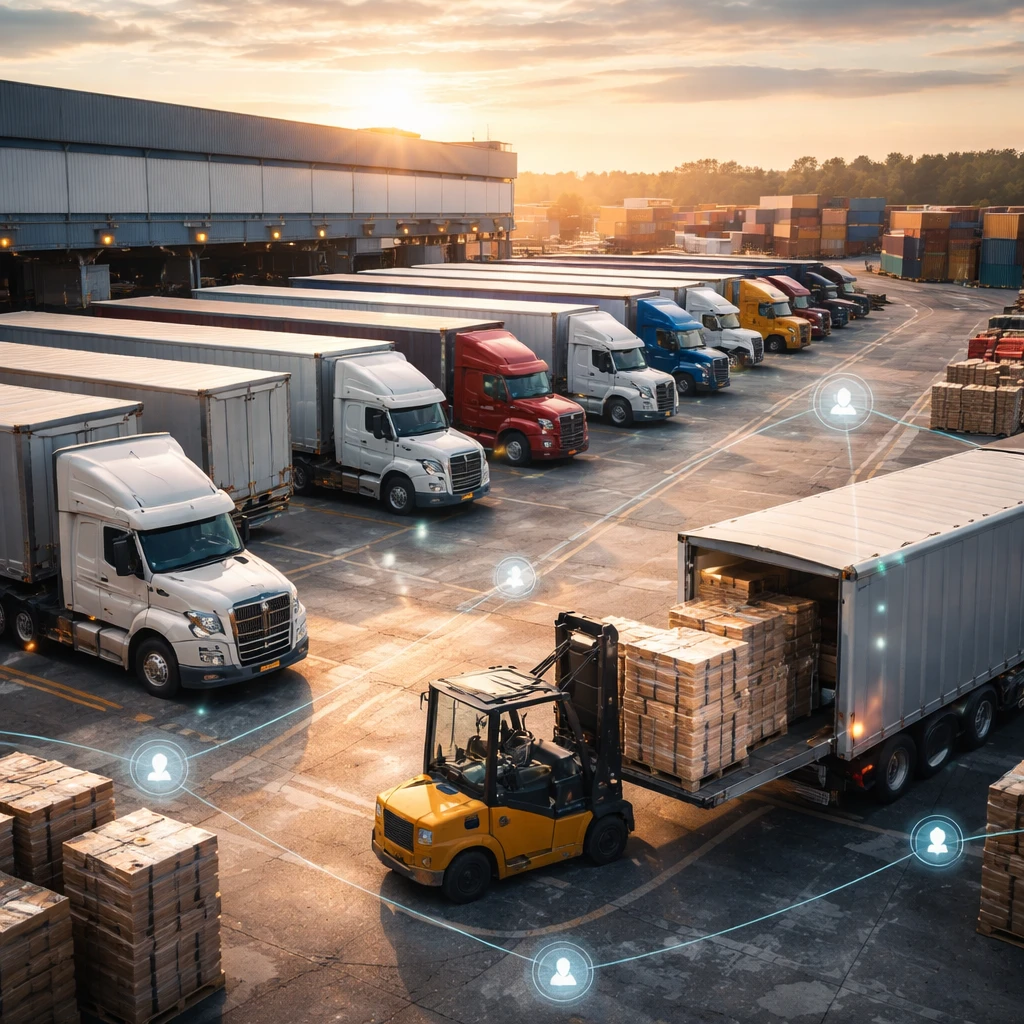
Amazon described the expanded LTL offering as drawing on a fleet of more than 80,000 trailers and 24,000 intermodal containers. The company said the service aims to provide cost-effective freight shipping, reliable capacity, and GPS-powered tracking. The LTL model enables businesses to ship by pallet and share trailer space for partial loads rather than pay for a full truckload.
Amazon Freight, which is part of Amazon Supply Chain Services, covers full truckload, LTL, and rail services and operates terminals across major U.S. metropolitan areas. Amazon said the service gives shippers access to the logistics infrastructure and technology the company uses to move its own freight.
Features included with the expanded LTL service, as outlined by Amazon, include drop trailer support, end-to-end real-time GPS tracking, sensor-equipped fleet monitoring, electronic data interchange integrations, and LTL drivers with specific training in freight handling operations.
Separately, a market snapshot of ticker movements included the following symbols and short-form changes: AMZN-0.42% SAIA-0.29% ODFL+0.7% FDXF+5.42%.
Market context
The premarket declines in Saia, Old Dominion, and FedEx Freight followed Amazon's announcement expanding its LTL footprint and underscored investor attention on how an enlarged Amazon Freight could affect third-party carriers' volumes and pricing dynamics. Amazon emphasized technology and fleet scale as central elements of the expanded service.
What the company highlighted
- Availability of the LTL service to any destination in the United States and to businesses of all sizes.
- Operational scale: more than 80,000 trailers and 24,000 intermodal containers powering the service.
- Service capabilities including GPS tracking, drop trailer support, sensor monitoring, EDI integrations, and trained LTL drivers.
The announcement follows Amazon's statement that its LTL service has been used by tens of thousands of selling partners and vendors since 2019 and moved millions of pallets last year, and that the company is broadening access in response to positive feedback.