
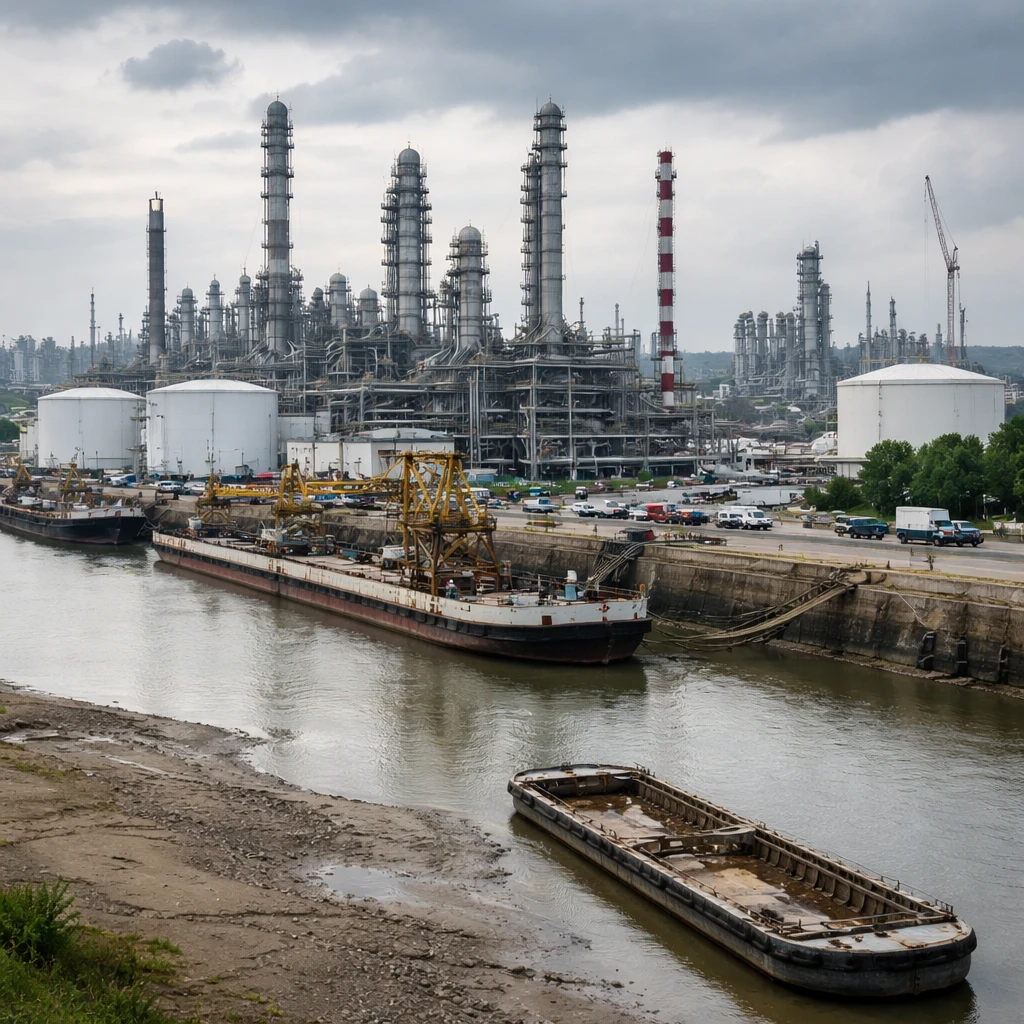
Belgrade - Serbia has secured a further 30-day waiver from the United States allowing NIS, the Russian-owned oil company that operates the country’s only refinery, to continue importing crude oil until August 28, Energy Minister Dubravka Djedovic Handanovic said on Friday.
The waiver, issued by the U.S. Office of Foreign Assets Control (OFAC), gives NIS additional time while Hungary’s oil and gas firm MOL negotiates the purchase of the Russian majority stake in the company. NIS runs the Pancevo refinery just outside Belgrade, which provides roughly 80% of Serbia’s fuel needs and imports crude through Croatia’s Janaf pipeline.
On state RTS television, Djedovic Handanovic characterized the extension as a positive development, saying: "Thirty days is good news; NIS will have time to purchase and bring in enough crude oil."
President Aleksandar Vucic on Friday said he expected MOL to finalise the acquisition of NIS in the coming days and indicated he planned further high-level contacts. "We are expecting finalization of the deal in the coming days, I will probably speak with (the Russian President Vladimir) Putin and (Hungary’s Prime Minister) Peter Magyar," Vucic said to reporters during a visit to southern Serbia.
The United States originally imposed sanctions on NIS in October as part of broader measures targeting Russia’s energy sector over the war in Ukraine. Those sanctions called for divestment of the company by its Russian majority owners, Gazprom Neft and Gazprom. In January, MOL signed a provisional agreement to buy the combined 56% stake held by Gazprom Neft and Gazprom. Serbia’s government retains a 29.9% stake in NIS, with the remainder held by small shareholders and employees.
Compounding supply-side challenges, other fuel imports to Serbia have been hit by navigational limits on the Danube River. Record-low water levels have forced barges and tankers to operate at roughly a quarter of their normal cargo capacity, pushing some imports down to about 25% of their monthly target for July.
That combination of a temporary sanctions waiver for NIS, ongoing ownership negotiations involving MOL, and reduced import volumes because of Danube conditions leaves Serbia with a limited but critical window to stabilise domestic fuel supply ahead of the waiver’s August 28 expiry.