
Shares of Saia Inc. plunged in pre-market trading after Amazon unveiled a full nationwide expansion of its less-than-truckload freight offering. The logistics change, which opens the service to all destinations in the United States and to businesses of all sizes - including third-party warehouses, distribution centers, and retail partners - was cited by traders as a primary driver of an approximately 8.0% decline in Saia stock in pre-open trading.
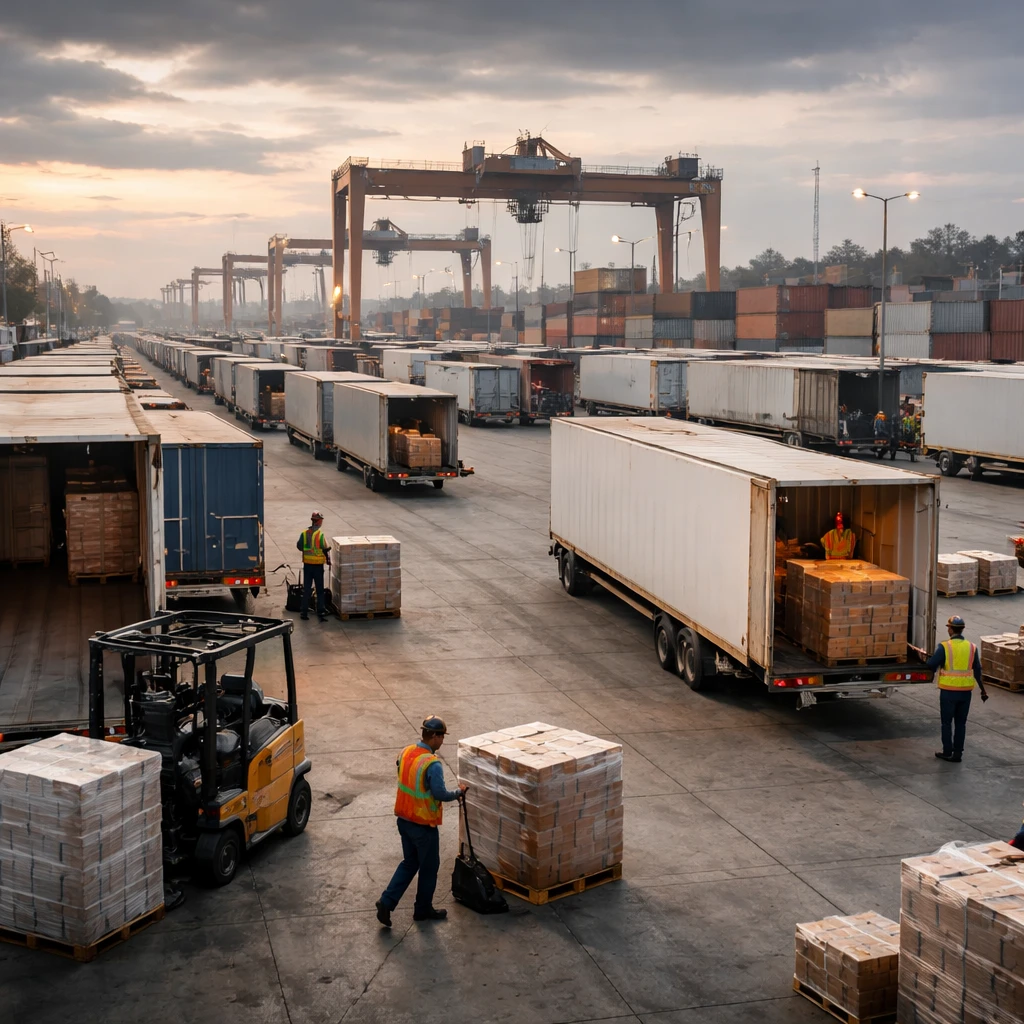
Amazon said its expanded LTL service is enabled by a large operating base of equipment, using more than 80,000 trailers and 24,000 intermodal containers to allow palletized shipping and the option to share trailer space for partial loads rather than requiring a full truckload. That capability, according to market participants, represents a material escalation in competition for incumbent LTL carriers.
Saia is particularly exposed to this development because about 97% of its revenue comes from transporting LTL shipments. The company had been showing signs of operational recovery in recent months - April 2026 data showed LTL shipments per workday up 5.6% and tonnage per workday rising 6.9%, while May registered shipments up 3.7% and tonnage up 8.4% year-over-year. Those improvements had prompted a series of analyst price-target increases in the days before Amazon's announcement, with brokerages including JPMorgan, Wells Fargo, and Goldman Sachs among those lifting targets.
Still, insiders had been net sellers over the preceding three months, with insider activity showing share sales without any recorded insider purchases. That selling left little internal support in the stock as the sector absorbed the sudden competitive news.
The market reaction was not limited to Saia. Old Dominion Freight Line shares also fell in premarket trading, and FedEx Freight moved lower as well, reflecting investor concern that Amazon's expansion poses a structural threat to traditional LTL providers rather than a company-specific issue. The broader equity market responded modestly as well, with the S&P 500 edging down about 0.3% and the NASDAQ declining about 1.0%, providing limited support for risk assets on the day.
Several factors combined to amplify Saia's premarket decline. A powerful new entrant expanding aggressively into the carrier's core market, the stock's recent rally from a 52-week low of $249 toward its 52-week high of $494.71, and an overall mildly risk-off tone in equities contributed to the outsized move. Market participants noted that while Saia's operational momentum - including improving tonnage trends and management's guidance for meaningful operating ratio improvement in the second quarter - remained intact, investors were rapidly repricing the outlook to reflect a tougher competitive environment for the LTL sector as a whole.
In short, the combination of Amazon's nationwide LTL push and Saia's concentrated exposure to LTL freight was the primary market narrative driving the abrupt share-price weakness. Observers point to the scale of Amazon's equipment base and the broader accessibility of the service to all business types as the mechanics of the competitive impact. The result was a sector-wide reassessment that placed downward pressure on multiple freight and logistics names in premarket trade.
Contextual observations
- Saia's revenue mix - roughly 97% from LTL shipments - makes it particularly sensitive to structural shifts in the LTL marketplace.
- Operational indicators for Saia had been improving in April 2026 and May, with shipments and tonnage rising year-over-year, which had supported analyst optimism before the announcement.
- Insider selling in the prior three months occurred without offsetting insider purchases, providing limited internal demand support as external competitive pressure mounted.
Market implications
Investors interpreted Amazon's move as a durable competitive threat to conventional LTL carriers rather than a short-lived disruption. That perception triggered declines not only in Saia shares but also in other LTL-related stocks in premarket trading, underscoring concerns about pricing and volume pressure across the sector.