
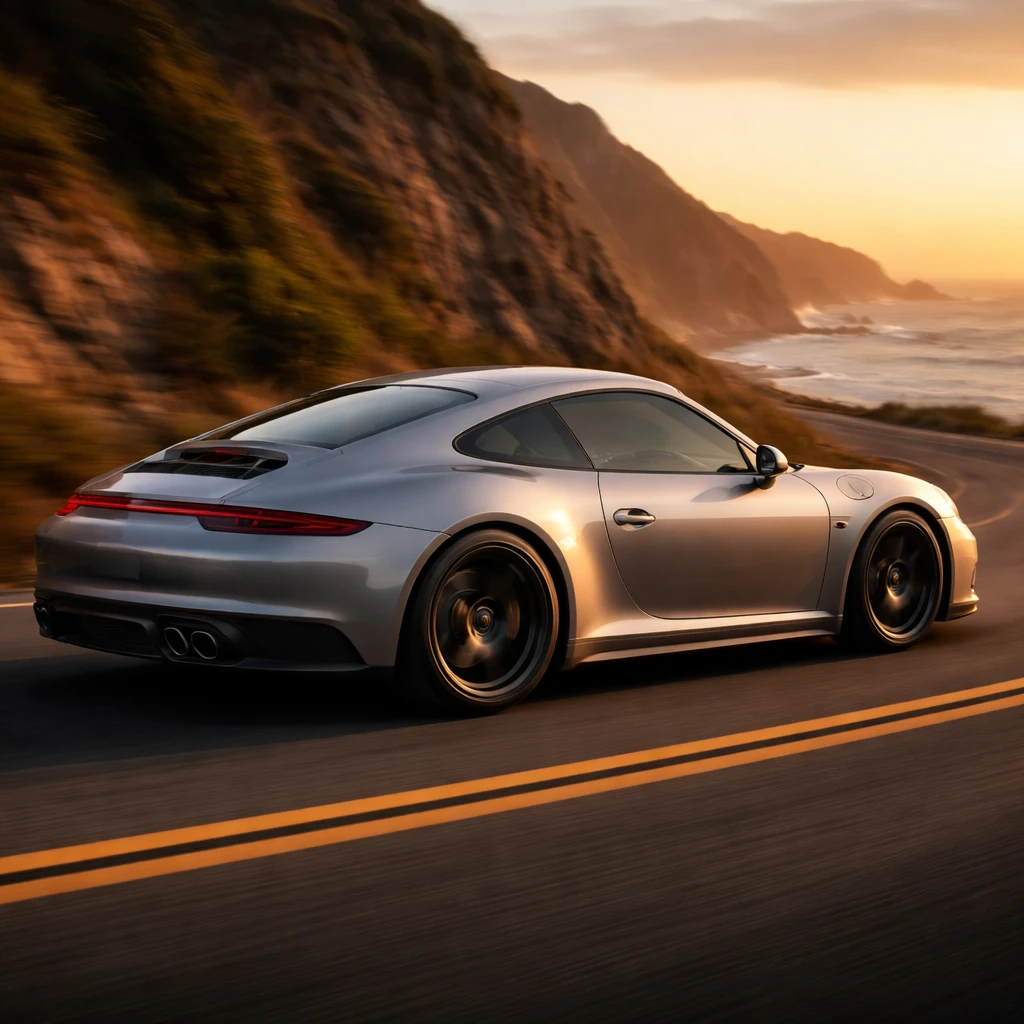
Porsche's leadership has ruled out developing a fully electric iteration of its iconic 911 sports car, CEO Michael Leiters said at an event hosted by Auto, Motor und Sport magazine. The statement underscores a deliberate choice to preserve the 911's traditional propulsion architecture rather than convert the model line to battery-only power.
The 911 has been produced with combustion engines since the model's inception, and while Porsche has introduced hybrid versions of the model family, Leiters confirmed the company will not pursue a fully electric 911. That decision comes amid a parallel effort by the automaker to expand its electric vehicle portfolio elsewhere in its range.
Porsche launched the fully electric Taycan sports car in 2019 and currently offers two fully electric SUV models. Those products represent the company's existing footprint in battery-electric vehicles, while the 911 family remains tied to internal-combustion engineering and hybrid options.
Leiters said Porsche intends to continue investing in electric mobility, but the approach will be selective and guided by customer demand. He noted that the company has overestimated demand for electric models in recent periods and, as a result, has shifted some focus back toward combustion-engine vehicles. The comments suggest Porsche will calibrate future investments in electric technology against market signals rather than pursue an across-the-board electrification of all existing nameplates.
The announcement clarifies Porsche's product strategy for one of its most recognizable models while reaffirming the automaker's broader, albeit measured, commitment to electric vehicles. The company's stance highlights a demand-driven framework for deciding which models to electrify and which to preserve in their current forms.
Summary
Porsche will not develop a fully electric 911. The 911 lineage has relied on combustion engines since its debut, though hybrids have been available. Porsche already sells the Taycan and two electric SUVs, and will invest selectively in electrification based on customer demand after concluding it had overestimated demand for electric models.
Key points
- Porsche will not create a fully electric version of the 911 sports car; the model line remains combustion-engine based with some hybrid variants.
- The company has an existing fully electric sports car, the Taycan (introduced in 2019), and two fully electric SUV models, which form Porsche's electric vehicle offerings.
- Porsche plans to continue investing in electric mobility on a selective basis, with customer demand guiding which models are electrified; management says the company overestimated electric vehicle demand and has rebalanced some focus toward combustion-engine vehicles.
Risks and uncertainties
- Demand uncertainty - Porsche acknowledges it overestimated demand for electric models, creating uncertainty about future EV uptake that affects product planning and capital allocation. (Impacts the automotive manufacturing and EV markets.)
- Strategic reorientation - A shift back toward combustion-engine vehicles may require adjustments in production planning and supply chains that were previously focused on electrification. (Impacts suppliers and manufacturing sectors tied to both internal-combustion and electric powertrains.)
- Selective investment approach - Relying on customer demand to guide selective electrification could slow the pace of EV adoption within Porsche's lineup and alter competitive dynamics in the luxury auto segment. (Impacts the luxury automotive and EV markets.)