
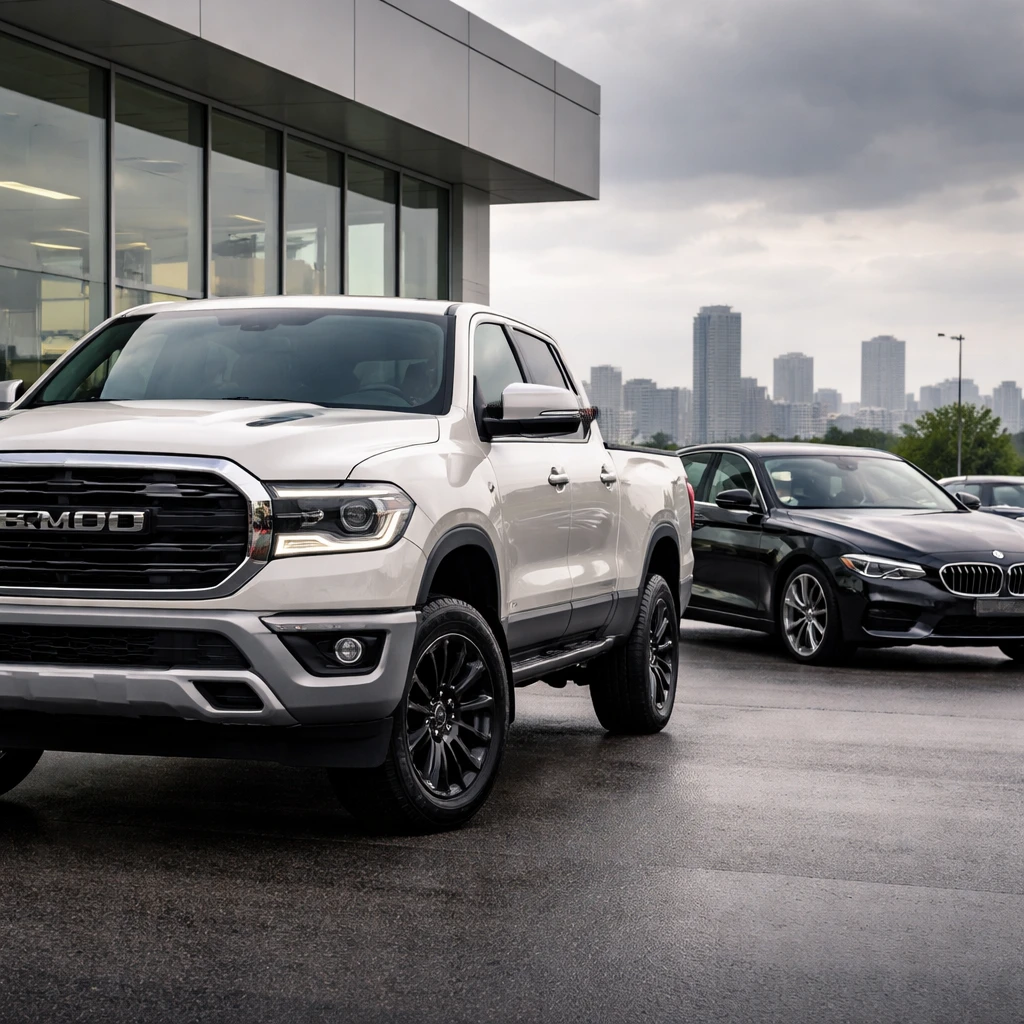
Automakers that rely on sales of large, combustion-engine pickups in the United States are currently reaping strong cash flow, even as other manufacturers contend with an increasingly competitive global market that is shifting toward electric vehicles and facing fresh pressure from Chinese entrants.
Stellantis provides a clear example of this divide. The group, which sells in both the U.S. and Europe, reported second-quarter results showing 6% sales growth in the United States, led by an 11% rise in sales of pickup trucks - a segment known for its high profit margins. The robust U.S. performance contrasts with more muted results in Europe, where Stellantis logged only 3% sales growth and said it had to reduce prices to respond to lower-cost imports from Chinese manufacturers.
Detroit competitors Ford and General Motors have already raised their profit forecasts for the year, explicitly pointing to strong U.S. pickup demand as a key driver. For the moment, that market - effectively closed to Chinese automakers - is offering established producers partial relief from competitive pressures they are encountering elsewhere.
But the uplift from legacy combustion-engine models can mask deeper structural challenges. French automaker Renault has publicly noted that it is fighting to avoid reducing prices in the face of Chinese competition, and analysts caution that relying on existing, profitable vehicle lines is not the same as funding the transition to electric vehicles.
Former Aston Martin chief executive Andy Palmer summed up the tension succinctly: firms selling pickup trucks in the U.S. are “profiting from legacy stuff,” yet risk failing to finance the shift to EVs if they do not make the transition. He warned that continued reliance on profitable internal combustion products without reinvestment could imperil long-term competitiveness.
At the premium end, Munich-based BMW illustrates how quickly fortunes can turn when China weakens. BMW reported a 30% drop in sales in China during the second quarter and is on track for a third straight year of declining sales in the world’s largest market. The company also posted a 35% quarterly fall in profits and said it would review working practices that had previously been treated as sacrosanct.
BMW’s problems were attributed in part to delays in launching its Neue Klasse, or "new class," of electric vehicles in China, where local automakers are rapidly introducing competitively priced, feature-rich electric models. As Chinese brands roll out premium-grade models at lower price points, traditional German premium manufacturers are feeling margin pressure and are increasingly forced into discounting to maintain volumes.
Other legacy premium manufacturers are taking stark measures. Porsche announced plans to cut one in five jobs after weak China sales, and Mercedes-Benz has removed sales and revenue forecasts amid similar market softness. Even Toyota, which has generally performed better than many legacy players, reported a 17.1% fall in China sales in the first half of the year.
The landscape described by automakers and industry figures highlights two concurrent trends: near-term profitability driven by high-margin combustion vehicle segments in certain markets, and a tougher strategic environment as manufacturers contend with a slower-than-ideal move to electric vehicles and intensifying competition from Chinese firms.
For investors, suppliers and labor markets, the split has practical implications. Firms with heavy exposure to profitable U.S. pickup sales may show stronger near-term results, while those dependent on premium volumes in China face deteriorating margins and the need for cost adjustments. Suppliers tied to internal combustion platforms may continue to benefit temporarily, but longer-term demand signals depend on how quickly legacy manufacturers allocate resources toward EV programs.