
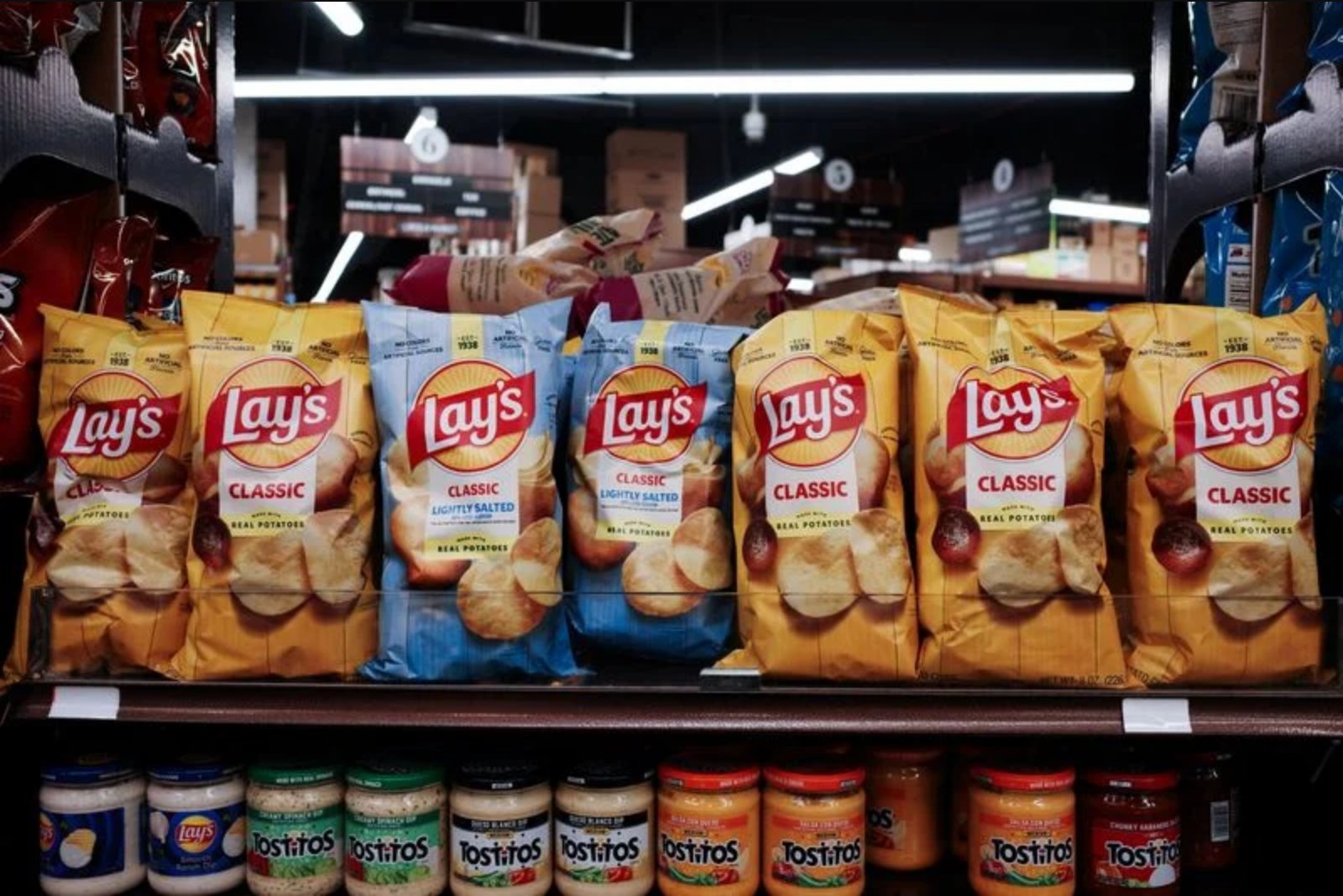
PepsiCo reported quarterly revenue that outpaced Wall Street forecasts, as demand for salty snacks in the United States improved and zero-sugar soft drinks remained resilient. The food and beverage company said second-quarter sales rose 6.4% year-over-year to $24.18 billion, above analysts' consensus of a 5.4% gain to $23.95 billion, according to data compiled by LSEG.
Despite the better-than-expected top-line performance, PepsiCo maintained its full-year guidance. Management signaled that growth in its largest market has been restrained by consumers tightening their budgets amid continuing inflationary pressures.
"Results were tempered in the quarter as U.S. food and beverage category performance moderated with consumer budgets tightening due to rising inflationary pressures," said CEO Ramon Laguarta in prepared remarks, underscoring the headwinds the company is seeing in North America.
On a forward-looking basis, PepsiCo reiterated its fiscal 2026 targets. The company expects organic revenue growth for fiscal 2026 to be in the 2% to 4% range. It also projects fiscal 2026 core constant currency earnings per share to increase by 4% to 6%.
The mix of product performance cited by PepsiCo highlights two contrasting trends: improving consumption of savory snacks in the U.S. and steady demand for zero-sugar beverage offerings. Those product-level dynamics helped lift quarterly revenue despite the broader moderation in consumer spending in its key market.
Investors will likely monitor how persistent inflationary pressure and consumer budget constraints affect demand in North America - a region the company identified as having moderated performance. For now, PepsiCo's management is keeping its annual outlook intact while calling out the impact of tighter household spending on near-term growth.
What this means
- PepsiCo reported a 6.4% rise in second-quarter revenue to $24.18 billion, beating estimates of a 5.4% rise to $23.95 billion.
- The company kept fiscal 2026 guidance unchanged, forecasting 2% to 4% organic revenue growth and 4% to 6% growth in core constant currency EPS.
- Management noted that rising inflationary pressures and tightened consumer budgets have restrained U.S. food and beverage category performance.