
Stock Markets June 11, 2026 07:02 AM

Oppenheimer: Separate Tesla and SpaceX Public Listings Best Serve Musk's AI Strategy

Firm raises Tesla estimates after SpaceX IPO but sees limited strategic rationale for an immediate merger

By Jordan Park
Share
Twitter Reddit Facebook LinkedIn
TSLA SPCX

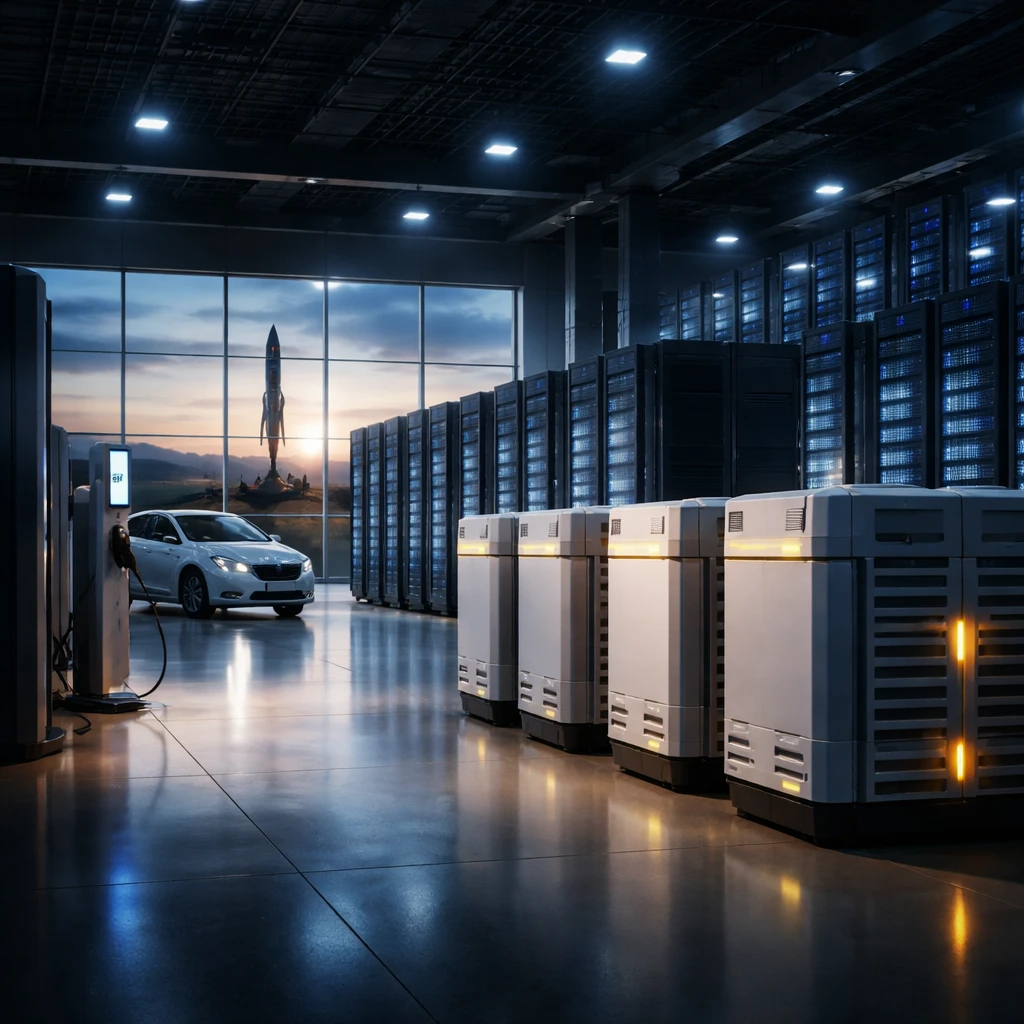
Oppenheimer raised its Tesla fiscal estimates in light of a SpaceX IPO but pushed back against investor chatter about a merger, arguing that two independent public companies provide the capital flexibility CEO Elon Musk needs to pursue AI ambitions. The firm raised revenue and EPS forecasts for 2026 and lifted vehicle and energy storage sales projections across multiple years while flagging that supply-chain synergies may develop ahead of any transaction.

Oppenheimer: Separate Tesla and SpaceX Public Listings Best Serve Musk's AI Strategy
TSLA SPCX
Summarize with
ChatGPT Perplexity Claude Grok Gemini

Key Points

  • Oppenheimer raised Tesla's fiscal 2026 revenue estimate to $97.2 billion and adjusted EPS to $2.03, up from $94.5 billion and $2.00.
  • The firm sees more value in keeping Tesla and SpaceX as separate public companies to preserve diversified access to capital that supports Musk's AI ambitions.
  • Energy storage and vehicle sales forecasts for Tesla were increased - energy storage sales raised 2% for the balance of 2026 and 3% for 2027 and 2028; vehicle sales raised 4% across 2026 through 2028. Sectors impacted include automotive, energy storage, and data center infrastructure.

Oppenheimer said Thursday that it has raised its projections for Tesla following the SpaceX initial public offering, but the firm cautioned that a combined Tesla-SpaceX entity does not appear to be the most strategically compelling path for CEO Elon Musk's long-term AI objectives.

Estimates revised higher

The firm increased its fiscal 2026 revenue estimate for Tesla to $97.2 billion and adjusted EPS to $2.03, up from prior estimates of $94.5 billion and $2.00. Oppenheimer also nudged up its revenue and earnings forecasts for fiscal 2027 and 2028, driven largely by higher expectations for stationary energy storage and vehicle sales.

Merger narrative assessed

Addressing the growing discussion among investors that Tesla and SpaceX might combine, Oppenheimer said Musk's "longer-term vision of AI is best served by diversified, flexible access to capital" and that maintaining "two public currencies supports that strategy most effectively." While the firm described a merger as "plausible," it characterized a near-term transaction as unlikely.

Oppenheimer expects that supply-chain synergies across areas such as energy storage, server infrastructure and data operations will continue to expand independently before any possible deal is pursued.

Near-term beneficiaries and sector impacts

The analyst team identified Tesla's stationary storage segment as a primary near-term beneficiary of the SpaceX IPO. The note argues Tesla's energy storage capabilities are "a key enabler of SPCX's time to power/compute," a dynamic that is helping drive cash flow through data center leasing activities. As a result, Oppenheimer raised its energy storage sales forecasts by 2% for the remainder of 2026 and by 3% for both 2027 and 2028.

On the automotive front, the firm cited elevated oil prices as supporting electric vehicle total cost of ownership for consumers across regions and increased its vehicle sales forecasts by 4% for each year from 2026 through 2028.

Remaining cautions

Despite the upward revisions, Oppenheimer remains cautious about commercialization timelines for advanced autonomy and humanoid robotics. The firm highlighted Full Self-Driving version 15 (FSD V15) as the next important proof point for Tesla's progress in autonomy.


This analysis underscores how capital structure and flexible financing options factor into long-range AI strategies, while also showing tangible near-term upside in Tesla's energy storage and vehicle revenue assumptions following the SpaceX IPO.

Risks

  • A near-term Tesla-SpaceX merger is considered unlikely by Oppenheimer, but the possibility remains - this uncertainty could affect investor expectations in technology and capital markets.
  • Commercialization timelines for autonomous vehicles and humanoid robots remain uncertain; FSD V15 is identified as a critical upcoming proof point, creating execution risk for the automotive and robotics sectors.
  • Supply-chain synergies across energy storage, servers and data may expand before any transaction, meaning anticipated benefits could materialize unevenly across energy and data center markets.

More from Stock Markets

Pentagon Seeks $13.7 Billion to Reverse Drop in F-35 Readiness Jun 11, 2026 Kimco Realty Shares Rise After Subsidiary Prices Upsized Exchangeable Notes Jun 11, 2026 UniCredit Reduces Moscow Footprint, Moves Russian Network Toward Remote Service Jun 11, 2026 GE Vernova Advances After Analyst Re-rating and Datacenter Demand Signals Jun 11, 2026 Oppenheimer Opens Wall Street Coverage of SpaceX, Issues Bullish Outlook Jun 11, 2026