
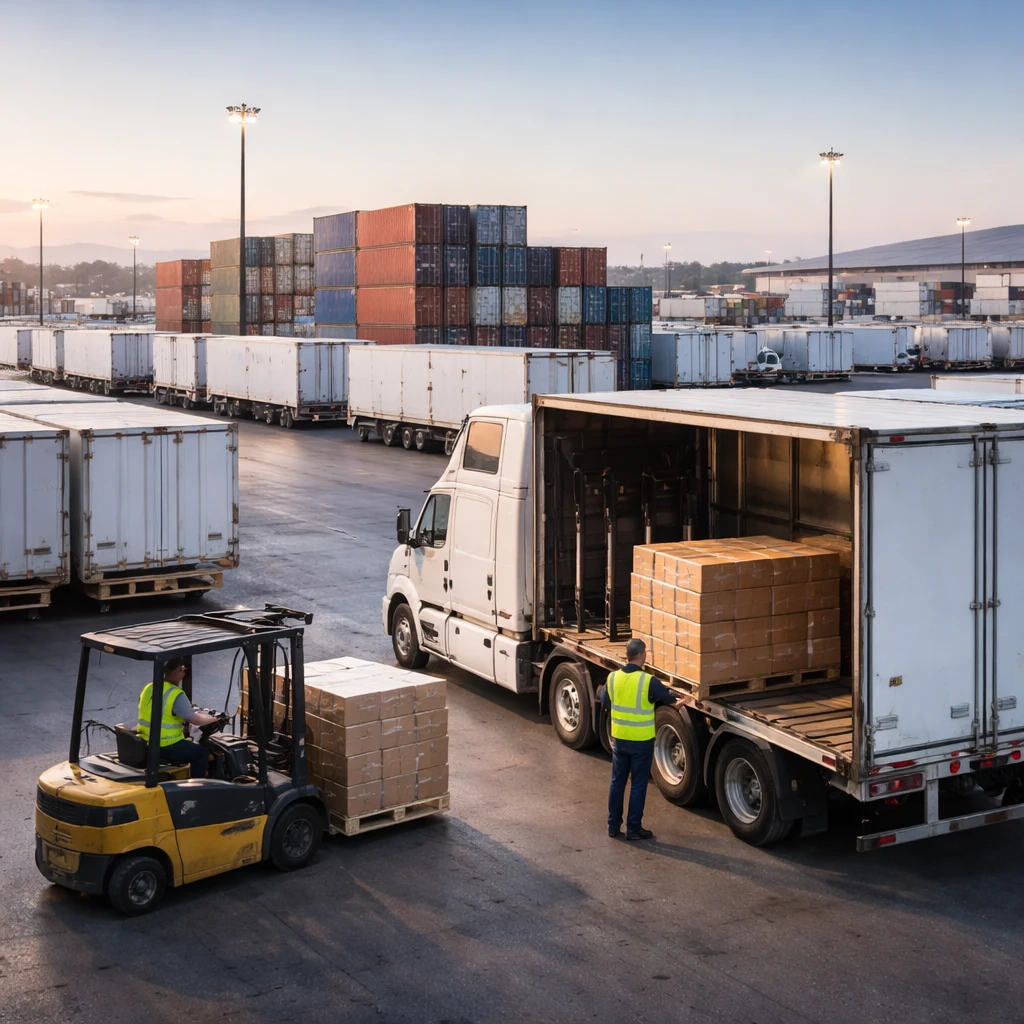
Old Dominion Freight Line stock declined 6.0% in morning trading, slipping to $233.72, after Amazon disclosed a full nationwide expansion of its less-than-truckload freight service. The company said the offering is now available to businesses of all sizes and will reach commercial destinations across the United States, including third-party warehouses, distribution centers, and retail partners.
The expansion represented a direct competitive challenge to Old Dominion's core LTL business, a segment that has been central to the company's strong profitability. Amazon has run a limited-capacity LTL service since 2019. Under the new nationwide push the service will leverage a fleet of more than 80,000 trailers and 24,000 intermodal containers to move palletized freight of between one and six pallets across the country.
Raymond James described the announcement as incrementally bearish for the long-term competitive landscape facing public LTL carriers. The firm said the short-term effects are likely to be concentrated among small and medium-sized enterprise shippers and retail-facing carriers that operate within Amazon's ecosystem. Raymond James noted that these customers tend to be more price-sensitive and more willing to accept the operational complexity involved in switching providers.
Amazon Freight Director Jim Ruiz was quoted in the company announcement saying that "the technology, visibility, and reliability were exactly what they needed - and they wanted to use it more broadly," highlighting a demand-driven rationale for the expansion.
Market reaction extended beyond Old Dominion. Industry peers such as XPO and Saia posted declines, and shares of FedEx - which recently completed a spin-off of its FedEx Freight unit - also moved lower. The wider U.S. equity market provided limited support for the sector: the S&P 500 edged down 0.2%, the Dow Jones Industrial Average declined 0.4%, and the Nasdaq slipped 0.2% during the same session.
Amazon's nationwide LTL product targets conventional LTL shipments of one to six pallets, with weights ranging from 150 to 15,000 pounds. The service offers next-day live pickup for orders placed by 5 p.m., and standing daily pickups are available for shippers with higher volume needs.
Market participants pointed to a combination of factors that contributed to the outsized decline in Old Dominion's shares. Those factors included a disruptive competitive announcement from a major logistics operator, a richly valued stock trading near all-time highs, and a modestly negative backdrop in broader equity markets. While Old Dominion's operational performance and service quality remain benchmarks in the industry, investors are now pricing in the risk that Amazon's nationwide LTL initiative could exert meaningful pressure on volumes and yields for carriers across the sector going forward.
Context and implications
Observers emphasized that the immediate vulnerability is likely to be concentrated among shippers and carriers that are more exposed to pricing pressure and have closer ties to Amazon's logistics network. The degree to which larger, long-established LTL carriers will be affected depends on how market share and pricing dynamics evolve as Amazon scales the offering.