
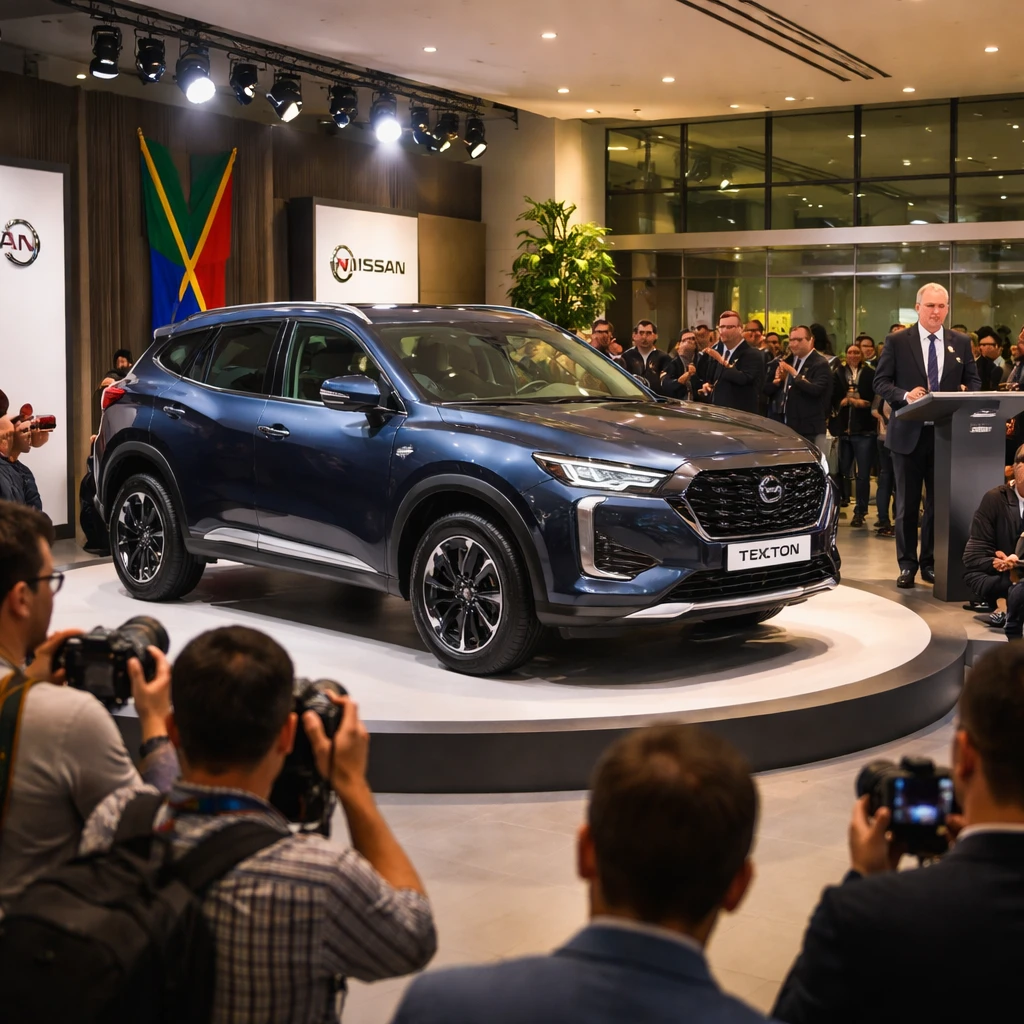
Nissan Motor Co has unveiled the Tekton SUV in South Africa, presenting the model as the opening act in a wider product rollout for the continent's largest auto market. The launch arrives after Nissan ceased vehicle production in South Africa earlier this year and sold its Pretoria manufacturing facility to Chery Automobile Co (HK:9973).
At the launch event, Nissan Africa President Jordi Vila addressed the company’s departure from local assembly. "Unfortunately, we had to stop the activity of manufacturing in South Africa. We’re maximising capacity in other plants, and that makes us more competitive, which hopefully we see in the vehicles we bring," Vila told reporters.
The Tekton will be offered in South Africa with a starting price of 339,999 rand ($20,939.64). The model is manufactured in India, and South Africa serves as the first African market to receive the Tekton after its global debut in India.
Vila framed the vehicle’s intent in product terms. "It’s designed to compete, it’s designed to stay relevant and most of all it is designed to let South Africans fall in love again with the brand that has been part of our lives," he said.
The introduction of the Tekton comes as part of a broader shift in Nissan’s footprint: the company is moving toward an import-based approach in South Africa and implementing a global restructuring program that emphasizes cost reduction. That program includes plant closures, workforce reductions and a narrower vehicle lineup.
For local consumers and channel partners, the Tekton represents Nissan’s first tangible product bet since exiting local manufacturing. Positioned as a competitive entrant in the market, the model’s India-based production underlines Nissan’s strategy to leverage other plants to serve markets it no longer produces in domestically.
Industry participants and observers will watch how the Tekton’s market reception translates into renewed brand momentum in South Africa, particularly given questions that arose earlier this year about Nissan’s commitment to the country after the Pretoria facility sale to Chery Automobile Co (HK:9973).
Market and strategic context
Nissan’s decision to supply South Africa through imports fits within its stated global cost-cutting measures. The company is rebalancing production capacity across remaining plants to improve competitiveness and to support the vehicles it intends to introduce in markets where it no longer maintains manufacturing operations.