
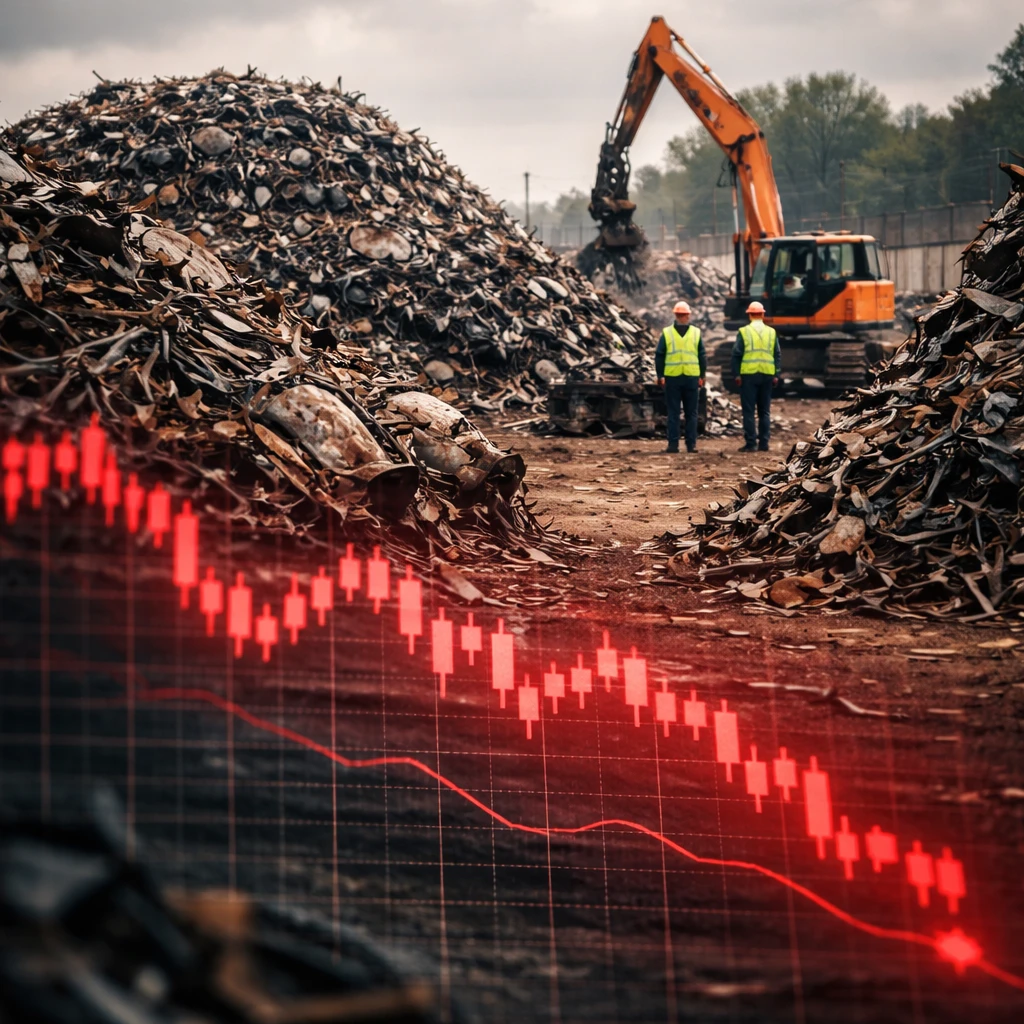
Shares of Mitsubishi Materials dropped 7.3% on Thursday after the company disclosed plans to issue ¥70 billion in convertible bonds, a move that prompted investor concern about the potential for future shareholder dilution.
The proposed offering is divided into two tranches that mature in 2030 and 2032. The company indicated that the securities will be placed mainly with European and Asian institutional investors. According to the announcement, funds raised will be allocated to investments tied to a transformation of Mitsubishi Materials' business structure, with particular emphasis on growing its metal recycling operations.
Market participants reacted quickly to the announcement. Trading activity surged early in the session, with volume reaching approximately 25% of the stock's five-day average within the first hour of trading. While the conversion prices are set at ¥5,275 for the 2030 tranche and ¥5,105 for the 2032 tranche - levels described by the company as representing meaningful premiums to the current share price - the outline of the transaction was sufficient to trigger widespread selling by existing shareholders concerned about dilution.
The stock underperformed the wider Japanese market on the day: the Nikkei 225 advanced by more than 1%, driven by strength in technology stocks, while Mitsubishi Materials lagged amid the bond news.
Details of the issuance
- Aggregate size: ¥70 billion in convertible bonds.
- Maturities: two tranches maturing in 2030 and 2032.
- Intended investors: primarily European and Asian institutional investors.
- Use of proceeds: investments to transform the business structure, with a focus on metal recycling expansion.
- Conversion prices: ¥5,275 (2030) and ¥5,105 (2032), both noted as significant premiums to the current share price.
The market's swift response, marked by elevated trading volume and a marked share price decline, highlights investor sensitivity to equity-linked capital raises and the potential implications for existing equity stakes. The company has framed the issuance as funding for strategic transformation initiatives, particularly in recycling, but the immediate effect was increased selling pressure among shareholders.
Information in this report is limited to the details disclosed by the company regarding the size, structure, targeted investors, intended use of proceeds, conversion prices and observed market reaction.