
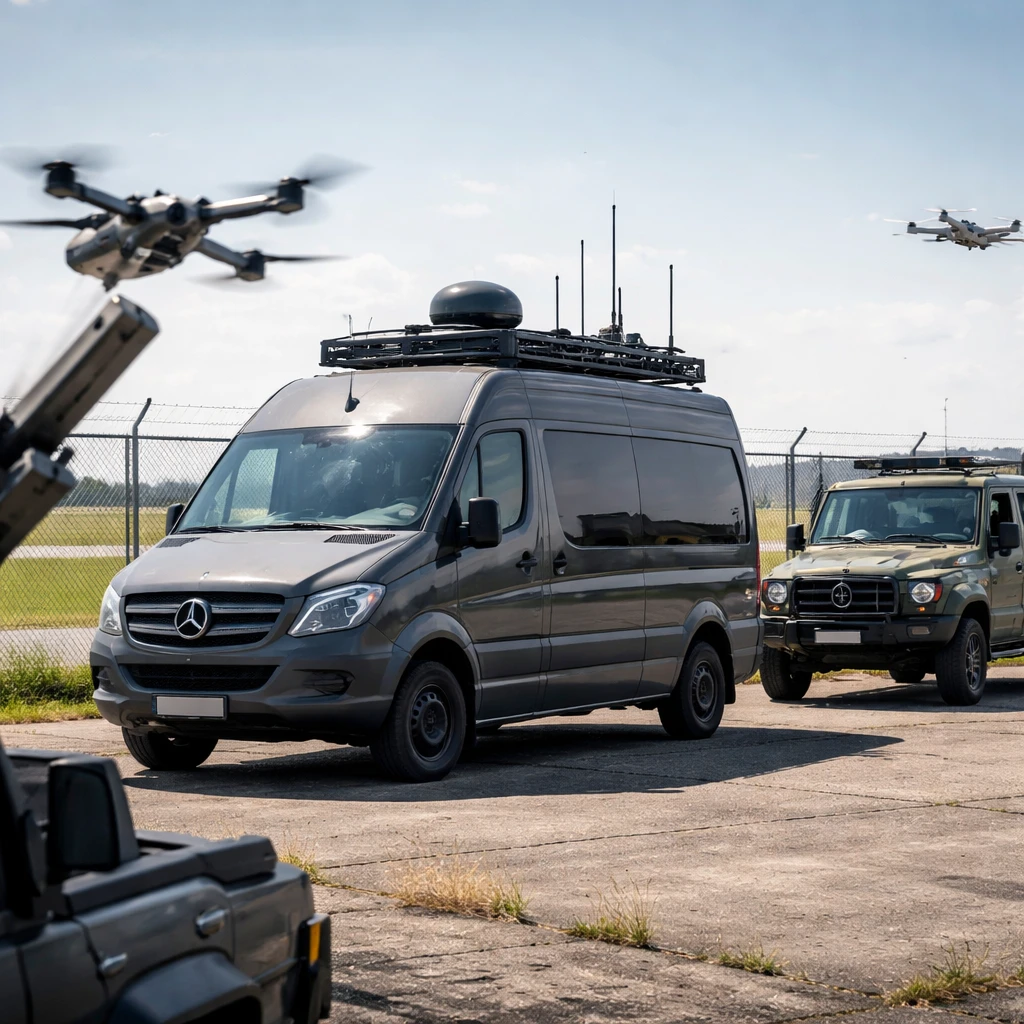
Mercedes-Benz and Munich-based Tytan Technologies have agreed to collaborate on a mobile drone-defence solution, Tytan said on Wednesday. The memorandum of understanding was formalized during the ILA aviation conference in Berlin.
Under the terms of the agreement, Mercedes-Benz will supply vehicle platforms to host the mobile system - specifically its Sprinter van and a military-spec variant of the G-Class SUV. Those vehicles are intended to serve as the transport and deployment platform for a system designed to counter small first-person-view unmanned aerial vehicles that are identified as threats to airports and other pieces of critical infrastructure.
Tytan will contribute the interceptor drones themselves. According to the company, these interceptor drones are built to destroy unmanned aerial vehicles that have been classified as threats following detection and identification procedures.
The partnership was framed by Tytan's assessment of the security environment. "The threat is real, every day we see aircraft flying over German and European critical infrastructure," said Tytan CEO Balazs Nagy.
Project roles and capabilities
- Mercedes-Benz - provision of two vehicle platforms: the Sprinter van and a military version of the G-Class SUV to house and move the counter-drone system.
- Tytan Technologies - supply of interceptor drones engineered to neutralize small FPV drones deemed threats.
Context and deployment intent
The stated focus of the collaboration is a mobile air-defence capability aimed specifically at small FPV drones that can present security hazards to aviation operations and to other sensitive infrastructure. The agreement announced at the ILA conference indicates an operational concept in which detection, identification and interception elements are combined into a deployable platform mounted on road vehicles.
Summary assessment
The MoU establishes a clear division of responsibilities: Mercedes supplies mobility and integration platforms, while Tytan supplies the intercepting unmanned systems. Public comments from Tytan underline a perceived and ongoing risk from small drones operating near critical infrastructure. The announcement does not provide further technical details, operational timelines, procurement schedules or information on testing and certification processes.