
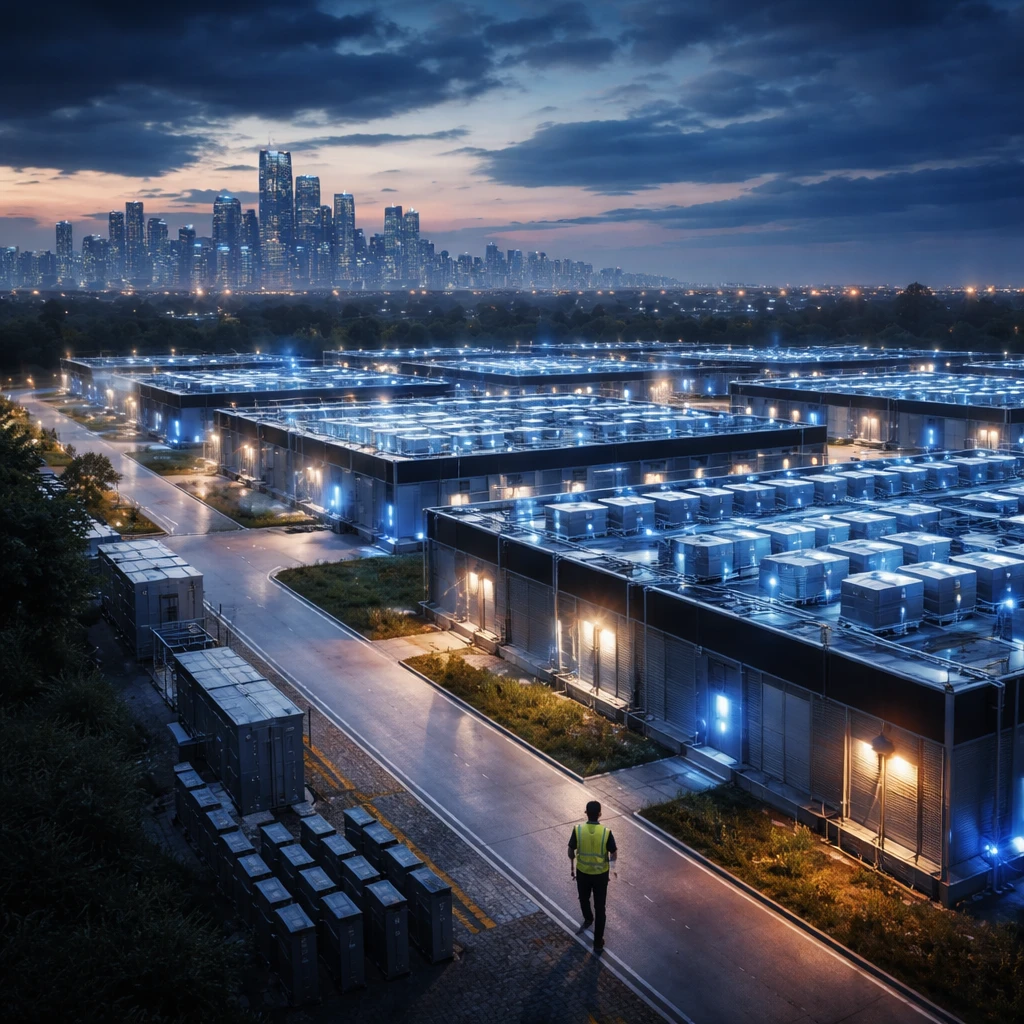
Goldman Sachs is challenging prevailing Wall Street assumptions on hyperscaler capital expenditure for 2027, arguing that current analyst projections understate the size of potential AI-related investment.
Analyst Ryan Hammond noted that the set of analyst estimates presently implies hyperscaler capex of about $920 billion in 2027. That figure would mark a pronounced slowdown in growth relative to the prior year, moving from an 84% year-over-year increase in 2026 to roughly 22% in 2027 according to the consensus path.
Goldman’s own modelling offers materially higher alternatives. In a scenario where incremental AI spending reaches between 2% and 3% of gross domestic product - a level the bank likened to historical large-scale infrastructure build-outs - hyperscaler capex would climb to about $1.1 trillion in 2027. That outcome implies approximately 45% growth versus 2026.
Goldman also outlined a more extreme upside case. Under that scenario, the combination of stronger cash flow generation and available capacity in investment-grade credit markets could support hyperscaler capex near $1.4 trillion in 2027, which would represent roughly 89% growth year over year.
Hammond said that additional AI capital spending would create upside pressure on earnings and share prices for companies that supply AI infrastructure in the near term. At the same time, he warned that "recent valuation expansion and positioning dynamics suggest additional volatility ahead."
The firm pointed to current valuation levels in the AI infrastructure space: the median AI infrastructure stock now trades at a price-to-earnings multiple of 26x, which Goldman says is the highest recorded since the introduction of ChatGPT.
Goldman also addressed enterprise adoption of AI, describing corporate commentary as mixed. The bank observed that around 54% of companies mentioned AI when discussing productivity on first-quarter earnings calls, but only about 2% of firms attempted to quantify the impact of AI on earnings. Goldman characterized that pattern as evidence that enterprise adoption remains nascent.
Finally, the bank noted that debate over whether firms are "AI enabled" or "AI disrupted" will continue to create dispersion in returns, a dynamic it expects to be especially pronounced within the software sector, where valuations have shifted sharply during the year.
Implications and context
Goldman’s higher-capex scenarios imply larger potential demand across data center construction, servers, networking equipment, and related services. Those upside paths would likely benefit suppliers and service providers tied to hyperscaler expansion, while also heightening sensitivity to valuation and positioning in public markets.