
House Republican leaders have circulated a dramatically scaled-back reconciliation framework that pares the defense component to $60 billion, down from an earlier $350 billion objective. The move, described by Wolfe Research as improving the bill's passage chances only modestly, also sharply reduces how consequential the measure would be for investors.
The draft budget resolution sets out the specific allocations that would underpin reconciliation work: $60 billion for the Armed Services Committee, $13 billion for Intelligence, $11 billion for Agriculture and $10 billion for Administration. Those totals are intended to establish the procedural basis for a reconciliation bill, but they represent a much narrower fiscal footprint than originally contemplated.
Wolfe Research characterizes the reduction in scale as a reflection of political constraints inside Congress. Lawmakers have reportedly had difficulty identifying offsets that would finance a substantially larger defense package, which helps explain why the proposal has been compressed to the current figures.
The research firm noted the revised proposal aligns with its prior view that Congress is unlikely to approve a major structural increase in defense spending. Rather than expanding long-term defense budgets, the package appears focused on covering near-term costs tied to the conflict with Iran, effectively substituting for the administration's previously requested $67 billion supplemental defense ask instead of adding new, ongoing spending.
Wolfe also suggested that bringing the White House and congressional leaders into closer agreement on a narrower bill marginally raises the odds of enactment. Even so, the firm emphasized that substantial obstacles persist. It highlighted three specific impediments: the House's slim Republican majority, procedural complexities in the Senate and a compressed legislative calendar leading up to the midterm elections.
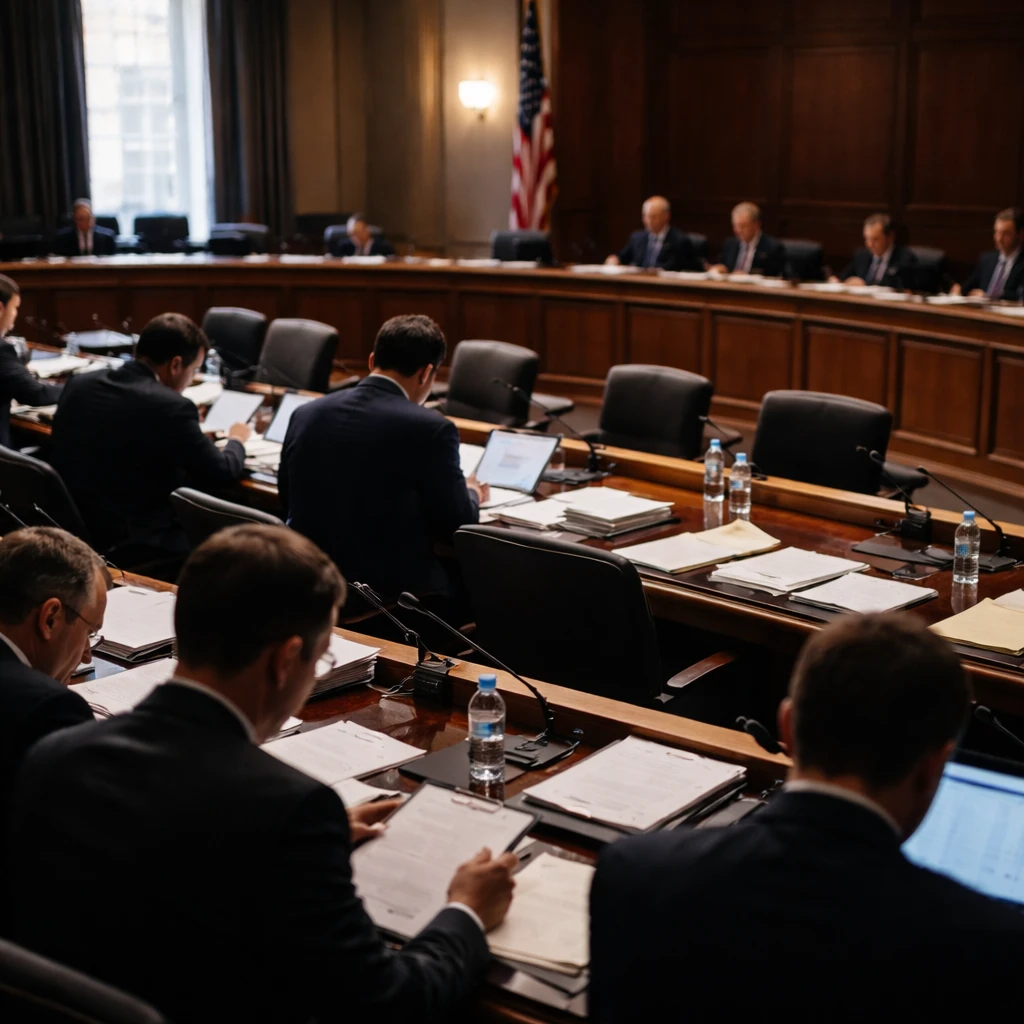
Procedurally, the House Budget Committee was scheduled to begin marking up the framework before the measure would move to the House floor and then to the Senate. Wolfe said that, even with an optimistic schedule, any final legislation is unlikely to be enacted before September.
Despite the change in approach, Wolfe Research maintained its expectation that total U.S. defense funding will remain broadly steady. Congress is expected to cover war-related expenses, but the firm does not anticipate a meaningful long-term expansion of defense spending through either reconciliation or routine appropriations.
Contextual note: The reduced scope is portrayed as a pragmatic adjustment to political realities and does not, according to Wolfe Research, represent an increase in baseline defense commitments.