
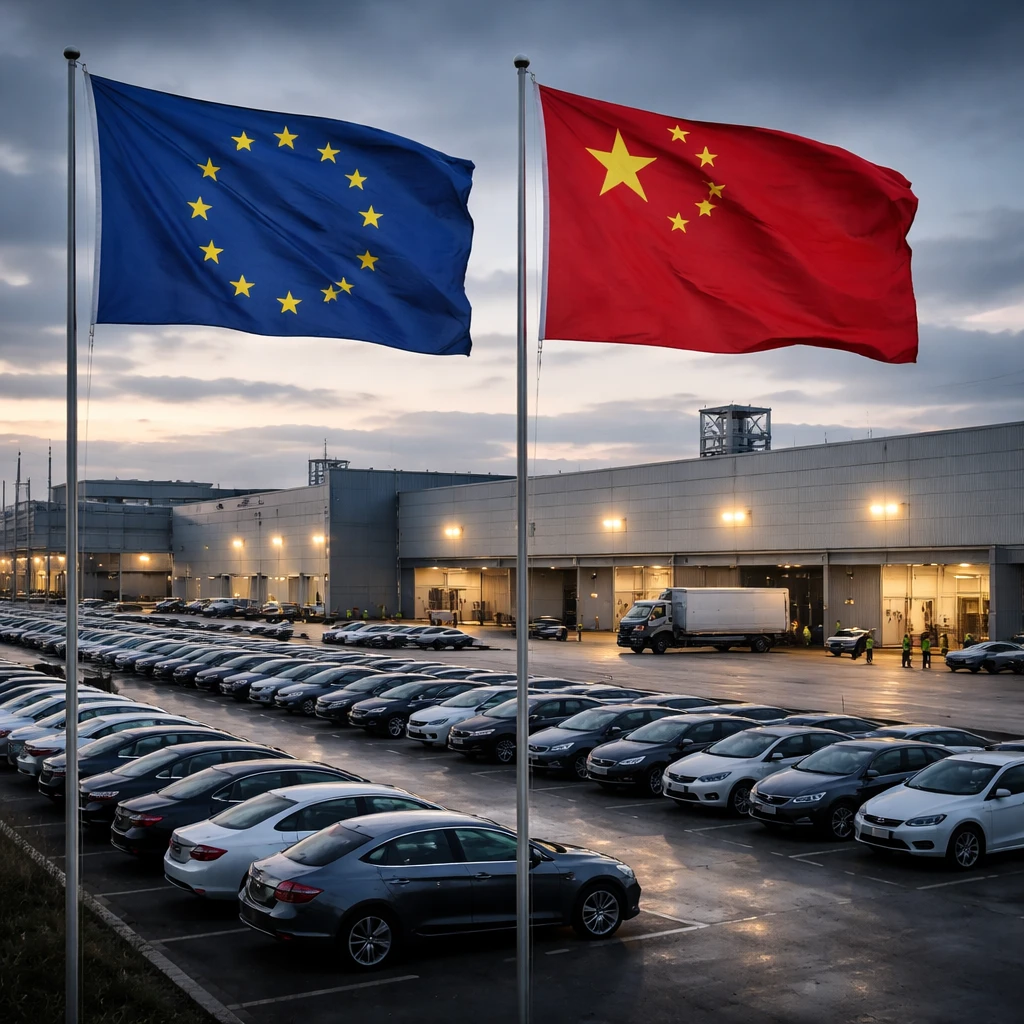
A senior economy minister from Saxony has proposed that the European Union examine the possibility of increasing import tariffs on cars made in China, framing the measure as leverage to encourage Chinese automakers to enter into joint ventures with European carmakers.
Dirk Panter, who serves as economy minister for the eastern German state of Saxony, made the remarks in an interview with the Bild newspaper on Thursday. Saxony hosts one of Volkswagen's key factories, giving Panter's comments a local economic context.
The appeal for higher tariffs follows a warning from Volkswagen that it could shutter four German factories in coming years if alternative arrangements are not reached. Among the facilities identified was the Zwickau plant in Saxony, which produces all-electric vehicles.
Volkswagen's chief executive, Oliver Blume, has described several potential responses to the challenge, including the option of manufacturing models that were developed in China at European plants. He has also raised the prospect of forming partnerships with Chinese carmakers.
Panter suggested a strategic link between tariffs and joint ventures. "If a joint venture in Saxony could help avoid European tariffs, that would be a bargaining chip that would allow us to negotiate from a completely different position," he told Bild.
The minister acknowledged that Chinese firms are growing their presence in European markets. He pointed to companies such as BYD, which have bolstered share in Europe with plug-in hybrid models. Those models, Panter noted, are not subject to the European Union's current tariff regime for all-electric vehicles.
At the same time, Panter said that blocking Chinese manufacturers from the European market is not the objective. "We will not keep Chinese manufacturers out of Europe," he said, adding that access should come with commitments to creating value and employment within Europe.
Context and implications
- Saxony's economy is closely tied to automotive production, including Volkswagen operations.
- Volkswagen has signaled potential factory closures unless commercial or strategic solutions are found.
- Chinese automakers continue to increase market share in Europe, using product lines that may not fall under existing tariffs.