
First Solar shares climbed roughly 5.5% in mid-day trading following reports that the Trump administration is preparing to impose a 15% tariff and a set of minimum import prices on polysilicon and its derivative products - including wafers, photovoltaic cells and finished solar modules. The measures reportedly could be announced as soon as this week and would be implemented under Section 232 of the Trade Expansion Act of 1962, the authority that allows the U.S. President to restrict imports deemed a national security risk, according to the reporting.
The proposed package would reach beyond raw polysilicon to encompass downstream components in the crystalline silicon supply chain, a move that market participants say would alter competitive dynamics for solar-module manufacturers in the U.S.
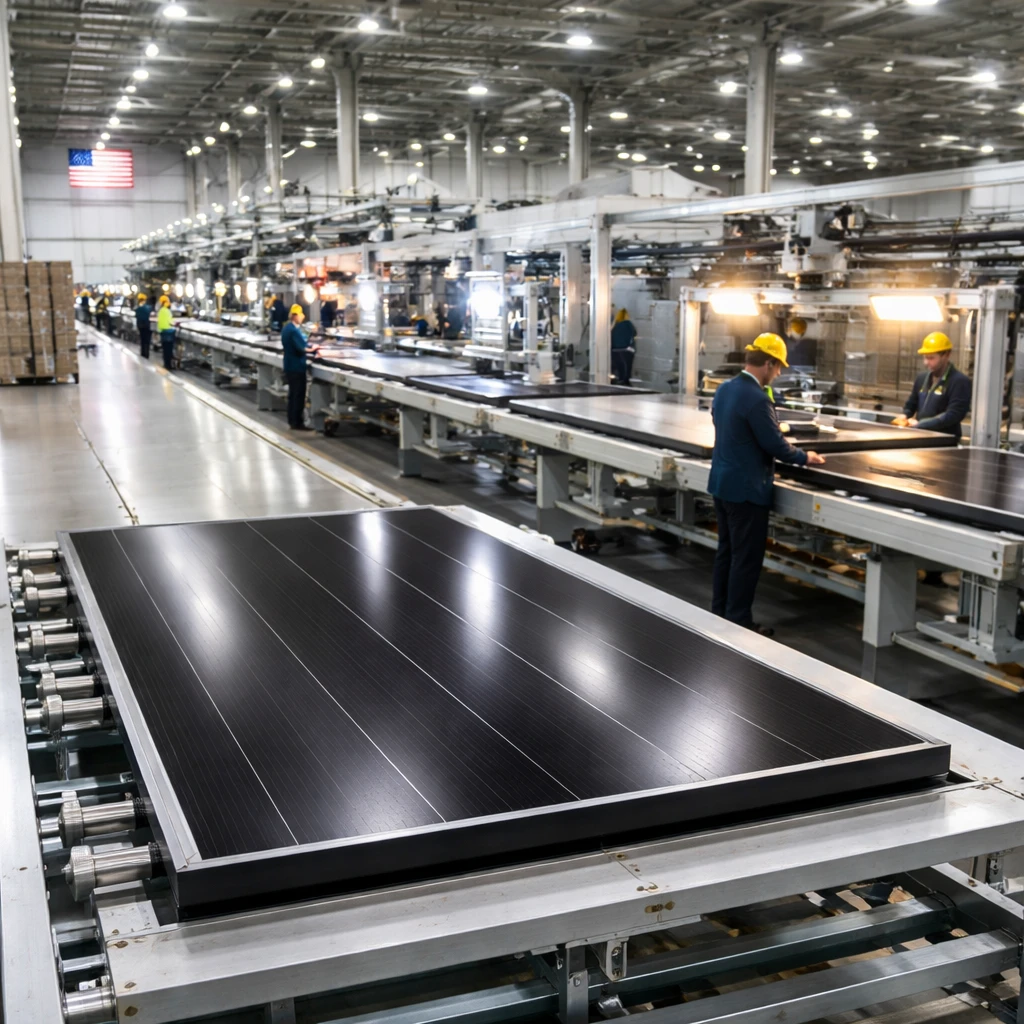
First Solar’s business model makes it a clear beneficiary in this scenario. The company manufactures cadmium telluride (CdTe) thin-film photovoltaic modules using a fully integrated, continuous process that does not depend on Chinese crystalline-silicon inputs. As a result, tariffs aimed at imported polysilicon and related goods would likely increase costs for firms tied to silicon supply chains while leaving First Solar’s cost structure largely intact.
Analysts have highlighted Section 232 as a likely "positive catalyst" for the CdTe thin-film producer, citing the technology’s insulation from the trade dispute over silicon-based products. That structural separation from polysilicon inputs, combined with greater regulatory clarity, has been presented by some market observers as a potential trigger for re-pricing domestic manufacturers’ competitive positions.
First Solar also entered the day with momentum from its Q2 2026 results. The company reported net income of $423 million, or $3.92 per diluted share, a 23% increase year-over-year and well ahead of consensus expectations. Management disclosed a contracted sales backlog of 45.1 GW as of June 30, 2026, with that backlog extending through 2030. These elements - earnings outperformance and a large multi-year backlog - provided a backdrop that amplified investor response to the trade-policy reports.
The broader market offered little lift. The S&P 500 slipped 0.3%, the Dow Jones Industrial Average fell 0.7% and the Nasdaq Composite edged down 0.2% on the same session, underscoring that the move in First Solar was driven primarily by company- and sector-specific developments rather than a market-wide rally.
News of the prospective polysilicon measures sent other U.S.-based solar manufacturers higher as well, reflecting a broad reassessment of the economics for domestic production. Market commentators noted that regulatory clarity - or restrictions on imported polysilicon - could materially improve the near-term manufacturing economics for U.S. producers and help convert demand visibility into executable customer orders.
During its Q2 earnings discussion, First Solar emphasized several pillars that management said underpin its long-term strategy: strong demand visibility, continued expansion of U.S. manufacturing capacity, improving technology execution and the company’s policy-driven advantages. The tariff reports appeared to validate, at least in part, the company’s public thesis by reinforcing advantages tied to domestic manufacturing and technology differentiation.
In combination, the potential Section 232 polysilicon measures and the residual tailwind from a decisive Q2 earnings beat helped drive First Solar’s stock meaningfully higher despite a weaker overall tape. Observers caution that the final shape and timing of any policy action will dictate how persistent the re-pricing of domestic solar makers will be.
Summary
First Solar rallied after reports that the administration plans a 15% tariff and minimum import prices on polysilicon and related downstream products under Section 232. The company's CdTe thin-film, vertically integrated manufacturing process is not reliant on crystalline silicon inputs, making it relatively insulated from the proposed measures. A strong Q2 2026 earnings beat and a 45.1 GW contracted backlog provided an earnings backdrop that amplified the market reaction.