
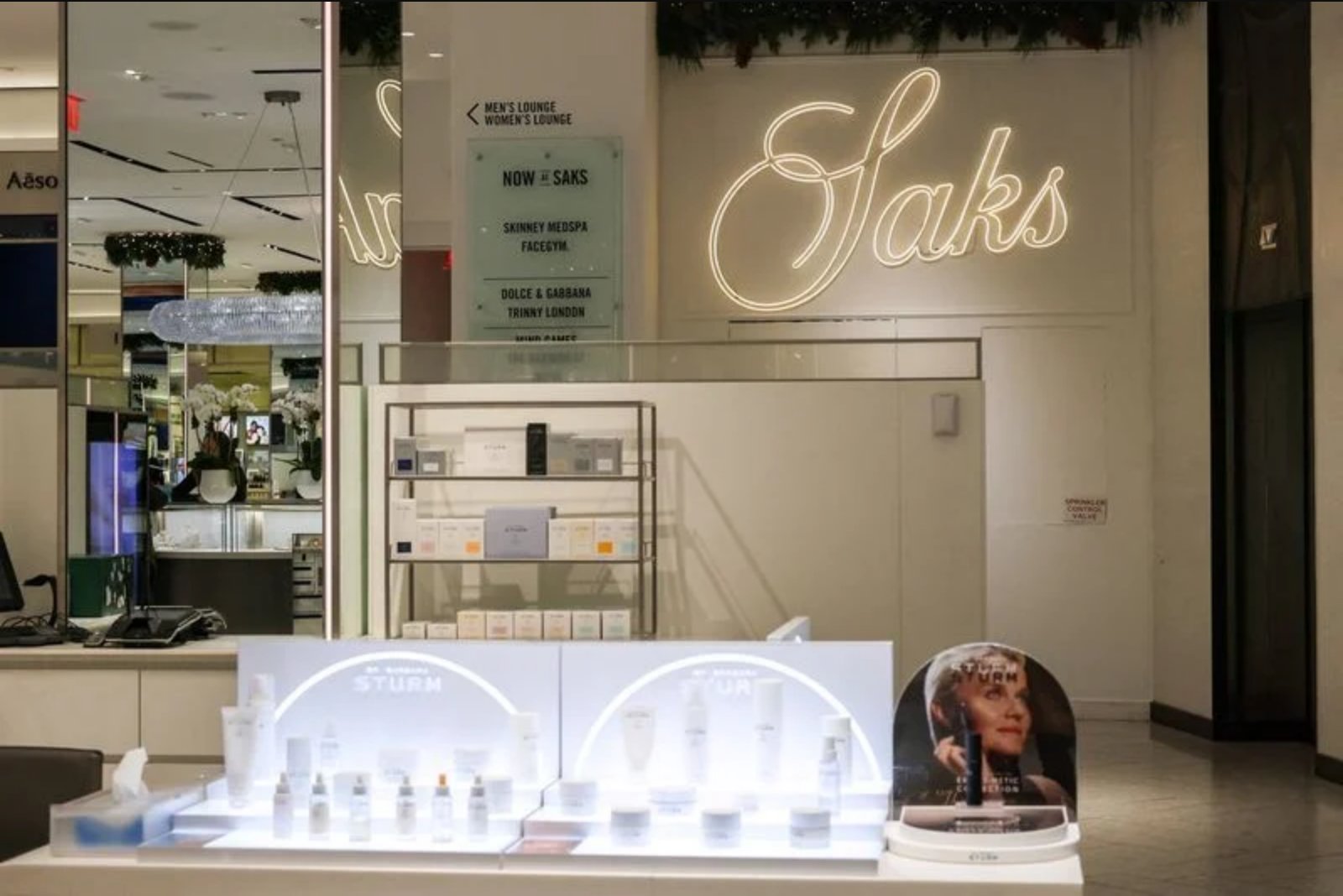
Exemplar Luxury Group - the entity created out of last year’s debt-heavy merger that brought together Saks Fifth Avenue, Neiman Marcus and Bergdorf Goodman - has completed its Chapter 11 reorganization after a period of vendor payment delays and withheld inventory. The company emerged with a much smaller physical footprint and a clarified strategic emphasis on high-end luxury, seeking to close a difficult chapter in its retail history.
The restructured company, which includes names that have long anchored U.S. luxury retail, trimmed its store network by more than half to concentrate on its strongest premium locations and largely stepped away from off-price formats. Management says that narrowing the footprint will help the business pursue its financial targets, among them a compound annual revenue growth rate of 7% between fiscal 2027 and 2030.
At the same time, the restructuring dramatically reduced the company’s leverage, cutting debt by roughly 75% to about $1.2 billion and transferring ownership from prior shareholders - including Amazon - to the company’s senior lenders. The ownership reset came as the group, which has been renamed Exemplar Luxury Group, sought to stabilize cash flow and reestablish vendor and shopper confidence following its January Chapter 11 filing.
That filing followed a period in which suppliers reported delayed payments and inventory was reportedly held back, developments that contributed to the decision to seek court protection. The company also moved to end its previous e-commerce partnership with Amazon as part of a broader retreat from mass-market channels in favor of higher-end direct and wholesale retailing.
Despite the reorganization and a lighter balance sheet, the central question for the newly structured group is whether it can regain customer traffic and sales in a luxury market that is already under pressure. Mark Cohen, former director of retail studies at Columbia Business School, noted the uncertainty around consumer return and the stronger tendency of top luxury houses to prioritize their own stores for the best merchandise during periods of supplier stress.
The competitive landscape has shifted as rivals such as Bloomingdale’s and Nordstrom have actively pursued business that might otherwise have gone to the refocused luxury group. Analysts and industry observers say the company will need to demonstrate consistent, positive sales to validate its recovery projections, which some see as optimistic given market conditions and brand behavior.
Vendor dynamics were a significant factor throughout the bankruptcy process. Some of the largest luxury brands secured prioritized payouts for pre-bankruptcy claims, according to people with direct knowledge of the payments, while many smaller suppliers faced limited recovery. That pattern underlines the negotiating leverage premium brands retain as Exemplar Luxury Group pivots toward high-end retailing.
Wholesale remains a substantial part of the group’s model. A company spokesperson indicated that wholesale accounts for 75% of sales and suggested that the channel will represent an even larger share going forward, even as the company says it will continue to work with brands on joint strategies. At the same time, the company is retaining hundreds of so-called concession and consignment agreements that let vendors lease space in department stores or keep ownership of inventory until it sells, according to court filings.
Those arrangements appeal to brands seeking to protect inventory and cash flow in a retailer that has experienced financial disruption. Some designers and labels that do not currently participate under concession or consignment terms are reportedly pursuing such agreements as a hedge against future instability, though the shift could create new tensions between the retailer and smaller vendors.
Smaller suppliers, in particular, appear to have been disadvantaged by the bankruptcy. One vendor owed at least $20,000 in unpaid invoices said he recovered none of his pre-bankruptcy claims and has abandoned hopes of getting the money back. Company statements indicate that nearly half of the vendors offered recovery on pre-petition claims were small and independent designers and brands, reflecting the disparate outcomes from the reorganization.
Industry executives and strategists interviewed for the record described a market in which established luxury houses have the resources to negotiate protected positions and where smaller, emerging brands encounter greater exposure to retailer distress. Gary Wassner, CEO of Hilldun, said high-end designer and luxury is the category the company understands best. Jonathan Saven, CEO of women’s fashion brand L’Agence, expressed trust in Exemplar Luxury Group’s new management to operate the business effectively. Thomai Serdari, a luxury brand strategist and professor at NYU’s Stern School of Business, cautioned that systems favor brands with more capital and that concession and consignment arrangements may further squeeze smaller players.
For the restructured group, the interplay between store rationalization, vendor agreements and channel mix - including a heavier reliance on wholesale paired with retained concession deals - will determine how successfully it can re-attract shoppers and restore stable supplier relationships. Management’s financial targets are explicit, but converting a leaner physical and balance-sheet footprint into durable top-line growth depends on regaining product access from major brands and proving to customers and vendors alike that the company is a dependable partner.
Summary - Exemplar Luxury Group emerged from Chapter 11 after reducing stores and cutting debt, refocusing on high-end luxury and projecting a 7% revenue CAGR for fiscal 2027-2030. The company shed prior shareholders and shifted control to senior lenders, ended an e-commerce partnership with Amazon, and preserved concession and consignment arrangements that favor larger brands. Smaller vendors have faced uneven recoveries.
- Key points:
- Exemplar Luxury Group cut its store base by more than half to concentrate on premium locations and largely exited off-price formats.
- Debt was reduced by about 75% to roughly $1.2 billion and prior shareholders, including Amazon, were wiped out; control passed to senior lenders.
- Wholesale accounts for 75% of the company’s business and the company plans to prioritize that channel while maintaining concession and consignment agreements with vendors.
- Sectors affected: luxury retail, department stores, branded apparel and e-commerce partnerships.
- Risks and uncertainties:
- Customer reclamation - It is unclear whether shoppers will return to the relaunched stores in a strained luxury market, putting revenue forecasts at risk.
- Vendor relationships - Larger luxury brands have secured preferential recoveries, while smaller suppliers may remain vulnerable, potentially disrupting product assortment and supply continuity.
- Competitive displacement - Rivals such as Bloomingdale’s and Nordstrom have sought to capture business during the retrenchment, which may limit market share recovery.
Tags: luxury, retail, bankruptcy, ecommerce, brands