
Overview
Venezuelans are again being asked to reduce electricity and water use as government officials warn that El Niño is already affecting the country and could bring drought before the end of the year. The appeal comes amid a period of acute strain on public services less than two months after twin earthquakes killed more than 6,000 people and damaged infrastructure in several regions.
Public reaction and immediate conditions
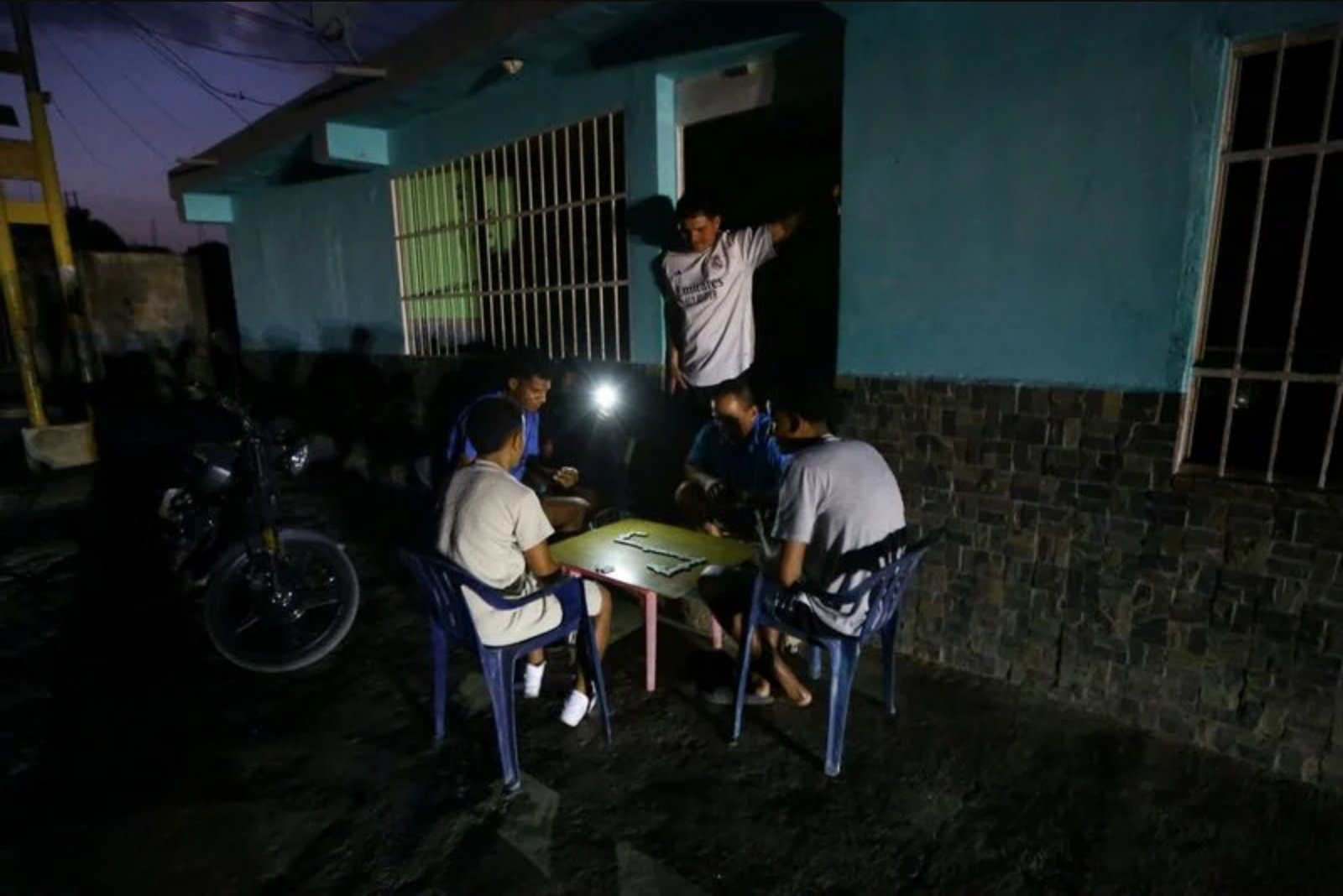
The call for expanded conservation has catalyzed fresh protests in regions where households and businesses are contending with severe service interruptions. Many areas report planned electricity cuts of up to 10 hours per day, frequent equipment failures that can produce multi-day blackouts, and an irregular supply of running water.
"I can’t wrap my head around more power savings measures if we don’t have it at all," said Mariela Nunez, a 75-year-old retired teacher in the central city of Valencia, where rolling outages are lengthening. She said power is often cut without notice and that the heat prevents sleep. Nunez also noted she lacks an elevator to travel to and from her 12th-floor apartment.
System capacity and vulnerabilities
Government data cited by officials indicate Venezuela has less than 13,000 megawatts (MW) of generation capacity available from an installed base of 36,000 MW. Authorities say there is a shortfall of more than 1,500 MW between current supply and demand that they are trying to avoid widening.
Analysts and engineers point to chronic problems in thermal generation. An energy expert, Nelson Hernandez, reported earlier this year that nearly 90% of thermal capacity is out of service after years of underinvestment and postponed maintenance. That deterioration has driven reliance on hydropower - primarily from the Guri dam system in the south - to account for over 80% of power generation.
Interim President Delcy Rodriguez has publicly said the warming Pacific phenomenon is already affecting Venezuela and could bring drought before year-end, making conservation necessary. She has also announced commitments to restore as much as 4,800 MW of installed capacity by year-end, pointing to recently signed contracts with GE Vernova and IMPSA for upgrades and installation of new turbines as contributors to increased supply.
But previous unfulfilled promises have left consumers and business leaders skeptical that the measures will arrive in time to head off further disruptions.
Expert and local perspectives
"We must be honest. El Niño is not the cause of the public services’ crisis," said Jose Antonio Robles, head of Zulia state’s engineers’ center. He said El Niño only exacerbates an existing shortfall caused by years of underinvestment and the deterioration of transmission and distribution networks, which have left the grid unable to meet rising demand.
Abraham Salcedo, director of the school of civil engineering at Venezuela’s Central University, warned drought and wildfires could further threaten agricultural output in addition to aggravating power and water rationing.
Impacts on recovery and services
Authorities in Caracas have already issued directives to reduce energy use in public and commercial buildings. Office towers and shopping centers were ordered to turn off elevators for three hours per day, and several ministries and public offices have cut in-person service to three days per week until further notice.
Business groups warn that factories, shops and farms that are still struggling to recover from the earthquakes expect lower production and revenue should supply constraints deepen. Hospitals and clinics are also taking precautions: some public hospitals and private medical centers are reinforcing emergency services with generators, according to nurses and doctors.
"How will companies install in Venezuela? How will they grow if there’s no certainty over the national power system’s restoration?" asked Ernesto Abbas, who heads the commerce chamber of central Carabobo, an industrial state facing increasing power interruptions.
Conditions in quake-hit areas
In cities worst-hit by the twin earthquakes, including La Guaira on the northern coast where large swaths were devastated, many families have lived in tents outside damaged apartment buildings for weeks. Residents say they cannot endure additional service reductions.
Josefina Rodriguez, 59, a former public worker guarding her daughter’s apartment from a tent while awaiting official word on whether it will be repaired or demolished, described having no running water and relying on a cable from a neighboring building to power a single light and a fan. She said she fears greater rationing will worsen already dire conditions.
In La Guaira’s Tanaguarena neighborhood, where dozens of buildings collapsed and recovery crews are still retrieving bodies from rubble, homeless families have only a small river that flows to a nearby beach to bathe and wash clothes. Some sites near the river are receiving debris dumped by trucks, compounding the hardships facing displaced residents.
Official responses and outstanding questions
Venezuela’s information ministry and the state utility Corpoelec did not respond to requests for comment. Government assurances on capacity restoration and equipment contracts remain central to official plans to stabilize supply, but public skepticism persists given a history of unmet targets.
This report outlines the immediate operational challenges, affected communities, and the government’s stated plans to address a fragile power system now further threatened by looming drought conditions.