
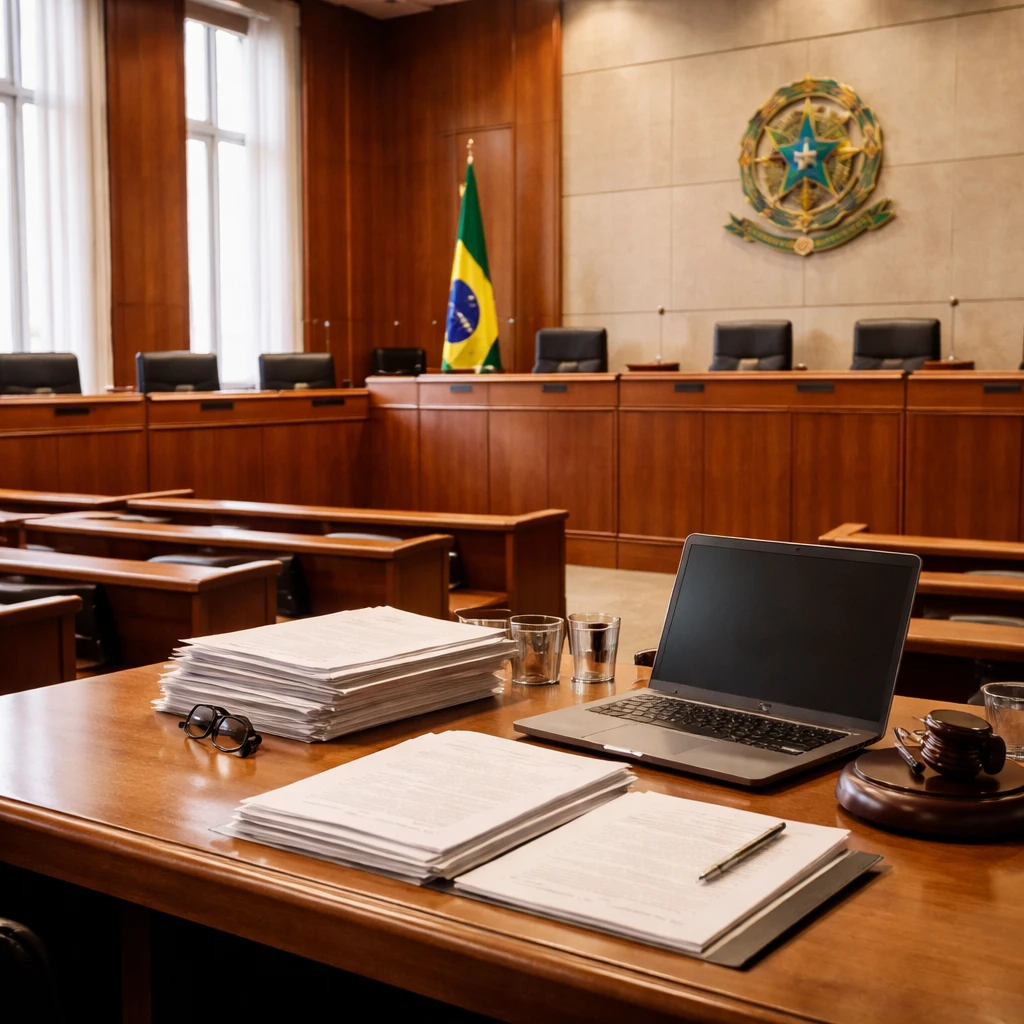
Brazil's highest electoral authority has sanctioned Meta Platforms' Facebook with a fine totaling 7.5 million reais for shortcomings in its response to judicial directives issued during the presidential runoff campaign, yet concluded there is no current evidence the company deliberately interfered with the electoral outcome.
In a unanimous decision, the Superior Electoral Court (TSE) found that Facebook did not fully satisfy several court orders tied to complaints that its platform handled material from the competing campaigns - that of President Luiz Inacio Lula da Silva and Senator Flavio Bolsonaro - in an unequal manner. The dispute focused on allegations raised by Lula's coalition ahead of the vote.
The complaint from Lula's camp asserted that their posts faced restrictions in distribution, that there was activity from purportedly inauthentic accounts, that the company had shortcomings in identifying content generated by artificial intelligence, and that Meta's platform tools operated in ways that produced asymmetries between the campaigns.
Meta had informed the court the previous month that it implemented measures intended to ensure parity in treatment between the two campaigns. When approached for comment after the TSE decision, the company did not immediately provide a response.
Although Meta supplied information and documentation about measures it said it had taken, the court determined that parts of the orders were either not complied with at all, were only partially fulfilled, or were executed after the deadlines set by the tribunal had passed.
"The records contain technical failures acknowledged by Facebook itself, but there are no elements allowing us to conclude, on a preliminary basis, that there was deliberate action to unbalance the election," Justice Marco Aurelio Bellizze wrote in the ruling.
Justice Bellizze added that a finding of deliberate manipulation would demand strong evidence, to be produced within the appropriate legal processes. The court indicated that its current assessment did not support such a conclusion.
The 7.5 million reais penalty reflects the tribunal's appraisal of Meta's overall conduct in responding to the court's orders - highlighting delays, incomplete disclosures and challenges the court identified in verifying some of the data Meta submitted. The calculation of the fine comprises three daily penalties of 500,000 reais for the period October 17 through October 19, and six days of fines at 1 million reais per day covering October 20 through October 25.
Those latter dates coincide with the period when Lula unexpectedly secured re-election over Bolsonaro, a result that followed a significant social media effort by Lula's team. In his victory remarks, Lula reiterated his intent to strengthen regulation of digital platforms, stating: "We had to overcome foreign interference in the election, coming from outside through digital platforms that we will have to regulate."
For reference on currency conversion used in the court documents, the ruling cites an exchange rate of $1 = 5.5832 reais.
Context and implications
The TSE decision separates procedural noncompliance from an affirmative finding of intent to influence the vote. While the fine penalizes deficiencies in how Meta answered judicial demands, the court did not find the evidence necessary at this stage to declare deliberate interference.