
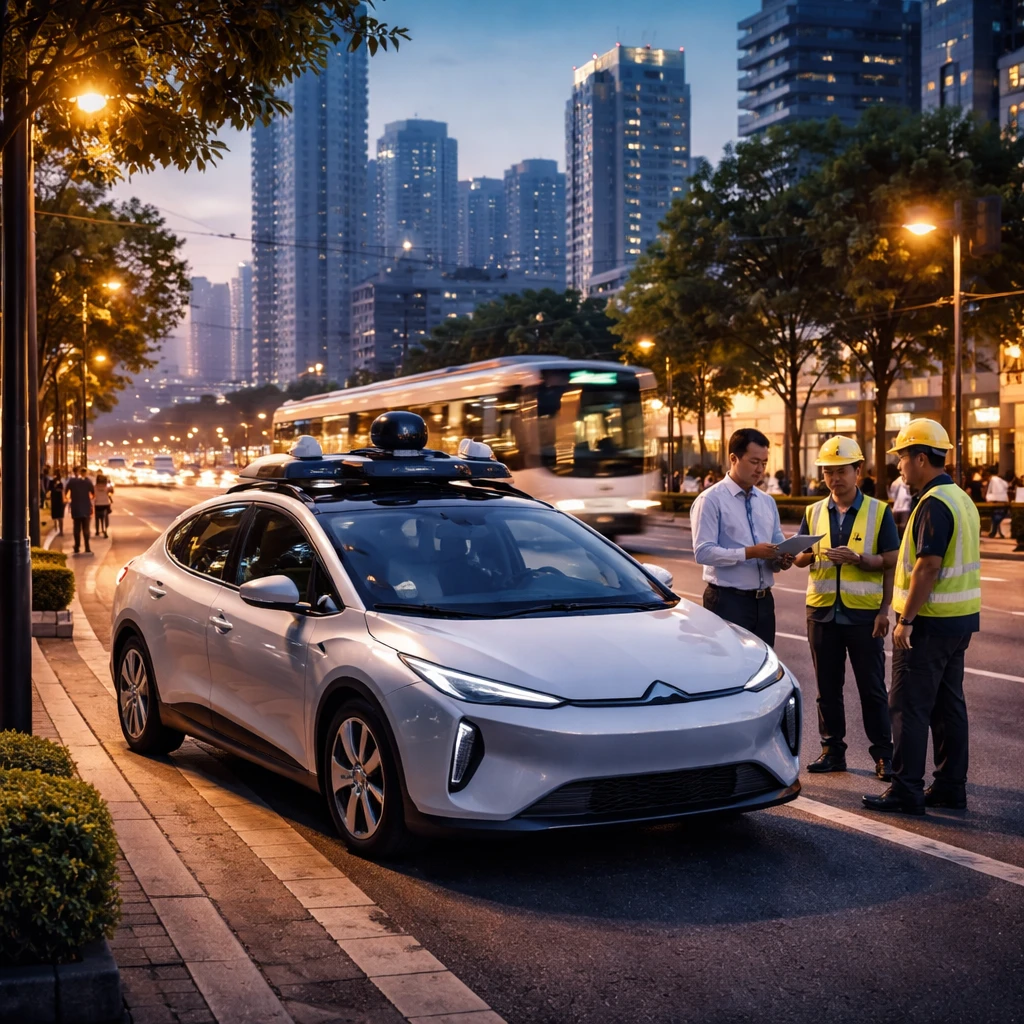
WeRide is actively evaluating a group of new international markets as it accelerates global rollouts of its autonomous vehicle services, the company said. The Guangzhou-headquartered developer named Australia, South Korea, Japan and Southeast Asia as potential regions for expansion and indicated discussions are also under way with several European countries.
"In Australia, we are talking with the regulatory authorities about the possibility," said Tony Han, WeRide's chief executive. Han added that Southeast Asia, South Korea and Japan are on the company's list of prospects, and noted ongoing talks with governments in Europe.
The firm recently entered Denmark earlier in August, extending its European presence to a sixth country. WeRide's automated driving operations now cover more than 60 cities across 13 countries, and commercial launches of its right-hand-drive robotaxi service are slated to begin in Singapore and Hong Kong.
Han said the company intends to recruit locally and collaborate closely with local government officials and partners. "We want to hire locally and we want to work closely with the local government officials and the authorities and try to use as many local collaborators as possible," he said.
Overseas expansion has become a significant growth driver. WeRide reported second-quarter overseas revenue rose 164% year-on-year, outstripping an 82% increase in total quarterly revenue, according to the company's disclosure. The company's EBITDA loss narrowed by 8.1% compared with the same quarter a year earlier.
On capital strategy, Han said the firm does not currently face an urgent need to raise funds but would remain open to attractive financing terms. "Currently we don’t have a very immediate need for capital raising," he said, while leaving the door open to future options if conditions are favorable.
WeRide's global robotaxi fleet exceeded 1,800 vehicles at the end of July. Those robotaxis form part of a broader level 4 autonomous vehicle fleet numbering about 3,400 units, which also includes robobuses and robosweepers. The company expressed confidence in meeting its goal to deploy 5,000 level 4 vehicles by the end of this year, a target that includes 2,600 robotaxis.
On the product front, WeRide highlighted collaborative vehicle programs. Beyond its jointly developed purpose-built robotaxi with Geely Farizon, the company is co-developing an additional robotaxi model with GAC, which it expects will bring further reductions in hardware costs.
Looking further ahead, WeRide has set multi-year deployment ambitions: tens of thousands of robotaxis by 2030 and expansion to 1 million vehicles by 2035. Separately from robotaxis, the company reported strong demand for its advanced driver-assistance systems from both Chinese and international automakers. Han said he expects that line of business to develop into "a very profitable business" for the company.
Financial and operational targets highlighted
- Target of achieving positive cash flow in a single quarter by 2028 and full-year break-even in 2029.
- Q2 overseas revenue rose 164% year-on-year; total quarterly revenue rose 82% year-on-year.
- EBITDA loss narrowed by 8.1% year-on-year in Q2.
WeRide's push into new jurisdictions, coupled with ongoing product partnerships and a growing global fleet, underscores the company's strategy to diversify revenue and scale operations as autonomous driving technology moves toward broader commercial deployment.