
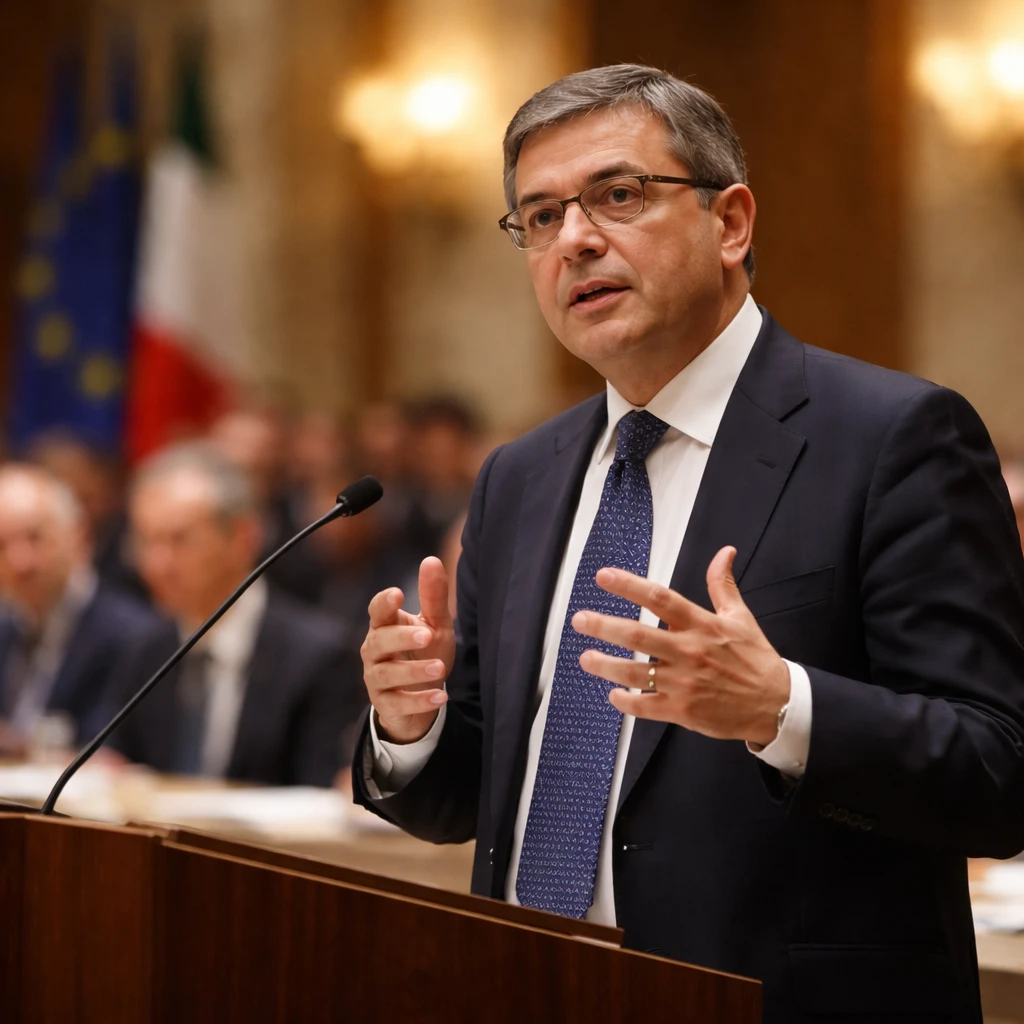
A senior European Central Bank policymaker warned that the euro-area outlook remains delicate as the global economy moves through a period of notable change. Fabio Panetta, an ECB Governing Council member and governor of the Bank of Italy, delivered the remarks at a research conference in Rome focused on how monetary policy is transmitted through the economy.
Panetta characterised the current phase as a "Great Reconfiguration" for the global economy. He said that the outlook is complex, with upside risks to inflation existing alongside downside risks to growth.
He set out a list of areas that demand ongoing scrutiny: geopolitical developments, energy markets, supply chains, wages and inflation expectations. According to Panetta, those variables will be important in assessing where inflation and growth pressures evolve, and they underline the need for continued monitoring rather than reliance on a fixed policy trajectory.
On policy posture, Panetta emphasised that monetary authorities should avoid committing to a predetermined path. That approach, he argued, preserves the flexibility needed to respond to a range of potential outcomes as the economic picture changes.
Panetta also referenced ongoing discussions between the United States and Iran, noting that such talks could result in energy prices that are lower than what the ECB had anticipated in June. He recalled that the ECB in June was the first major central bank worldwide to raise interest rates in reaction to the energy shock linked to the Iran war.
Policymakers are now weighing whether an additional interest-rate move is necessary to rein in price pressures. On the June decision, Panetta said it "was judged to be robust across a range of scenarios," framing that judgment as an example of a key principle for policy making under uncertainty.
His comments underline a consistent theme: the need for policymakers to remain alert to changing conditions across energy markets, geopolitical dynamics and domestic economic indicators, and to keep policy options open rather than adopt a fixed course.
Summary
Fabio Panetta told a Rome research conference that the euro zone is operating in a fragile environment amid a global "Great Reconfiguration." He warned of both upward pressure on inflation and downside risks to growth, urged ongoing monitoring of geopolitical and economic variables, and argued that monetary policy should avoid precommitting to a set path. He also said negotiations between the United States and Iran could lead to lower energy prices than the ECB expected in June, and noted the ECB's June rate hike - the first among major central banks in response to the energy shock from the Iran war - was designed to be robust across scenarios.