
Overview
Concerns over an emerging choke point in photonics supply chains have escalated after recent disruptions tied to China’s control over exports of indium phosphide (InP), a material critical to manufacturing high-speed optical chips used by AI data centres. The problem has drawn attention at senior business and diplomatic levels, with executives raising export-permit delays directly during recent high-level trips and preparatory trade talks linked to a late-May summit between U.S. and Chinese leaders.
Diplomatic and corporate escalation
Within days of a public warning from a major U.S. photonics firm about looming InP shortages in early May, the company’s chief executive joined a U.S. business delegation traveling to China with the President. One of the topics he sought to raise was the backlog and delays in China’s export licences for InP, according to multiple people familiar with the matter. The same subject was brought up by top trade negotiators from both countries in discussions in Seoul ahead of the May summit.
These interventions underscore the urgency in Washington and among U.S. photonics firms to resolve Chinese export controls that are now shaping global availability of a raw material seen as indispensable for the next generation of optical modules that hyperscalers are deploying to support AI workloads.
Why InP matters
Indium phosphide is used to produce high-speed optical components that move data by light through fibre rather than electricity over copper. As AI workloads expand rapidly, data centre operators are increasingly adopting photonics to meet demands for speed and energy efficiency. Industry analysts say InP has few or no substitutes in these specific applications, making access to InP substrates a critical constraint on how quickly optical-module ecosystems can be scaled.
Konrad Wang, a research analyst at SemiAnalysis, summarized the situation by calling InP "one of several supply chain bottlenecks collectively gating AI data centre buildouts."
Export restrictions and market concentration
China introduced export restrictions on InP in February 2025. The country is also the dominant producer of indium, accounting for about 70% of global output as of 2024, according to the U.S. Geological Survey cited in industry reporting. That combination - export controls on a strategic compound and concentrated upstream production - has amplified concerns that Beijing can shape global photonics supply by conditioning or slowing outbound shipments of inputs rather than finished products.
Paul Triolo, a partner at Albright Stonebridge Group, framed the approach as a move toward a more granular "materials chokepoint" toolkit - slowing or conditioning exports of upstream compounds, substrates and metals that determine whether optical-module supply chains can expand fast enough to meet demand.
Immediate market impacts
The practical effects have been stark. Since the export restrictions took effect, the average price for a 6-inch InP wafer has risen about 250% to roughly $5,000. Suppliers and chipmakers report order backlogs and permit delays that are constraining shipments.
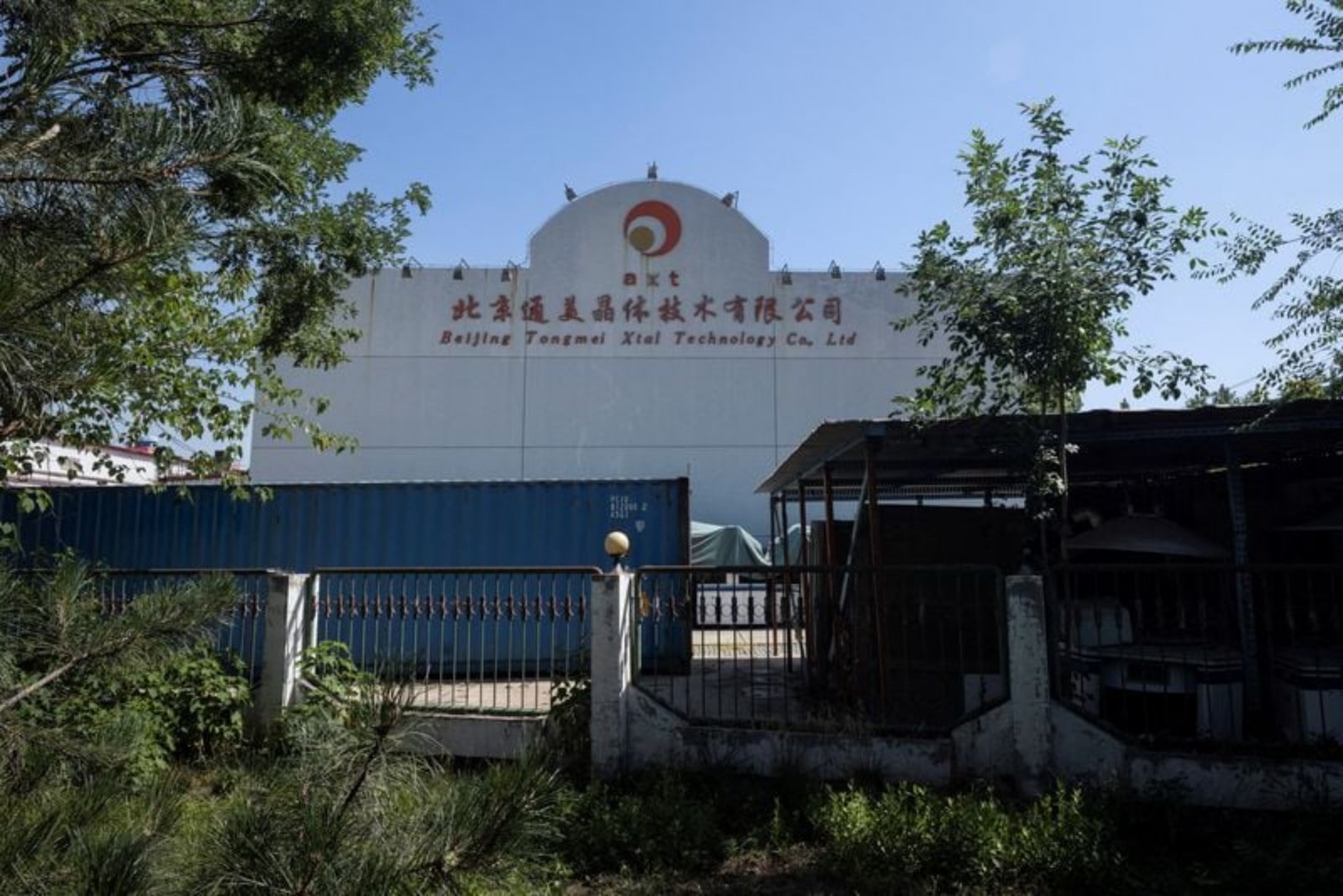
AXT, the world’s second-largest InP substrate producer and a major supplier to one leading U.S. photonics firm, described InP export permits as "the most significant challenge we currently face." Most of AXT’s InP substrates are manufactured in China; the company reported that its Chinese subsidiary only received its first export permits last June and that orders remain substantially backlogged.
SemiAnalysis and other industry sources say these permit delays ripple across the optical supply chain. Lumentum, one of the major photonics product makers, has reportedly been sold out through 2028 even after quadrupling output. Smaller Taiwanese suppliers have also experienced disruptions connected to delays in substrate exports from Chinese manufacturers.
Responses from industry
Faced with higher costs and ongoing uncertainty, at least two major U.S. photonics chipmakers have sought assistance from industry organisations to navigate export licensing processes. Firms are also looking to reduce dependence on Chinese substrates by developing their own InP production or sourcing from non-Chinese suppliers such as Japan’s Sumitomo Electric Industries. But analysts caution that expanding capacity is neither quick nor easy: a typical new plant can take two to three years to come online.
Among public plans to expand capacity, one U.S. photonics company has announced it will double InP wafer capacity at its Texas facility within the year and expects to more than double that capacity again by the end of 2027. Meanwhile, at least one Taiwanese maker has secured a long-term supply contract with Sumitomo.
AXT, Coherent, Lumentum, VPEC and LandMark were contacted for comment but did not reply to requests.
Shifts within China’s domestic industry
The export controls have also created opportunity for domestic Chinese substrate producers. Several local firms - including Yunnan Germanium, Guangdong Xiandao and Zhuhai Dingtai Xinyuan - have been rapidly expanding capacity and investment.
Yunnan Germanium disclosed a 189 million yuan investment to boost production capacity to 450,000 single InP wafers annually. Its 2025 annual report noted a 74% surge in InP wafer shipments. Guangdong Xiandao has initiated an investment project through a subsidiary to target roughly 40 tons of InP crystals a year - the feedstock material for substrates.
Chinese manufacturers are engaging with officials to obtain export approvals, but one senior industry source cautioned that any overseas shipments that are approved could remain limited. That source also said Chinese producers are currently focused primarily on the domestic market in the near term, and there is no indication the government would favour domestic firms over foreign companies trying to export substrates manufactured in China.
Even if new Chinese capacity ramps up, market dynamics are shaped by supplier relationships and qualification cycles. Firms such as Coherent and Lumentum, which rely on established suppliers, are not expected to switch vendors quickly because component qualification is a lengthy process.
Market structure and competitive landscape
The market for InP substrates is concentrated. AXT and Sumitomo together represent nearly 80% of global manufacturing capacity, while JX Advanced Metals accounts for around 10%. That concentration limits short-term alternatives for buyers facing permit delays and rising prices.
Implications for AI data centres and related markets
The constrained supply and higher prices for InP substrates could slow how rapidly hyperscalers and data centre operators adopt advanced photonics modules at scale. Firms racing to design the most energy-efficient, highest-performance components for AI deployments may encounter extended lead times and higher input costs, with knock-on effects across companies that produce photonic chips, optical modules and the system integrators that install them.
Bottom line
China’s export controls on indium phosphide have introduced a material supply risk for a segment of the semiconductor and photonics supply chain that is critical to next-generation AI infrastructure. While industry participants are pursuing capacity expansion and alternative sourcing, the combination of concentrated production, export licensing delays and long build times for new plants suggests the sector could face protracted strain as developers push to scale AI data centre deployments.
Key developments and figures referenced in this article:
- China’s InP export restrictions began in February 2025.
- China accounted for about 70% of global indium production as of 2024.
- The average price for a 6-inch InP wafer rose roughly 250% to $5,000 after export restrictions.
- AXT reported its Chinese unit received first export permits in June and has a significant backlog.
- Lumentum is reported to be sold out through 2028 despite increasing output.
- Coherent plans to double InP wafer capacity at its Texas plant this year and more than double capacity again by end-2027.
- Yunnan Germanium announced a 189 million yuan investment to expand to 450,000 single InP wafers annually; its 2025 report showed shipments up 74%.
- AXT and Sumitomo together account for almost 80% of global InP substrate manufacturing; JX Advanced Metals about 10%.