
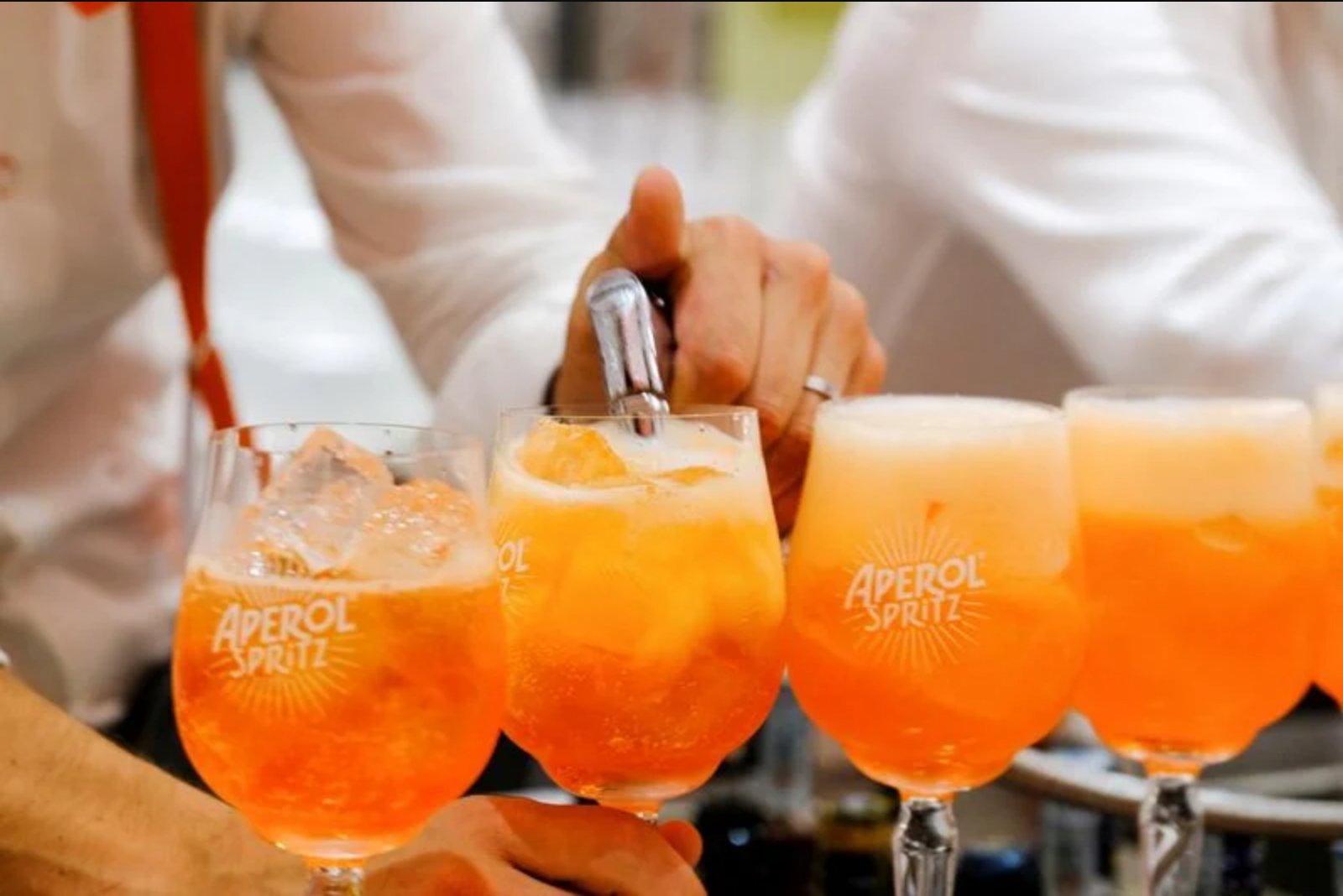
Campari has stepped up a multi-pronged effort to defend Aperol from an expanding field of lookalike aperitifs and alternative spritz-style drinks that have surged alongside the cocktail's rising popularity. The actions, focused initially in Italy where competition is most intense, include a marketing push, a loyalty and certification programme for trusted bars and restaurants, and distribution of pre-prepared Aperol Spritz in kegs to help preserve the brand's presence in both retail and on-trade channels.
The moves come as the spritz category grows rapidly: according to IWSR data cited by the company, global spritz consumption climbed to nearly 4 billion servings in 2024 from under 2.5 billion in 2019. Aperol is the single largest revenue driver for Campari, representing about 26% of the group's sales. The orange aperitif's performance helped Campari remain resilient last year during a period of softer consumer demand across the sector.
Management has consistently identified Aperol as a strategic focal point. The group said last November that it would streamline its brand portfolio and make the orange aperitif a "top priority," dedicating significant advertising and promotional resources to the label. Aperol's recipe remains a closely guarded secret, and the drink continues to be the defining ingredient in the world's most popular spritz cocktail.
Despite the recipe's secrecy, several rival makers have produced orange-coloured aperitifs that resemble Aperol on supermarket shelves and, increasingly, behind bars. Andrea Neri, managing director of House of Aperitivi at Campari, said the recent development is that since 2023 some bars and restaurants have begun serving orange-coloured drinks from taps that are not necessarily made with Aperol, with consumers often believing they are receiving the original.
Italy is a particularly sensitive market for the brand: it is where the Aperol Spritz originated and where lighter, bittersweet daytime cocktails are part of the drinking culture. In terms of Campari's geographic importance, Italy is the group's second-largest single market after the United States, making developments there especially material to overall performance.
Campari's countermeasures in the on-trade have included a loyalty programme that certifies venues selling genuine Aperol Spritz cocktails. The programme, launched in recent months, now covers about 2,000 venues in Italy. Alongside that, the company has begun supplying pre-mixed Aperol Spritz kegs to help licensed venues serve the cocktail quickly while ensuring the drink's composition and brand provenance.
In supermarkets, shelves dedicated to aperitifs are increasingly lined with orange bottles whose appearance closely resembles Aperol. These supermarket alternatives can be sold at a discount of roughly 30-40% compared with Aperol, which retails in Italy at about €10 a bottle. Campari has sought to protect the strong visual association between Aperol and its distinctive colour by pursuing trademark registrations and, in some cases, legal action against smaller competitors.
Assessing the direct impact of lookalikes on Aperol's growth is complex. The brand's global sales increased by 1.4% last year to €785 million, equal to $897 million at the exchange rate noted in company reporting. Still, Campari executives acknowledge uncertainty around how much faster Aperol could have grown absent competition from imitations. "We could probably have grown even faster," Neri said, referring to Italy, while noting the company lacks precise data to quantify the effect of lookalikes.
Campari invested heavily in marketing overall, spending about €547 million on advertising and promotions last year, which equated to 17.9% of net sales. That level of investment underscores the company's strategy of defending market share through deliberate brand support and trade engagement.
Beyond supermarket knockoffs, the spritz category is diversifying with other aperitif-style drinks. One notable example is the Hugo Spritz - a paler, elderflower-based alternative that has gained traction on U.S. summer menus and in British pubs. Many American recipes and bar menus use St-Germain, the French elderflower liqueur owned by Bacardi, as the key ingredient for Hugos. Bacardi reported that St-Germain experienced double-digit year-on-year sales growth, driven in part by the Hugo's rising popularity, citing IWSR data.
Campari itself has broadened its own spritz portfolio. The group has introduced Sarti Rosa, a fruit aperitif marketed with a campaign aimed at spritzes made from the hot pink drink, targeted at female consumers. The company also lists an array of aperitif brands in its stable that extend beyond Aperol - including Campari, Sarti, Cynar, the non-alcoholic aperitif Crodino and an elderflower aperitif called Mondoro - reflecting a strategy to address shifting tastes within the category.
Company executives see consumer preferences moving toward lower-alcohol aperitifs and greater daytime consumption, which supports an expanded spritz category. "As the category leader, we have worked to expand our spritz portfolio across multiple brands," Neri said, describing how the group is positioning itself across subsegments of the market.
Academic and sell-side observers surveyed by the company generally view the imitations as an indication of Aperol's brand strength rather than an immediate existential threat. Sandro Castaldo, a professor of marketing at Bocconi University, said that the existence of lookalike products is a signal of Aperol's potency as a brand and that colour is often the first element copied by imitators. Theodore Duval-Segard, an analyst at AlphaValue, told the company he does not see lookalike products representing a threat at present, adding that Campari has "literally reinvented the spritz" and that Aperol and the spritz are now closely associated.
Currency disclosure included in company material noted $1 equals 0.8750 euros. Analysts and company statements indicate Campari should continue to benefit from a category trend it helped to popularize, even as it contends with supermarket price competition and alternative spritz concepts in the on-trade.