
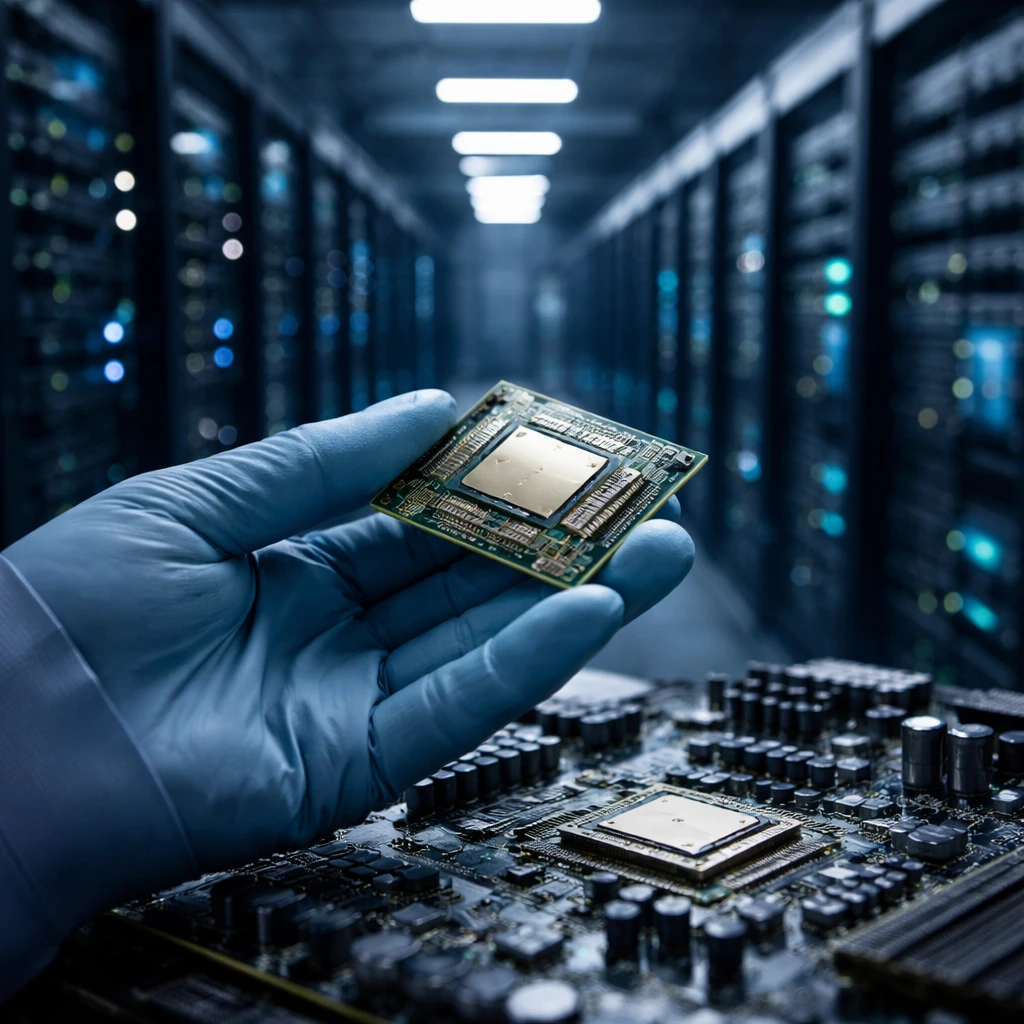
ByteDance is pursuing an accelerated timetable to complete the architecture of a next-generation in-house CPU, with design sign-off targeted by early 2027 and mass production plus broader rollout planned for the second half of that year, according to people familiar with the matter.
The move, disclosed publicly for the first time, signals how quickly the Beijing-based technology group is attempting to construct its own silicon stack to support an expanding portfolio of generative and agentic AI services.
Internal deployment and program progress
Sources report that a preliminary iteration of the proprietary processor has been operating inside ByteDance since late last year. That internal deployment, carried out without public comment from the company, suggests the chip program is more advanced than the absence of formal announcements would imply. The company has not issued any statement about its chip development work, even as that work has grown across multiple in-house designs in recent years.
Why ByteDance is moving fast
The compressed schedule is being driven by a marked uptick in internal computing requirements. Products such as Doubao, ByteDance's AI chatbot, and Seedance, its model for video generation, have materially increased infrastructure demand. As these systems evolve into more agentic and multi-step workflows, the character of compute needs is shifting as well. Workloads are moving away from pure matrix-multiplication-dominated tasks and toward more complex task orchestration, a profile that elevates the importance of high-performance, general-purpose CPUs relative to GPU clusters alone.
This evolving workload mix is a core reason the company is prioritizing own-design CPUs rather than relying exclusively on third-party accelerators and processor families.
Strategic supplier implications
ByteDance's ambition to broaden its self-developed hardware footprint has direct implications for publicly traded chip suppliers. ARM Holdings, whose instruction-set architectures underpin a large set of custom designs in the industry, along with Intel and Advanced Micro Devices, could see their roles at ByteDance change as internal capabilities mature. NVIDIA, which already faces limits on its most advanced AI accelerators for Chinese customers due to export controls, could face an additional long-term dampening of demand if ByteDance scales back third-party compute purchases in favor of internally produced silicon.
Export controls and the push for self-sufficiency
The broader geopolitical environment is a material factor. Progressive tightening of U.S. export restrictions on advanced semiconductors, including major accelerators, has prompted a wave of in-house chip initiatives among large Chinese technology firms seeking to protect their AI roadmaps from supply disruptions beyond their control. ByteDance's CPU program fits this pattern, combining economic and strategic rationales as it builds a wider silicon portfolio to integrate into its AI infrastructure.
Tape-out timing and production milestones
One source indicated the program could accelerate its tape-out timeline ahead of the stated early-2027 design-finalization milestone. Tape-out, the technical point at which a chip design is delivered to a foundry for manufacturing, is typically the last significant engineering milestone before a chip can enter production. If tape-out is moved forward, the onset of mass production could shift closer in time, although the headline target for broader deployment remains the second half of 2027.
How this compares with hyperscaler strategies
ByteDance's approach mirrors a broader industry thesis: at scale, custom silicon can deliver material cost and performance advantages over merchant parts. Major global cloud providers have followed this logic with proprietary accelerators and CPU lines. In ByteDance's case, the calculus is affected both by operating scale and by the constraints of export controls, giving its internal program a strategic dimension beyond pure cost or performance optimization.
Market signals to watch
The clearest near-term market signal will be confirmation of a tape-out date. A publicized tape-out would provide a concrete marker of engineering readiness and offer the clearest basis for assessing the pace at which ByteDance could become a credible supplier of its own compute hardware. For investors and corporate customers in ARM, Intel and AMD, the pressing question is whether ByteDance's ambitions will meaningfully erode future procurement from these vendors or primarily act as a complement to ongoing third-party purchases. Insiders cited in reporting suggest the longer-term direction favors increasing reliance on self-developed hardware as ByteDance scales its AI infrastructure through 2027 and beyond.
Conclusion
ByteDance's reported timeline to finalize an in-house CPU design by early 2027 and to target mass production and broader deployment in the second half of the year is a notable development in the race to own more of the AI compute stack. The combination of rising internal compute needs, changing workload profiles that favor general-purpose processors for orchestration tasks, and a tightening export-control environment creates a compelling rationale for the company to press forward with its chip program. The market will watch for a tape-out announcement as the principal catalyst to validate the program's timetable and potential impact on established silicon suppliers.
Sources of uncertainty - The article reflects reporting based on people familiar with the matter and indicates the company has not publicly commented on these developments.