
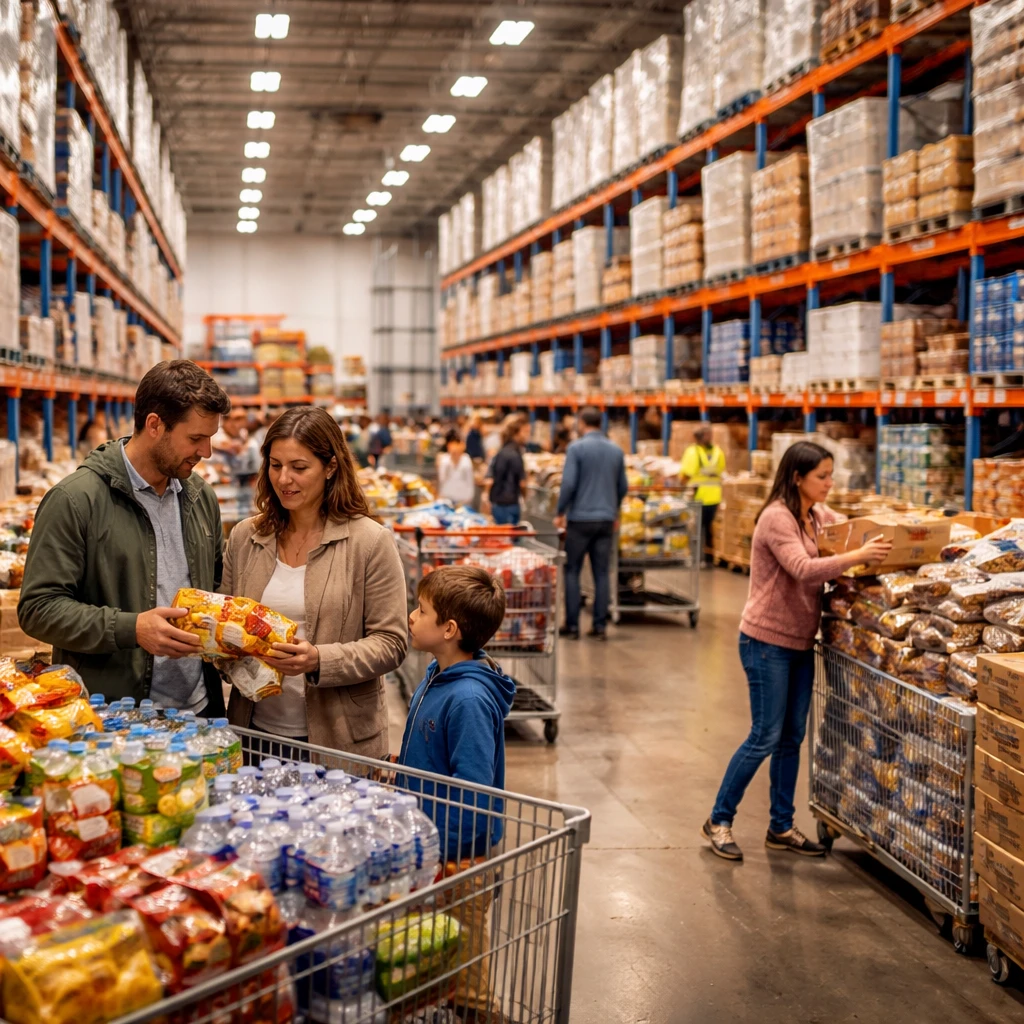
The U.S. retail environment entering the second half of 2026 presents a layered set of challenges and opportunities, according to Bernstein. After early-year optimism tied to tax refunds and hopes for interest-rate relief, March disruptions in the Middle East pushed energy prices higher and pressured household spending. Although energy costs have since normalized, Bernstein warns that fresh inflationary pressures are appearing in categories such as packaging and food.
Inflation and consumer segmentation
Bernstein describes a bifurcated consumer landscape. Lower-income households are contending with below-average wage growth alongside above-average inflation. In contrast, middle- and higher-income consumers are increasingly engaging in trade-down behavior, seeking greater value in their purchases. The firm also highlights ongoing secondary inflation dynamics: plastics and resin costs were up 18% year-over-year in May, and fertilizer expenses rose between 40% and 50% year-over-year during the spring planting season - dynamics that may feed into future food inflation.
Bernstein's H2 2026 retail picks
Against that macro backdrop, Bernstein singles out three retailers it views favorably for the remainder of the year.
1. Costco
Costco has shown resilience year-to-date, buoyed by double-digit comparable store growth that Bernstein attributes in part to competitive gas pricing. With gas inflation moderating, the firm's expectation is for Costco to achieve 6-7% comparable sales growth excluding gas and foreign exchange impacts. Bernstein also notes the prospect of a special dividend as a source of near-term support for the stock, while expressing high conviction in Costco's long-term expansion potential, particularly internationally. The research note cites shares trading in the low 40x range and identifies upside potential. Operational results referenced by Bernstein include a 14.5% year-over-year increase in net sales for May to $24.01 billion and a fiscal third-quarter earnings-per-share outcome that was modestly ahead of analyst estimates.
2. Dollarama
Dollarama has declined 5.5% year-to-date after investing in international expansion. Bernstein emphasizes the retailer's strong momentum in Canada and Latin America and suggests that Dollarama's value proposition has proven effective in an inflationary environment. The firm points to sentiment pressure tied to expansion uncertainties in Australia and Mexico, framing the pullback as a buying opportunity for what it calls a high-quality compounder with international optionality. Bernstein further observes that the Canadian business and the Dollarcity joint venture alone support the current valuation. Dollarama's recent first-quarter results exceeded analyst expectations, with revenue reported at $1.85 billion and sales up 21.4% year-over-year.
3. Dollar General
Dollar General's shares have fallen roughly 10% year-to-date amid concerns centered on lower-income consumer trends. Bernstein views those concerns as largely reflected in the stock price and believes the degree of trade-in from middle- and higher-income shoppers seeking value remains underappreciated. The firm characterizes Dollar General as a self-help story, projecting gross margin expansion to 31.8% by fiscal 2028 driven by shrink and damage recovery, mix improvements and efficiency gains. Supporting its constructive stance, Bernstein notes that Dollar General delivered its sixth consecutive earnings-per-share beat in the first quarter, and that several firms, including Guggenheim and Raymond James, adjusted their price targets following the results.
Implications for markets and investors
Bernstein's selections reflect a focus on retailers that combine defensive attributes with clear levers for margin or revenue growth. The emphasis on warehouse and discount formats underscores how segments that offer value and scale can outperform when consumers are sensitive to price and when input-cost pressures persist.
Conclusion
With inflation shifting from energy to categories such as packaging, plastics and agricultural inputs, Bernstein's H2 2026 outlook privileges retailers positioned to capture trade-down demand and manage cost pressures. Costco, Dollarama and Dollar General are highlighted for their specific growth avenues and operational responses to the current consumer and cost environment.