
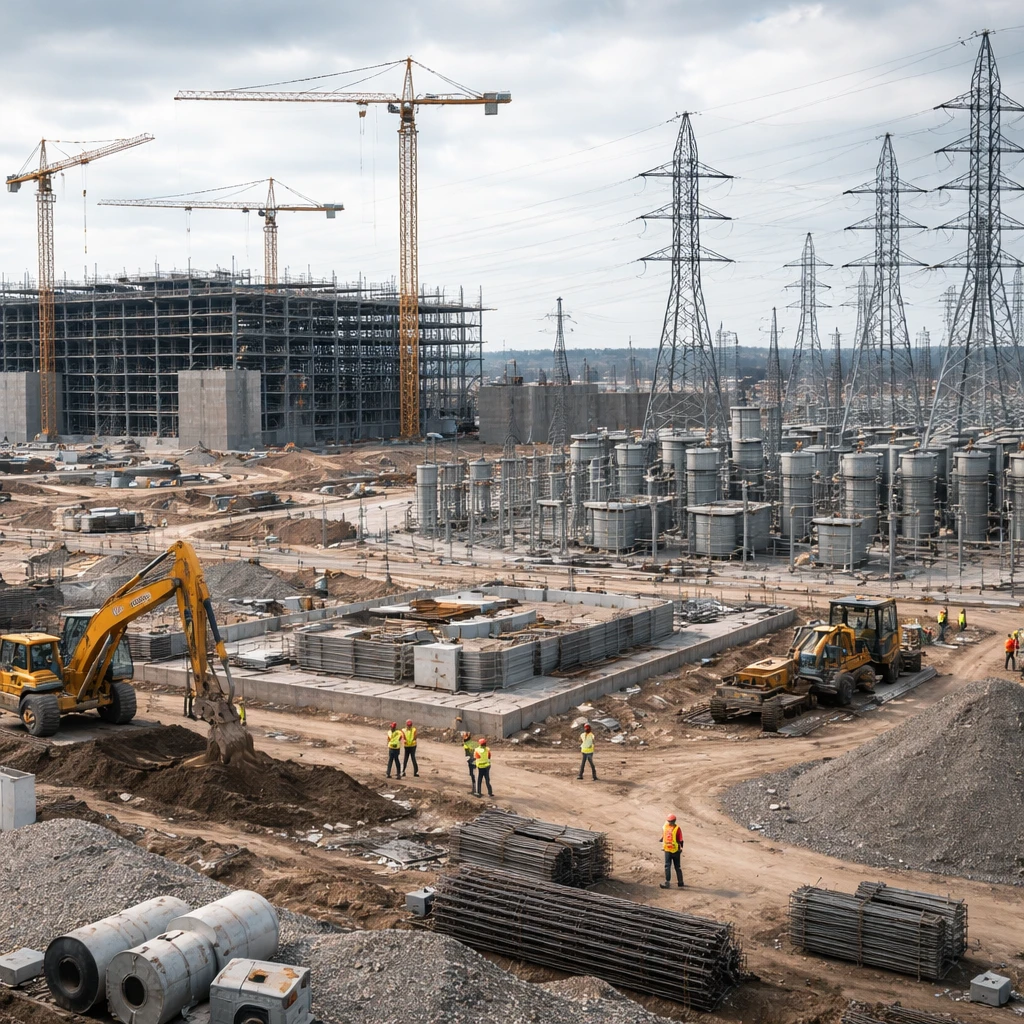
Barclays is flagging a turning point for U.S. non-residential construction, concluding that square footage activity has hit a bottom after several years of decline even as dollar-value measures were buoyed by inflation. The bank says large-scale projects, particularly those tied to AI data centers and power infrastructure, are now the primary drivers of spending.
According to Barclays, the sector has been dominated by sizeable projects since 2023, and over the last 18 to 24 months the project mix has migrated toward AI-driven initiatives. While these megaprojects underpin overall spending levels, the bank notes they are less effective at restoring volume-heavy portions of the market because each dollar of megaproject spending requires comparatively less construction work intensity.
Barclays views the broader non-residential market as stabilizing. Several categories that have been negative are showing smaller declines, and early indicators such as commercial and industrial loan growth are beginning to move higher, which the bank interprets as supportive for activity ahead.
Still, Barclays cautions that the recovery is not without constraints. The bank highlights higher interest rates and ongoing inflation as potential limits to momentum, and points to uncertainty in public funding as an additional headwind. Other areas of concern include supply discipline in discretionary non-residential segments like retail and warehouse, as well as a residential market that remains dormant and more conservative in its capital allocation.
Reflecting its assessment, Barclays raised its construction starts projection to a level it describes as mid-single digits above consensus. Relative to consensus, the bank places itself roughly 200 basis points higher in power, gas and communications; 175 basis points ahead in offices, a grouping that explicitly includes data centers; and about 100 basis points ahead in manufacturing starts.
On the sector-level implications, Barclays expects utilization gains and equipment replacement cycles to favor rental companies and selected equipment suppliers. Engineering and construction firms receive continued support from AI-related and power projects, although the bank notes that support comes with less emphasis on traditional hard infrastructure spending. For aggregates producers, Barclays anticipates that inflation will help accelerate price momentum into the second half of the year.
Clear summary
Barclays sees a bottoming in non-residential square footage activity, with spending growth concentrated in AI-driven data center megaprojects and power work. The bank raised its starts outlook above consensus but warns of macro and funding risks that could temper the recovery.
Key points
- Non-residential square footage has been in a multi-year recession; inflation has masked dollar-value growth.
- Megaprojects - led by AI data centers and power infrastructure - are sustaining spending but add less construction volume per dollar.
- Barclays raised its starts forecast to mid-single digits above consensus and is materially higher in power, communications, offices (including data centers) and manufacturing.
Risks and uncertainties
- Higher interest rates could limit new starts and dampen demand across non-residential sectors, including offices and manufacturing.
- Inflation and unclear public funding could constrain project pipelines, affecting segments dependent on public capital.
- Supply discipline in retail and warehouse categories, plus a subdued residential market, may slow recovery in volume-intensive construction segments.