
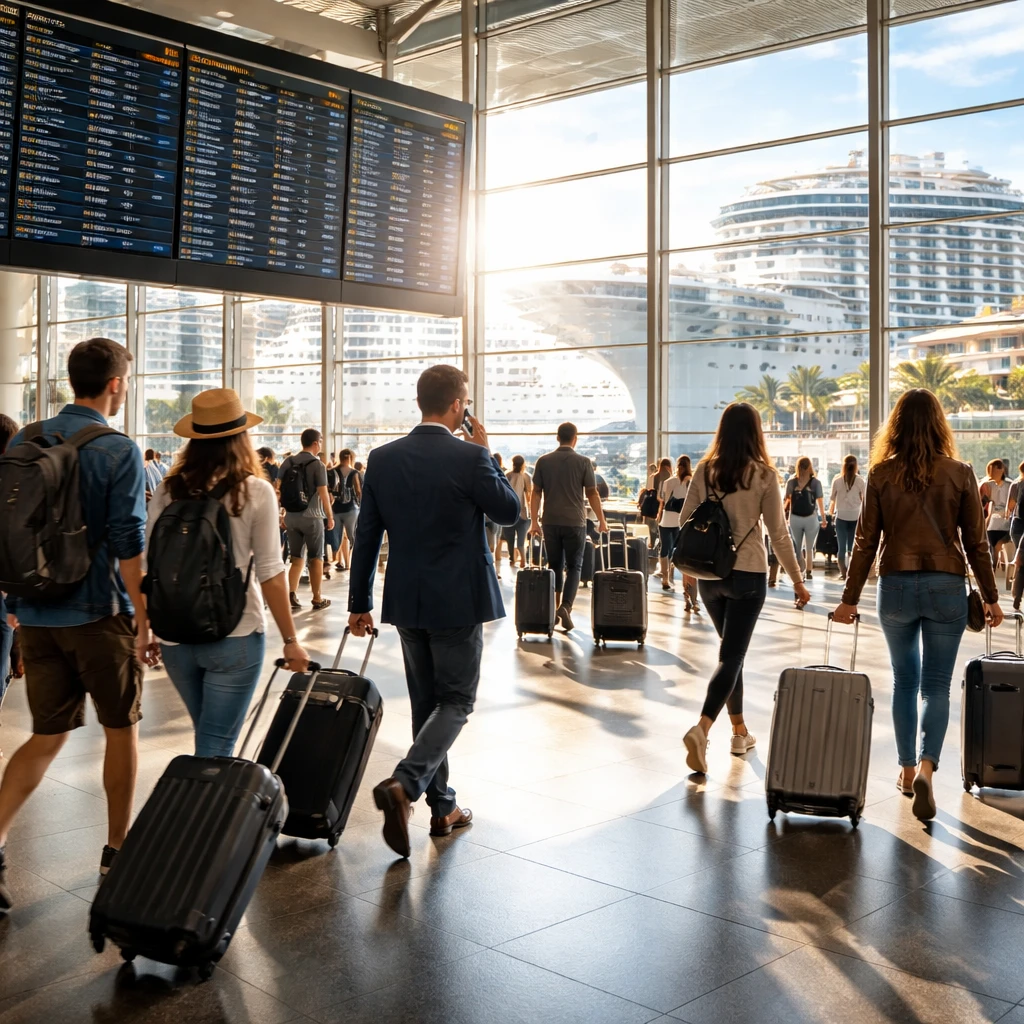
Early earnings released by a range of travel companies - from global hotel operators to cruise lines and airlines - show U.S. business and leisure travel demand holding up, and in some cases strengthening, enough to offset near-term headwinds from the war in the Middle East. The conflict has pushed up fuel costs and hindered international travel flows, yet results published on Tuesday suggest many consumers, particularly higher-income travelers, kept spending on travel despite broader economic uncertainty and rising travel expenses.
Earnings snapshots and consumer behavior
Executives and analysts point to continued demand for premium travel experiences. Brian Rooney, founder of travel advisory firm GetCruiseInfo.com, said JetBlue, Hilton and Royal Caribbean emphasized ongoing strength in higher-value products. He described the market as a K-shaped travel economy, in which higher-income travelers continue to book premium experiences while more price-sensitive customers change the timing or composition of trips rather than abandoning vacations altogether.
That pattern showed up across recent results. Several companies credited demand in the U.S. and the boost from the FIFA World Cup with improving revenue metrics for the quarter, even as operations tied to the Middle East faced sharp declines in activity.
Hotels: luxury demand and event-driven lifts
Hilton Worldwide Holdings raised its full-year forecast for room revenue growth, attributing the revision to robust demand at its luxury properties and an anticipated benefit in the third quarter from the World Cup. At the same time, Hilton reported that room revenue in its Middle East and Africa region fell 29.5% compared with the year-ago period.
Hilton CEO Christopher Nassetta noted that the World Cup provided a lift to quarter results and that mid-scale hotels saw the biggest turnaround as business and group travel rebounded. The soccer tournament added roughly 1.7% to RevPAR, or room revenue per available room, for Hilton in the second quarter.
Cruise lines: profit upgrades, mixed booking signals
Royal Caribbean raised its annual profit forecast even as it trimmed its revenue growth outlook after accounting for a modest decline in bookings tied to sustained geopolitical tensions. The Miami-based cruise operator reported a 27% increase in quarterly fuel expenses to $355 million from the prior year. The company slightly lowered its full-year fuel expense projection to about $1.34 billion from $1.35 billion.
Royal Caribbean’s finance chief Naftali Holtz said consumer demand for vacation experiences remains strong, and that guests continue to demonstrate a willingness to spend on memorable trips with the company.
Airlines: fuel pain and fare resilience
Air carriers have taken a disproportional share of the impact from the conflict in Iran, with fuel costs rising sharply. Most U.S. airlines recouped nearly half of the additional fuel costs in the second quarter, but their profit outlooks remain uncertain and airfares are expected to remain elevated.
JetBlue reported that stronger demand and higher ticket prices enabled it to recover more of its fuel cost increases than expected, although the airline’s quarterly fuel bill climbed nearly 81%, or roughly $407 million. JetBlue President Marty St. George acknowledged that customers do not welcome fare increases, but stressed that pricing is necessary to cover costs. The carrier also said its visibility for the back half of the year had improved as the volatility in fuel prices related to the war had moderated.
Payments and event-driven spending
Visa also reported a World Cup-related uplift. Chief Financial Officer Chris Suh said total card-present spend in the U.S. accelerated, with card-present transactions rising as much as 20% in select host cities on match days during the FIFA World Cup. In host cities, entertainment and restaurants saw the largest increases in cross-border spend by category.
Market segmentation and consumer priorities
Industry observers emphasized that luxury travel has shown particular resilience. Adam Sebba, CEO of London-based luxury travel company The Luminaire, noted that luxury has historically been durable and that travel is one of the most resilient parts of the luxury sector. He said it is difficult for households to cut or skip major family holidays, a factor that helps sustain demand for higher-end travel options.
Across these reports, the common thread is a travel landscape adjusted by higher costs and geopolitical disruption yet buoyed by strong domestic demand, premium bookings and episodic event-related spending.