
Politics July 20, 2026 07:27 AM

Justice Department Subpoenas 14 Law Firms in ABA Suit Over Trump Executive Orders

DOJ seeks records and depositions tied to communications with presidential adviser; subpoenas disclosed in American Bar Association lawsuit

By Maya Rios
Share
Twitter Reddit Facebook LinkedIn

The U.S. Justice Department issued subpoenas to 14 major law firms seeking detailed records and depositions related to White House executive orders and communications with a presidential adviser. The subpoenas were disclosed in a lawsuit filed by the American Bar Association alleging an unlawful administration policy to punish firms over prior work, diversity policies and political ties. The litigation and related appeals are likely to shape how evidence is gathered and which parties must respond.

Justice Department Subpoenas 14 Law Firms in ABA Suit Over Trump Executive Orders
Summarize with
ChatGPT Perplexity Claude Grok Gemini

Key Points

  • The DOJ issued subpoenas to 14 law firms seeking records and depositions about communications related to White House executive orders, including interactions with Boris Epshteyn - affects the legal sector and government oversight.
  • The subpoenas were disclosed in a lawsuit filed by the American Bar Association alleging the administration sought to punish firms over past legal work, diversity policies and political connections - relevant to law firms and professional associations.
  • Four targeted firms previously sued and obtained permanent court orders blocking the executive orders; the administration's appeal is pending before the D.C. Circuit, which heard arguments in May - a litigation risk for both government and firms.

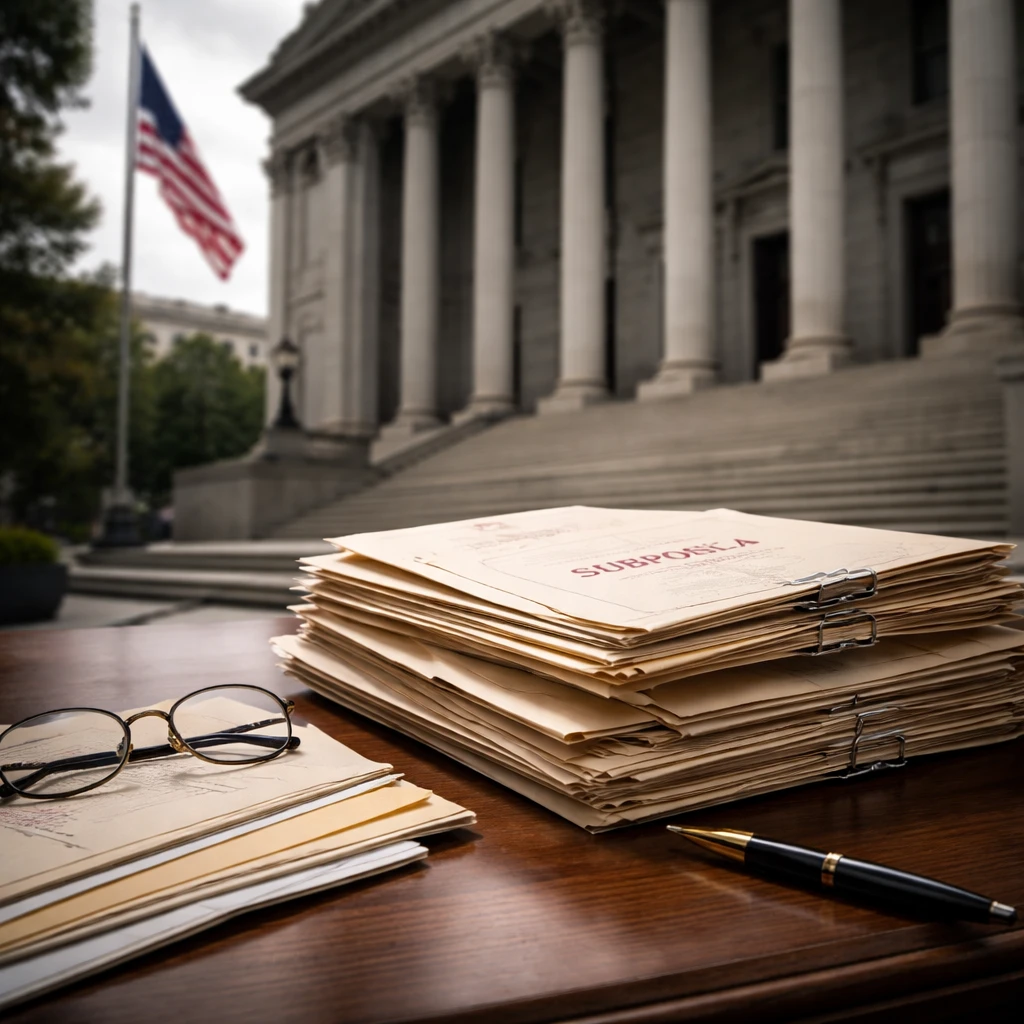
The U.S. Department of Justice has served subpoenas on 14 prominent law firms, seeking detailed documents and depositions tied to White House executive orders and related communications, according to copies of the subpoenas filed in federal court in Washington on Friday.

The subpoenas request records of the firms' communications about the executive orders and specifically seek any communications with Boris Epshteyn, who is identified in the filings as a longtime adviser to President Donald Trump, dating from the start of the president's second term. The Justice Department is also looking for any exchanges the firms may have had with the American Bar Association concerning Epshteyn.

It is not immediately clear from the filings whether the targeted firms will seek to challenge the subpoenas in court.

The Justice Department disclosed the subpoenas in the context of a lawsuit brought last year by the American Bar Association. In that complaint, the ABA asserts that its members have been harmed by what it describes as an unlawful policy by the Trump administration to punish law firms over their past legal work, diversity policies and political ties.

In its recent filing, the Justice Department urged U.S. District Judge Amir Ali to reject an ABA demand that the government produce similar information about the White House executive orders affecting law firms. The DOJ told the court that the ABA should "seek this information from its own members, or the law firms at issue, rather than going directly to the White House."

The filing further states that the subpoenas the DOJ issued to the law firms are intended to "obtain the documents that Plaintiff has requested."

Requests for comment sent to spokespeople for the ABA and the Justice Department received no immediate response. A White House spokesperson had no immediate comment, and representatives for the law firms named in the subpoenas likewise did not immediately respond to inquiries.

The ABA's litigation has intensified scrutiny of the administration's efforts directed at prominent law firms and may complicate matters for firms that previously reached agreements with the White House to avoid the practical effects of the executive orders. The dispute over evidence and disclosures could place such firms in a difficult position as the parties litigate scope and relevance.

Four law firms that were targeted by the executive orders filed suit against the administration last year and secured court orders permanently blocking the orders as they applied to them. The government has appealed that outcome; the appeal is pending before the U.S. Court of Appeals for the District of Columbia Circuit, which heard oral arguments in May.


Note: This article reports on the filings and claims made in the court documents and reflects information contained in those filings.

Risks

  • Uncertainty over whether the law firms will challenge the DOJ subpoenas in court could prolong litigation and increase legal costs - impacts law firm operations and potentially investor sentiment for publicly traded legal services companies.
  • The dispute over access to communications and documents could place firms that settled with the White House in an awkward evidentiary position as the ABA and DOJ litigate what must be produced - risk to reputations and client relationships in the legal sector.
  • The pending appeal in the U.S. Court of Appeals for the D.C. Circuit introduces procedural uncertainty about the ultimate legal status of the executive orders and associated remedies - affects regulatory and governance expectations for firms and professional organizations.

More from Politics

House Approves $1.15 Trillion Defense Authorization Amid Partisan Rift Over Iran and Israel Provisions Jul 22, 2026 Why New York’s Mayor Says He Cannot Arrest Israel’s Prime Minister Jul 22, 2026 Justice Department Seeks Detailed Records After New Jersey Voting Registration Glitch Jul 22, 2026 Trump Rallies in Georgia, Presses National Voting Changes as Republicans Warn of Turnout Risks Jul 22, 2026 Anthropic Pledges Additional $20 Million to Political Group Backing AI Regulation Jul 22, 2026