
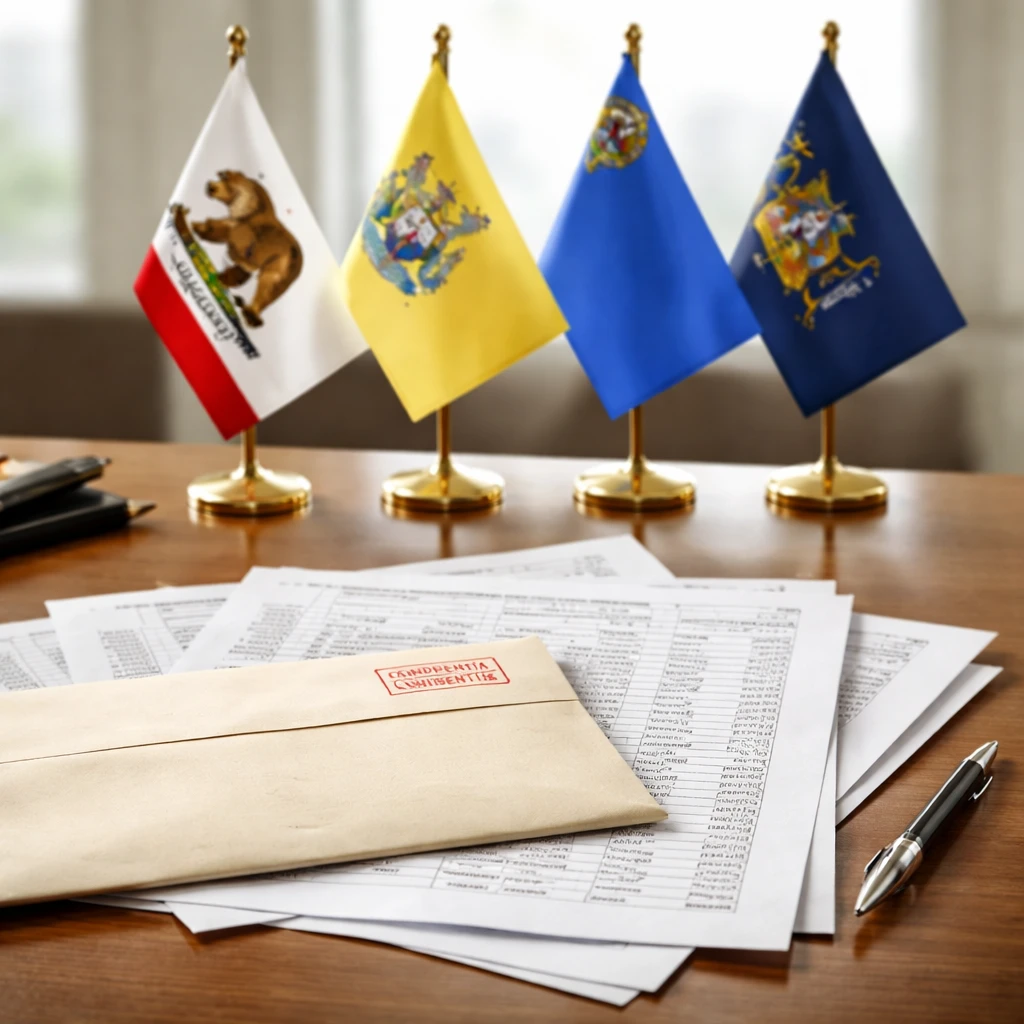
Homeland Security Secretary Markwayne Mullin on Friday asked election officials in four states to review their voter registration rolls for potential non-citizen registrations, according to a department statement. The letters were addressed to the secretaries of state in California, New Jersey, Nevada and Pennsylvania and referenced preliminary reviews of state records.
The outreach from the Department of Homeland Security follows a prime-time presidential address on election security delivered on Thursday evening. In the department statement, DHS pointed to potential violations in each of the four states, but the statement did not include supporting evidence for the tallies it cited.
The secretaries of state in the named states were asked to respond within two weeks and to confirm whether they would cooperate with DHS on matters related to election security. The letters, as described by DHS, sought a prompt reply to the department's request for engagement.
During the presidential address that preceded the DHS letters, the president alleged that China had interfered in the 2020 presidential campaign. A U.S. intelligence assessment, according to the statement, found no evidence to substantiate that claim.
The statement also placed the outreach in the context of a broader political strategy: the president is emphasizing election security as a central issue ahead of the November midterm elections. The statement noted that Republicans face the prospect of losing seats in one or both chambers of Congress, and cited factors that have affected presidential approval ratings, including the Iran war and elevated energy prices.
Contextual outline
- Request details - DHS Secretary Markwayne Mullin sent letters to secretaries of state in California, New Jersey, Nevada and Pennsylvania asking for reviews of voter rolls for non-citizen registrations.
- Evidence - The department's statement referenced potential violations but did not provide supporting documentation or evidence for the figures it mentioned.
- Timing - The outreach followed a prime-time presidential address on election security and included a two-week deadline for responses and confirmation of cooperation.
The correspondence and public messaging place emphasis on election security ahead of the midterm cycle, while also intersecting with ongoing political dynamics referenced by the statement, including approval ratings influenced by international conflict and energy prices.