
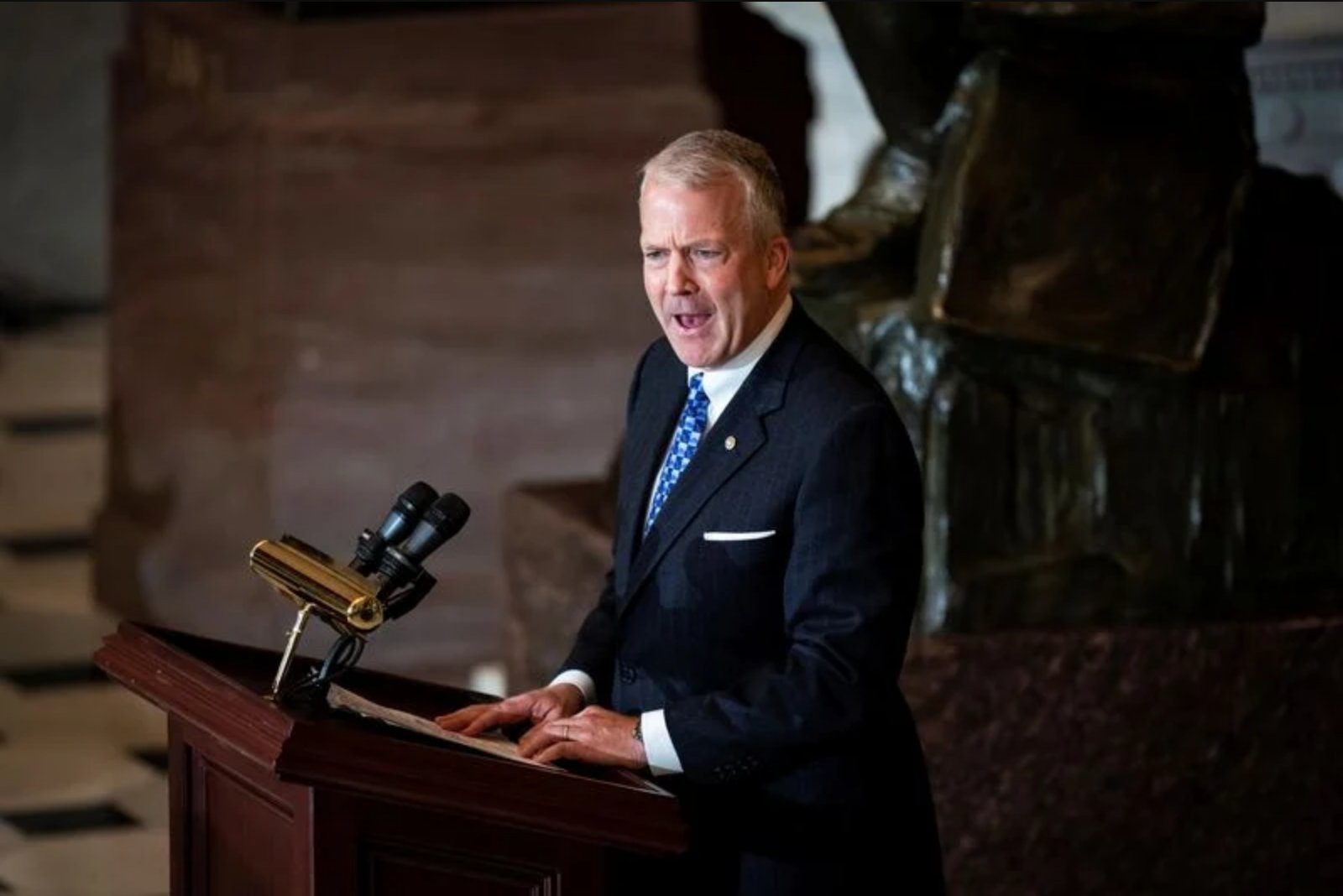
A Superior Court judge in Alaska has ordered that Dan J. Sullivan be restored to the state's August 18 primary ballot, reversing a recent decision by the Alaska Division of Elections that had removed him as an ineligible candidate.
The challenger, identified in court filings as an unelected former U.S. Forest Service worker and retired teacher, was taken off the ballot last week by Carol Beecher, director of the Alaska Division of Elections. Beecher's action followed complaints from Republican Party officials that the challenger's name could mislead voters because he shares a name with incumbent Republican Senator Dan Sullivan.
Republicans, including Senator Dan Sullivan, also publicly accused Democrats of recruiting the similarly named candidate to create confusion and to benefit Democratic Senate candidate Mary Peltola, a former U.S. representative. The Peltola campaign has denied any involvement; Peltola spokesperson Harry Child said the campaign has no involvement on either Sullivan campaign.
In a ruling late on Friday, Superior Court Judge Thomas Matthews said the removal decision was based on "good-faith criteria" that are not contained in the U.S. Constitution or Alaska election statutes. The judge's written conclusion declared, "Mr. Dan Sullivan is declared to be an eligible candidate." The opinion directly reversed the election director's prior action to disqualify the challenger.
Local media reports cited by court observers indicated the ruling is expected to be appealed to the Alaska Supreme Court. That potential appeal comes with a looming administrative deadline: state election officials must begin printing ballots by the Tuesday that follows the ruling, according to reporting on the case.
Under Alaska's nonpartisan primary system, all candidates appear on the same ballot regardless of party affiliation. The four candidates who receive the most votes in the primary advance to the November general election.
Requests for comment on the court ruling received no immediate responses from several parties. Senator Sullivan's campaign did not immediately reply to a request for comment. The Alaska Democratic Party also did not respond to a request for comment. Representatives for Dan J. Sullivan's campaign were not available to comment on the judge's decision.
Context and next steps: The case centers on the proper standards for candidate eligibility and the authority of election officials to disqualify a candidate when name similarity raises concerns about voter confusion. The Superior Court ruling restored the challenger to the ballot but the ruling's ultimate effect may depend on whether the Alaska Supreme Court accepts and overturns or affirms the decision before ballot production begins.