
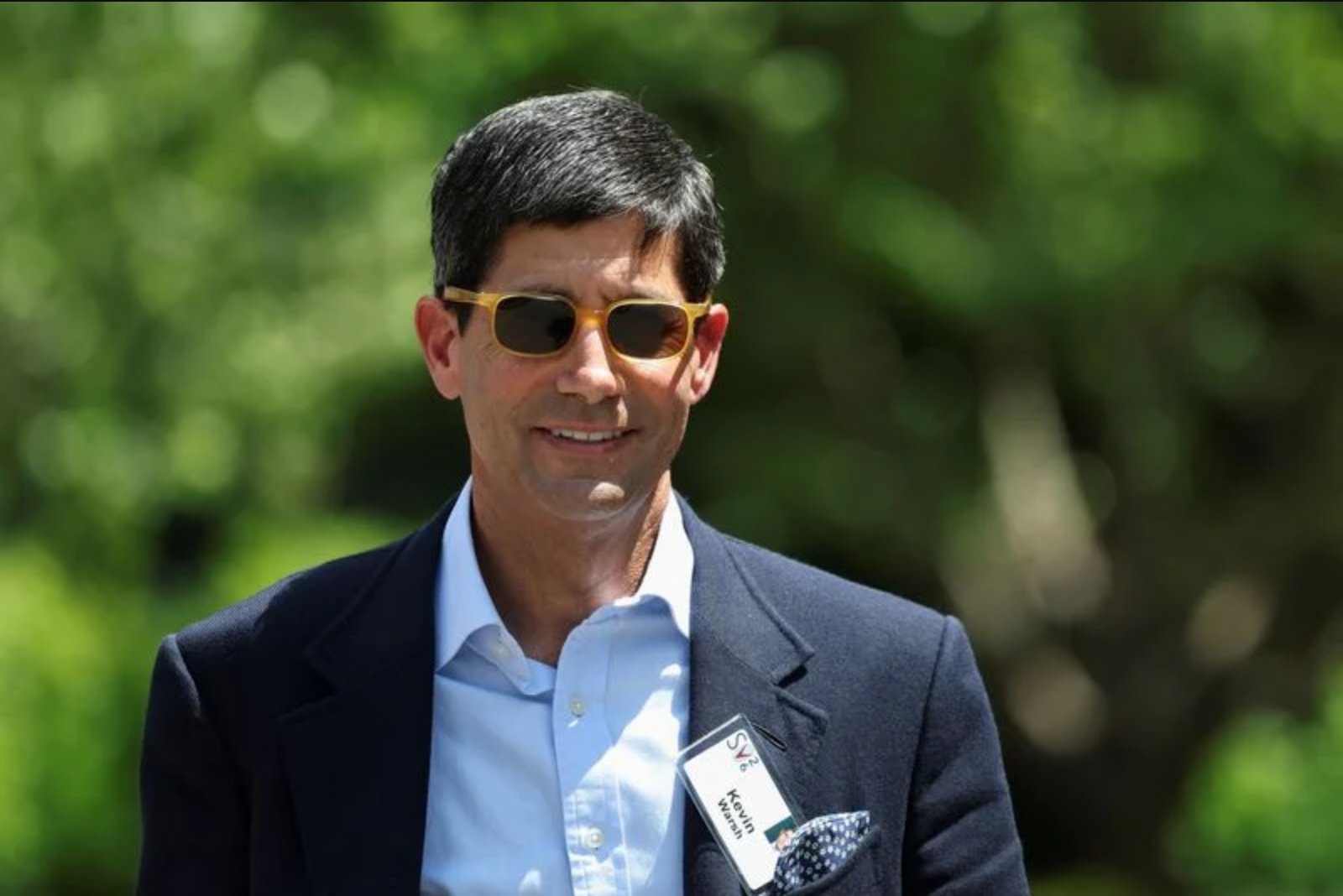
July 10 - Federal Reserve Chairman Kevin Warsh on Thursday announced the leadership for a comprehensive review of how the U.S. central bank implements policy operations. He tapped 15 individuals - 13 men and two women - to lead five distinct taskforces. Below is a concise profile of each designee, organized by the taskforces they will steer.
Summary of the assignment
Warsh has assigned teams to examine communications, balance sheet policy, the Fed’s use of data, productivity and labor dynamics, and inflation frameworks. The leaders named combine experience from central banking, government service, academia and the private sector. They will guide the taskforces that are intended to evaluate and recommend changes to the central bank’s policy toolset and practices.
COMMUNICATIONS
Peter Fisher - professor of practice, Foster School of Business, University of Washington. Fisher previously served as under secretary of the U.S. Treasury for domestic finance during the first two years of former President George W. Bush’s administration. Before that, he was the System Open Market Account manager at the Federal Reserve Bank of New York.
Arminio Fraga - founder and chairman, Gávea Investimentos; former president, Central Bank of Brazil. Fraga led Brazil’s central bank from March 1999 to December 2002, succeeding a period of extreme inflation in the country. In the 1990s he worked at the New York investment firm of financier George Soros. He now runs his own investment firm, Gávea Investimentos, and sits on the advisory council to the Bretton Woods Committee, an organization that promotes international economic cooperation and supports the work of the International Monetary Fund and the World Bank Group.
Mervyn King - former governor, Bank of England. King led the Bank of England for a decade, from 2003 to 2013, including the years of the global financial crisis. He is part of the international group of central bankers who played prominent roles in adopting inflation targeting and in expanding central bank communications.
BALANCE SHEET POLICY
Karen Dynan - professor of economics, Harvard University. Dynan served as the U.S. Treasury Department’s chief economist from 2014 to 2017 during President Barack Obama’s second term. Earlier she spent 17 years as a Fed staff economist, during which time she led the household and real estate finance section from 2000 to 2007.
Raghuram Rajan - professor of finance, University of Chicago Booth School of Business; former governor, Reserve Bank of India. Rajan led the RBI from 2013 to 2016, and a decade earlier he was chief economist at the International Monetary Fund. In 2022 he co-authored a paper presented at the Kansas City Fed’s Jackson Hole symposium that focused on the challenges posed by reducing the Fed’s large balance sheet, titled "Liquidity Dependence: Why Shrinking Central Bank Balance Sheets is an Uphill Task."
Jeremy Stein - professor of economics, Harvard University; former governor, Federal Reserve Board. Stein was a Fed governor for two years from May 2012 to May 2014. In the previous year he and two other academics wrote a Brookings Institution paper titled "Treasury Market Dysfunction and the Role of the Central Bank," which examined changes in the U.S. Treasury market since the Fed’s extensive bond purchases during the COVID-19 pandemic.
DATA
Raj Chetty - professor of economics, Harvard University. Chetty directs the Opportunity Insights research team at Harvard, known for influential research on the declining ability of low-income individuals to move into the middle class. Harvard notes he was among its youngest tenured professors, and his group uses large-scale data analysis to study ways to improve outcomes for disadvantaged children.
Doug McMillon - former president and CEO, Walmart. McMillon concluded a 12-year tenure as head of Walmart in January, during which he is credited with transforming the company from a traditional big-box retailer into a technology-focused enterprise positioned to compete in e-commerce.
Kevin Murphy - professor of economics, University of Chicago. Murphy’s research spans topics including inequality, unemployment and relative wages, addiction, and the economic value of improvements in health and longevity, according to his faculty profile.
PRODUCTIVITY AND JOBS
Marc Andreessen - cofounder and general partner, Andreessen Horowitz. As an early Internet developer and a leading Silicon Valley venture capitalist, Andreessen is a prominent backer and major donor to President Donald Trump, and he advised the administration’s Department of Government Efficiency (DOGE) on cost-cutting.
Charles "Chad" Jones - professor of economics, Stanford University, currently on leave at Anthropic Institute. Jones earned a PhD in economics from MIT in 1993 and joined Stanford’s economics faculty, where he has focused on the determinants of economic growth. In a recent paper he sketched a scenario in which artificial intelligence could raise productivity and create abundance over decades, while also noting the prudence of preparing for potential large consequences for labor markets, inequality, and catastrophic risk.
Asha Sharma - executive vice president and Xbox CEO, Microsoft. Sharma joined Microsoft after graduating in 2011 from the University of Minnesota and held roles at other technology firms including Facebook and Instacart, where she served as chief operating officer during its initial public offering in 2023. She returned to Microsoft in 2024 to lead internal AI development and, since February of this year, has overseen Microsoft’s gaming division. This week the gaming unit announced it was cutting 3,200 jobs in a restructuring; the company said the jobs are not being replaced by AI, though analysts have noted a connection between cost-cutting and large investments in artificial intelligence by major technology firms.
INFLATION FRAMEWORKS
Greg Mankiw - professor of economics, Harvard University; former chairman of President George W. Bush’s Council of Economic Advisers. In 2024 Mankiw set out views on inflation that overlap with Warsh’s, including skepticism about relying too heavily on the unemployment rate as a gauge of inflation pressures, and the argument that a central bank targeting 2% inflation should be prepared to declare success when inflation rounds to 2% rather than reaching that exact figure. In 2002 he co-authored a paper for the European Central Bank proposing that an inflation-targeting central bank consider a price index that gives weight to the nominal wage level; the ECB did not adopt that approach.
Thomas Sargent - professor of economics, New York University; 2011 Nobel laureate in economics. Sargent’s research covers a wide range of work on the causes of inflation. He has written that when governments are running fiscal deficits, raising interest rates today to counter inflation could, in some circumstances, lead to higher inflation later. In a recent paper he attributed the Fed’s delayed response in 2022 to rising inflation not only to the belief inflation would be transitory but also to uncertainty about tightness in labor markets and concerns that aggressive rate hikes would impose excessive harm.
William White - senior fellow, C.D. Howe Institute; former economic adviser, Bank for International Settlements. White earned his PhD in economics from the University of Manchester in 1969 and held positions at the Bank of England and the Bank of Canada before joining the BIS in 1996. At the BIS he oversaw research and data production and helped organize global central banker meetings, and he published critiques of inflation-targeting while at the BIS.
What the roster represents
The 15 leaders span central banking, government economic policymaking, academic research and corporate leadership. Their collective expertise covers traditional central bank tools and communication strategies, the operational implications of large balance sheets, high-frequency and large-scale data analysis, productivity and labor market transitions in the face of technological change, and competing views on how to frame and measure inflation.
Impacted sectors
Financial markets and institutions, given the prominence of former central bankers and academics focused on monetary operations and the Treasury market.
Technology and large employers, as reflected by appointees with private-sector technology and retail leadership experience.
Labor markets and productivity-sensitive industries, in light of taskforces addressing jobs and the potential economic effects of artificial intelligence.
Next steps
Warsh’s appointment of these figures places established economists and corporate leaders at the forefront of a review intended to scrutinize the mechanics and frameworks of Fed policy. Each named individual will lead a taskforce charged with examining specific elements of central bank practice, though the precise deliverables, schedules and internal membership beyond these leaders were not detailed in the announcement.
This group will steer discussions and evaluations that could influence how the Fed communicates, manages its balance sheet, uses data, assesses productivity and labor trends, and frames inflation policy.
Editor’s note: Biographical and career details above reflect the positions and roles specified in the announcement and as reported in the initial release of the taskforce leadership.