
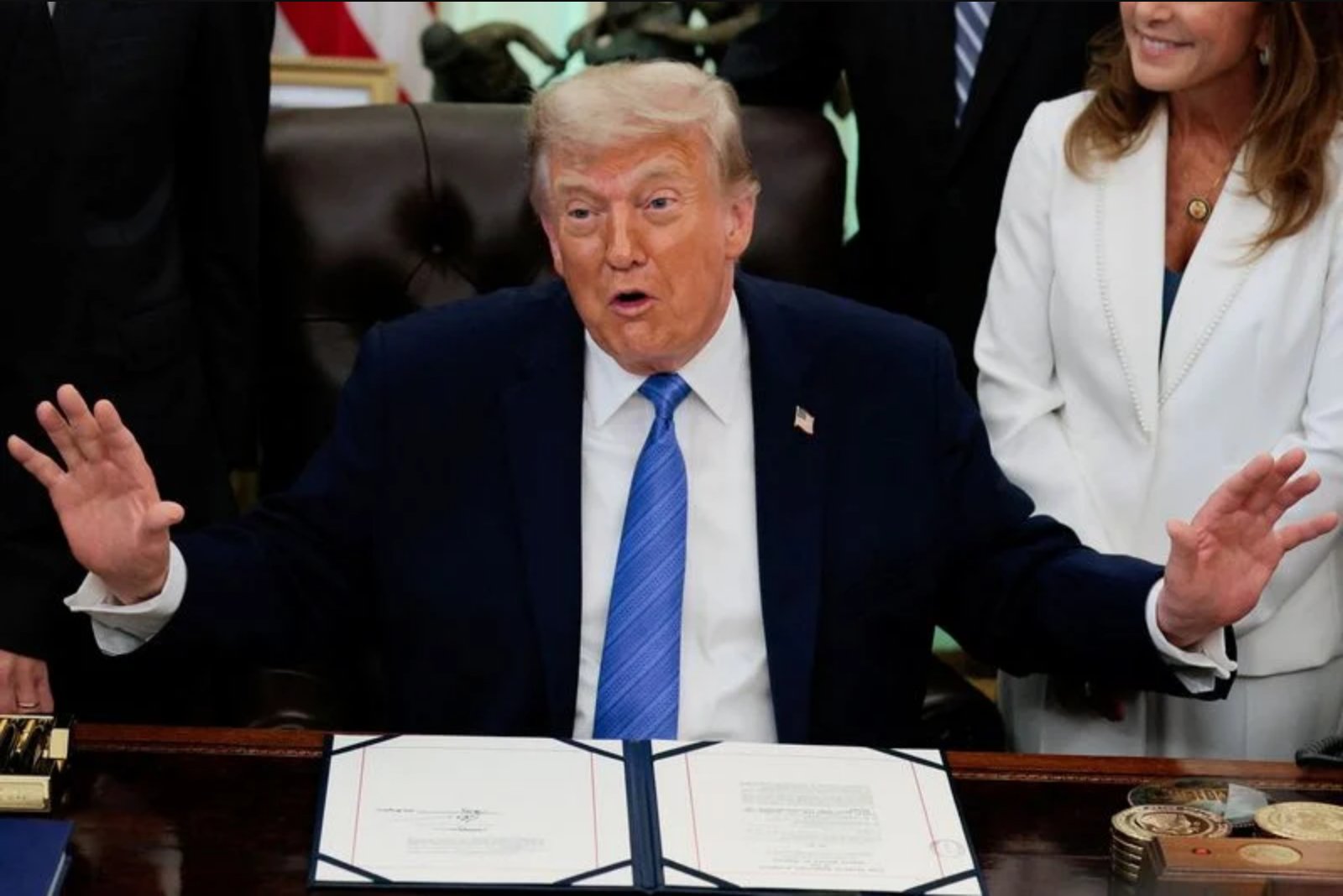
President Donald Trump on June 10 expressed an unusual embrace of higher consumer prices, saying he "loved the inflation" as U.S. government data showed consumer inflation rose at its fastest pace in three years in May, topping 4%.
Pressed by reporters on whether the jump in inflation could hurt Republican prospects ahead of November’s midterm elections, Trump repeated the phrase: "I love the inflation." He then described authorizing a covert plan to move oil tankers through the Strait of Hormuz as part of his response to the situation, saying the action was taken amid concerns over rising costs and accelerating inflation.
"It was worth it to me," the president said of his decision and called the operation a success. He further said that when the larger conflict with Iran is over, "you will see oil drop to where it was before," adding, "It’s coming down. It’s going to come down like a rock."
Trump has characterized the war with Iran as a detour and framed it chiefly as a national security issue. He cited Tehran’s closure of the key shipping route as a driver behind higher prices for gasoline, fertilizer and other goods - increases that have contributed to the broader inflation reading.
Higher inflation presents a policy dilemma for the U.S. Federal Reserve. Sustained elevated prices could keep the Fed from lowering interest rates, a move that would otherwise reduce borrowing costs - an outcome the president has urged since returning to power last year.
The political stakes are also clear. Republicans are trying to hold control of the U.S. House of Representatives and the Senate, and party strategists are concerned that consumer discontent over the rising cost of living could shift voter preferences toward Democrats in the run-up to November.
Trump, who campaigned in part on pledges to reduce inflation and whose approval ratings on cost-of-living issues have declined, has seen his overall approval on economic management fall to the lowest level of his political career, the president said in reference to his standing.
Efforts to reopen the Strait of Hormuz to routine tanker traffic have stalled, and industry executives and analysts have warned that the coming weeks could bring another oil price shock large enough to unsettle broader financial markets. Even if a deal between the United States and Tehran were reached in short order, officials expect it would take months before supplies fully resume; disruptions are now anticipated to extend through 2026.
While Americans may be more insulated from direct fuel shocks than consumers in some other countries, sustained higher energy costs could gradually erode consumer spending, complicating household finances and broader economic activity over time.
On the subject of Americans’ financial hardships and his calculus toward the conflict, Trump reiterated comments he made last month: "I don’t think about Americans’ financial situation. I don’t think about anybody. I think about one thing: We cannot let Iran have a nuclear weapon."
The president’s remarks tie together geopolitical strategy, energy market dynamics and domestic political considerations. They highlight how disruptions to a critical maritime route and related moves to safeguard shipments are now directly feeding into headline inflation figures and shaping debates over monetary policy and electoral risk.
Summary
President Trump publicly endorsed rising inflation in light of May's sharp increase in consumer prices, defended a secretive operation to move oil tankers through the Strait of Hormuz, and predicted oil prices will fall sharply after the Iran conflict ends. The situation has raised concerns about its effects on consumer costs, Federal Reserve rate decisions, and Republican prospects in the November midterms.
- Key points
- Inflation accelerated to more than 4% in May, the fastest pace in three years, prompting the president to say "I love the inflation."
- Trump said he authorized a covert tanker operation through the Strait of Hormuz and defended it as "worth it," predicting oil prices will drop sharply once the Iran war ends.
- Higher energy costs tied to Tehran’s closure of the shipping route have pushed up gasoline, fertilizer and other goods, complicating Fed rate decisions and raising political risks for Republicans ahead of the midterms.
- Risks and uncertainties
- Ongoing closure of the Strait of Hormuz and stalled efforts to fully reopen tanker traffic raise the risk of additional oil price shocks that could jolt financial markets - impacting energy and broader markets.
- Even if a diplomatic deal is reached soon, supply restoration could take months with disruptions expected through 2026, prolonging inflationary pressures and potentially reducing consumer spending.
- Sustained higher inflation could prevent the Federal Reserve from cutting interest rates, keeping borrowing costs elevated and affecting mortgage, auto and consumer lending sectors.
Key sectors affected: Energy, consumer goods, agriculture (fertilizer), financial markets