
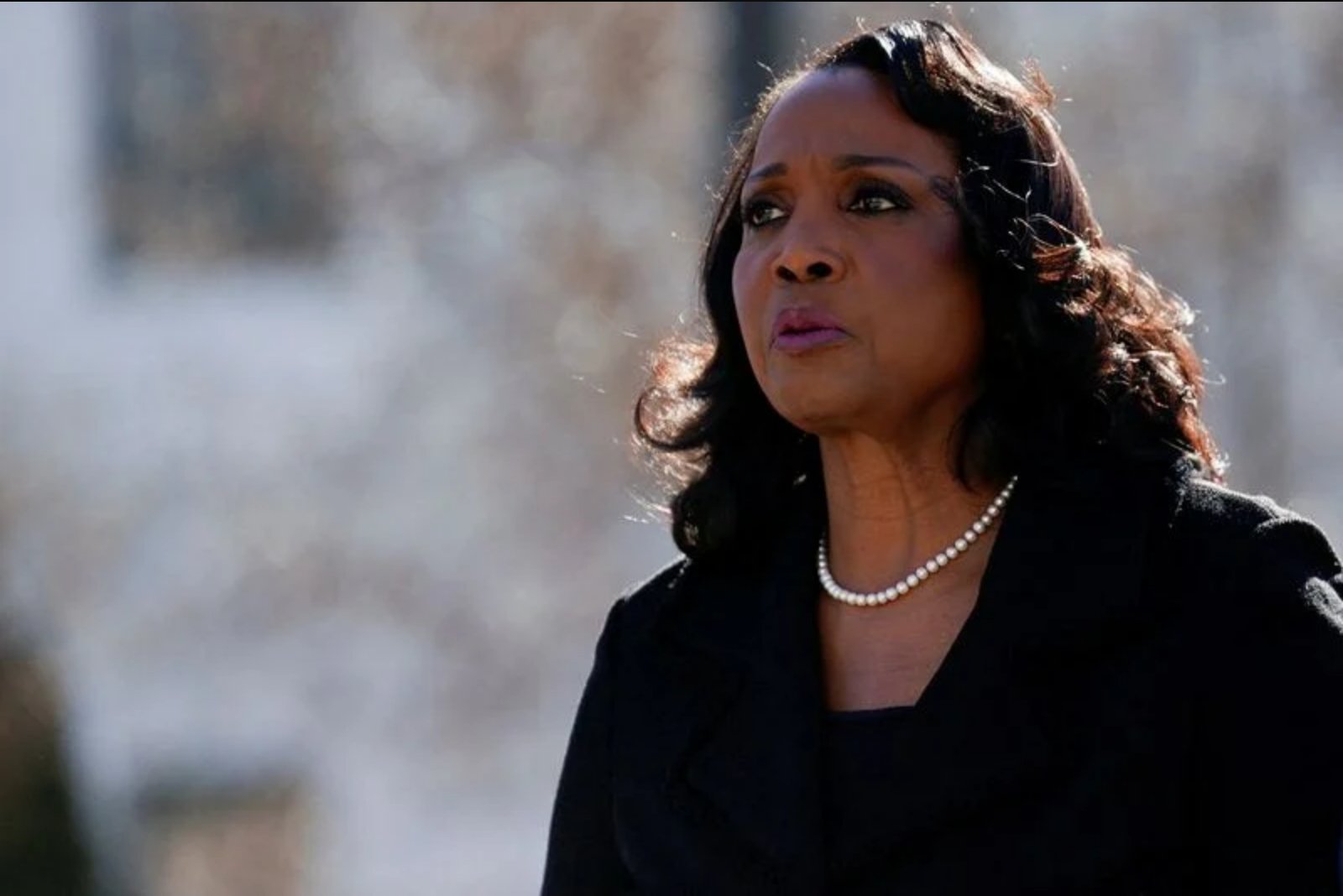
The U.S. Supreme Court on Monday declined to permit President Donald Trump to immediately remove Federal Reserve Governor Lisa Cook from her seat, issuing a 5-4 decision that preserves long-established protections intended to shield the central bank from direct political removal.
The ruling prevents Mr. Trump from becoming the first president to dismiss a Federal Reserve official since Congress created the central bank in 1913. A request by the Justice Department to set aside a lower-court order barring an immediate termination was denied, leaving in place a judge’s finding that the president’s August move likely violated Cook’s constitutional rights and statutory protections.
Background and sequence of events
President Trump announced the termination in August 2025 by publishing a termination letter on social media that cited allegations of mortgage-related misconduct disclosed by Federal Housing Finance Agency Director Bill Pulte. The allegations concerned residences in Ann Arbor, Michigan, and Atlanta. Governor Cook, the first Black woman to serve as a Fed governor, denied the claims and said the action was a pretext motivated by disagreements over monetary policy.
Following the announcement, U.S. District Judge Jia Cobb in September found that the president’s attempt to remove Cook without notice or an opportunity for a hearing likely violated her Fifth Amendment right to due process. The judge also concluded that the allegations cited by the administration were related to conduct that predates Cook’s service at the Fed and therefore likely did not meet the Federal Reserve Act’s standards for cause.
The U.S. Court of Appeals for the District of Columbia Circuit declined to suspend Judge Cobb’s order. The Supreme Court agreed in October to hear the dispute and left Cook in her role while the case proceeded. Arguments were presented to the justices in January, with both Cook and then-Fed Chair Jerome Powell in attendance.
What the law says
When Congress established the Federal Reserve in 1913, it included statutory language intended to protect the central bank from direct political interference by restricting presidential removal of governors to cases of "for cause." The statute does not define what constitutes "for cause" nor does it lay out removal procedures, which has left open legal interpretation when a president attempts to exercise removal authority.
The administration's legal position argued that the president has broad discretion to identify a cause for removal and that such a determination should be largely unreviewable by the courts. Cook’s legal team countered that allowing such unchecked authority would effectively destroy the Fed’s independence, destabilize markets and invite future presidents to use dismissal as a mechanism to steer monetary policy.
Related legal battles and the broader judicial posture
The decision to block Cook’s immediate removal comes amid several high-profile clashes between the president and the judiciary over the scope of executive power. Earlier this year, the Supreme Court ruled on a separate case with significant economic consequences by striking down most of the president’s sweeping global tariffs, a decision that prompted a fierce denunciation from the president.
In recent years the Supreme Court has taken cases that narrowed the independence of certain federal agencies from presidential control and has been positioned to reconsider precedents that have insulated agency heads from removal since 1935. Yet the court last year indicated it might treat the Federal Reserve as distinct because of its unique structure and long-standing role, an idea that was referenced in a May 2025 ruling related to federal labor boards.
The Fed and the individuals involved
Governor Lisa Cook was appointed by President Joe Biden in 2022 and her term extends through 2038. The Fed, regarded as the world’s most important central bank, determines the cost of credit in the United States and influences global financial conditions. The institution’s ability to set interest rates independently of political direction has been central to debates over its role in controlling inflation and maintaining market stability.
The episode involving Cook was one of several confrontations between the White House and the Fed following Mr. Trump’s return to the presidency in January 2025. Another prominent dispute involved Jerome Powell, whose eight-year tenure as Fed chair concluded on May 15, though he remains a member of the Federal Reserve’s Board of Governors.
The Senate on May 13 confirmed President Trump’s nominee Kevin Warsh as Powell’s successor; Warsh was sworn into office on May 22. Warsh had previously served on the Fed’s Board of Governors. During his swearing-in, Supreme Court Justice Clarence Thomas administered the oath and Justice Brett Kavanaugh attended the ceremony.
Investigation into Powell and related developments
The administration also pursued a separate inquiry into Powell involving alleged cost overruns tied to renovation projects at the Fed’s Washington headquarters. Powell and others described that probe as a pretext intended to pressure the central bank to lower interest rates. On March 13 a judge blocked subpoenas issued by a prosecutor appointed by the administration, agreeing with Powell that the investigation threatened to improperly intimidate the Federal Reserve. The prosecutor later dropped the inquiry on April 24.
The Department of Justice ultimately abandoned the Powell investigation after Republican Senator Thom Tillis criticized it as a frivolous assault on the Fed’s independence and pledged to block the confirmation of the president’s nominee to lead the central bank while the inquiry was ongoing. The withdrawal of that probe removed one significant legal pressure point on the institution, but the Cook matter continued through the courts.
Allegations and tax-status findings
In a separate action, Bill Pulte submitted a criminal referral to the Justice Department requesting an investigation into Cook and others over alleged mortgage fraud. There has been no indication that a criminal investigation has advanced. Records indicate that Pulte’s father and stepmother claimed the same homestead status as Cook on two separate residences. Homestead exemptions are used to lower property tax liabilities for a homeowner’s primary residence. The property tax authority in Ann Arbor said that Cook had not violated tax break rules in connection with her home despite the accusations.
Political pressure and monetary policy
President Trump has frequently pressed the central bank to reduce interest rates more quickly and more steeply than it has, while publicly criticizing Mr. Powell for not adhering to those demands. The Cook matter — together with earlier actions against Powell — represented one of the most forceful attempts by a modern president to exert influence over the Federal Reserve’s decision-making.
Cook serves as one of seven members of the Board of Governors, and she participates alongside the presidents of the 12 regional Federal Reserve banks in setting U.S. monetary policy. Her role, and the court fight over her removal, have direct implications for how the Fed operates when faced with political pressure on rate-setting decisions.
What the ruling leaves unsettled
While the Supreme Court’s decision keeps Cook at the Fed for the time being and prevents an immediate change in board composition, it does not fully resolve the broader legal questions about the extent of presidential authority to remove independent agency officials. The Federal Reserve Act’s lack of a precise definition for "for cause" and absence of removal procedures means further litigation or legislative clarification could still be needed to settle the issue definitively.
The close 5-4 split also highlights the narrow margin by which the Court decided to preserve the Fed’s current protections in this case, leaving open the possibility that future challenges or slightly different fact patterns could produce a different outcome.
Conclusion
The Supreme Court’s refusal to allow an immediate removal of Governor Lisa Cook marks a significant affirmation of the procedural and statutory safeguards designed to insulate the Federal Reserve from sudden political interference. The decision maintains the status quo while the underlying legal contest proceeds, and it underscores ongoing tensions between the executive branch and an institution charged with steering monetary policy independent of day-to-day political pressures.