
Economy June 15, 2026 09:52 AM

Merz Says U.S.-Iran Peace Deal Could Help Steady Global Economy, Stresses Lebanon Clause

German chancellor signals diplomatic openings on Ukraine ahead of G7 summit in France and plans to raise the issues with U.S. President Trump

By Jordan Park
Share
Twitter Reddit Facebook LinkedIn

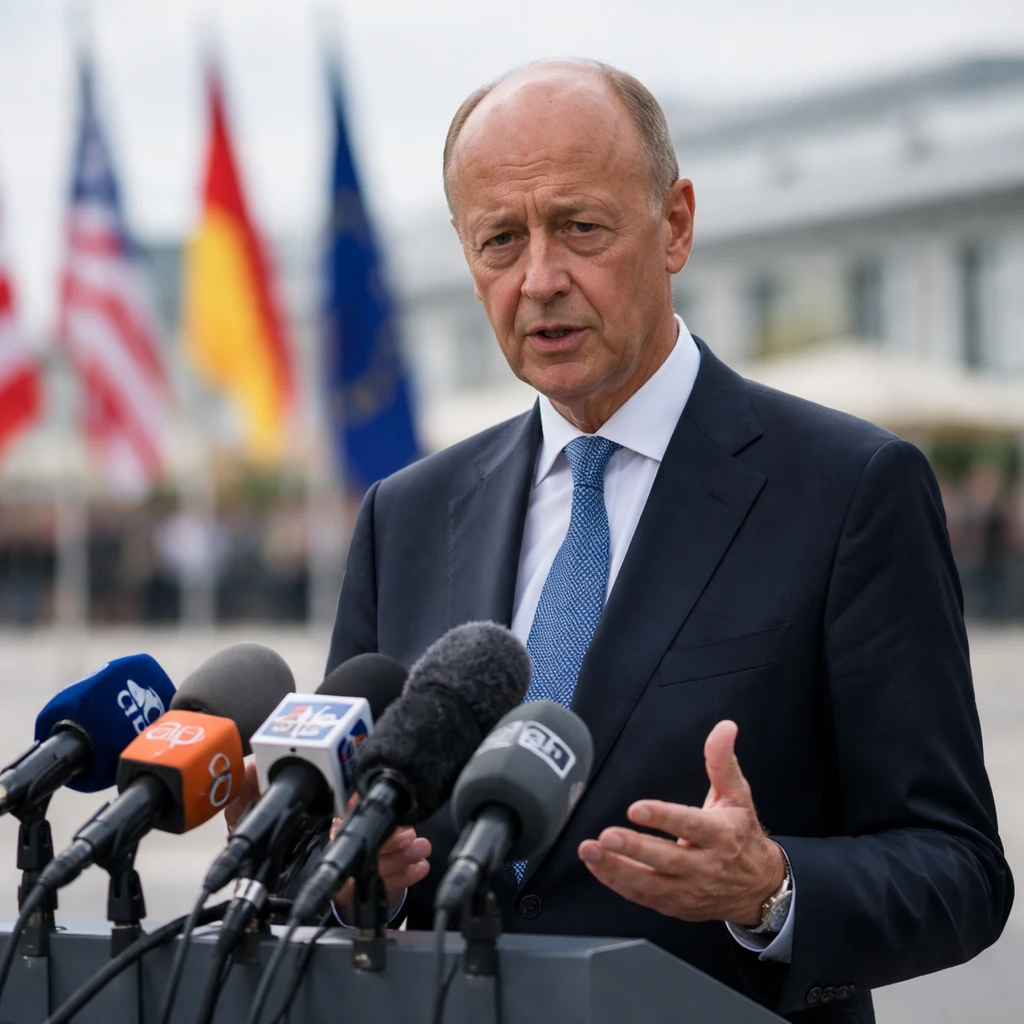
German Chancellor Friedrich Merz told reporters that a negotiated settlement between the United States and Iran has the potential to bring stability to the global economy, and that any such arrangement should also extend to Lebanon. Speaking ahead of a Group of Seven meeting in France, Merz said a diplomatic opening has emerged on the Ukraine war and that he intends to discuss the developments with U.S. President Donald Trump. He added that Ukraine occupies a position of renewed strength and asserted that Russia cannot secure victory through military means.

Merz Says U.S.-Iran Peace Deal Could Help Steady Global Economy, Stresses Lebanon Clause
Summarize with
ChatGPT Perplexity Claude Grok Gemini

Key Points

  • Merz said a U.S.-Iran peace deal could help stabilize the global economy - impacts financial and commodity markets sensitive to geopolitical risk.
  • He stated any such agreement must also apply to Lebanon - underscoring regional considerations in Middle East diplomacy.
  • Merz indicated a diplomatic opening on the Ukraine war and plans to discuss it with U.S. President Donald Trump at the G7 summit; he described Ukraine as in a new position of strength and said Russia cannot attain victory by military means - relevant to security and defense sectors.

German Chancellor Friedrich Merz said on Monday that a peace agreement between the United States and Iran could contribute to stabilizing the global economy, and he emphasized that any accord should be applied to Lebanon as well.

Merz offered the remarks in the run-up to a Group of Seven meeting taking place in France this week. He framed the potential U.S.-Iran diplomatic outcome as a factor that could restore elements of international economic calm.

Alongside his comments on the U.S.-Iran matter, Merz addressed the conflict in Ukraine. He said a diplomatic opening has appeared with respect to the Ukraine war and that he plans to raise the issue directly with U.S. President Donald Trump at the summit.

On the battlefield situation, Merz described Ukraine as occupying a new position of strength. He also expressed the view that Russia is unable to achieve victory through military means.

Merz's remarks linked two distinct diplomatic developments: the prospects for a U.S.-Iran settlement - which he said should explicitly include Lebanon - and evolving diplomatic dynamics around Ukraine that he expects to discuss with the American president at the G7 meeting.

The chancellor's comments highlight his view that negotiated outcomes in the Middle East could have broader effects on global economic stability, and that developments in Ukraine present a shifting strategic picture that merits discussion among G7 leaders.


Contextual note: These statements were delivered publicly in advance of the Group of Seven gathering in France, where Merz said he intends to speak with President Trump about the situation in Ukraine. Beyond these remarks, no additional details about proposed agreements or timelines were provided by the chancellor.

Risks

  • It is uncertain whether negotiations between the United States and Iran will lead to a durable agreement that includes Lebanon - this uncertainty affects political risk premiums in global markets.
  • The nature and extent of the 'diplomatic opening' on Ukraine were not specified by Merz, leaving unclear how talks at the G7 might translate into concrete policy changes - this creates uncertainty for defense and energy markets.
  • No details or timelines were provided for either the U.S.-Iran discussions or the planned talks with President Trump, so outcomes and immediate economic effects remain undetermined.

More from Economy

Undersea Cable Near Tartous Damaged in Alleged Sabotage, Syria Faces Widespread Internet Disruptions Jun 15, 2026 IMF warns economic risks remain high despite reopening of Strait of Hormuz Jun 15, 2026 IMF says global growth has held up so far, but elevated risks remain Jun 15, 2026 Builder Confidence Slips in June as Rates and Material Costs Bite Jun 15, 2026 Poland’s Monetary Council Seen Holding Rates Into Next Year as Geopolitical Risks Linger Jun 15, 2026