
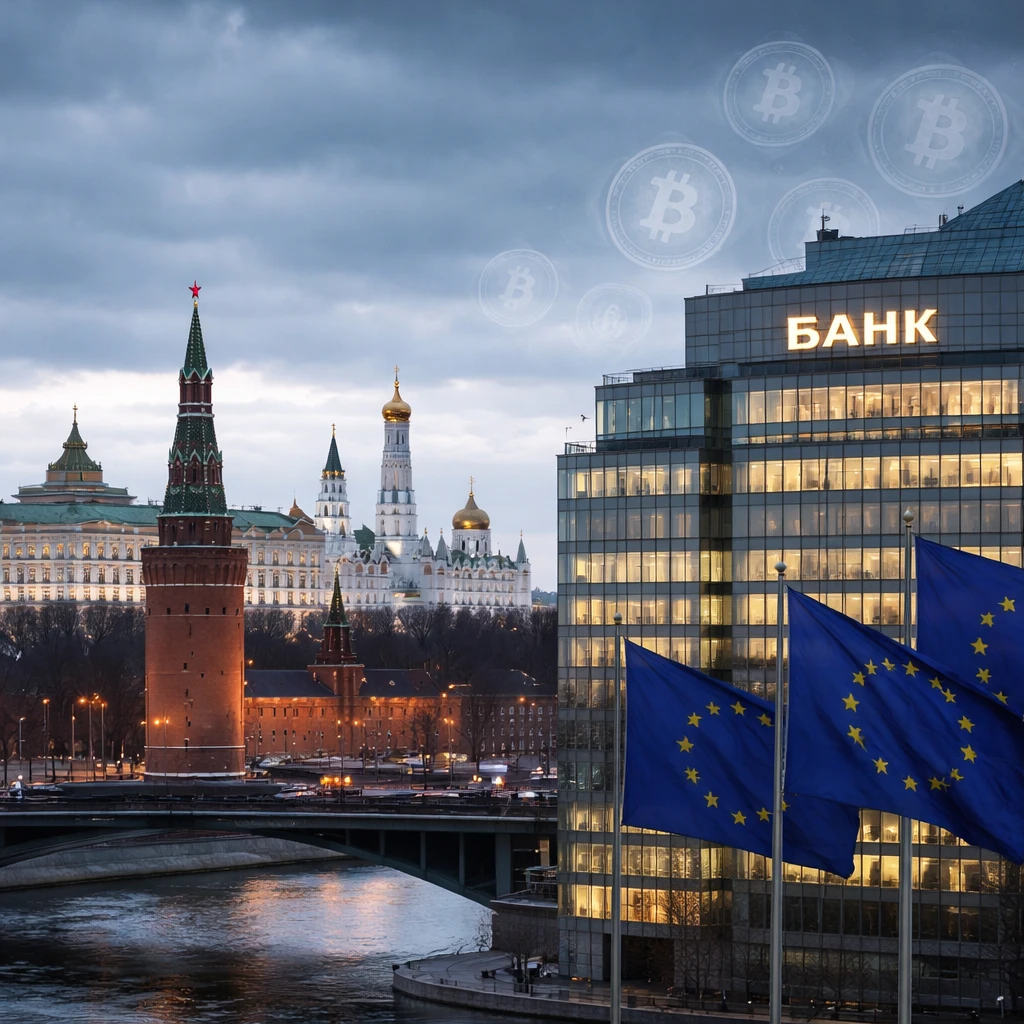
The Kremlin insisted on Thursday that a new European Union sanctions package aimed at Russian banks and cryptocurrency networks will not impair the operations or profitability of Russia’s lenders, saying those institutions have already adapted to operating under restrictions for years.
The EU has proposed measures targeting Russian financial institutions and crypto networks with the stated goal of weakening the country's financial system in response to the war in Ukraine. Kremlin spokesman Dmitry Peskov told reporters that Russia’s largest banks have long been subject to sanctions and that those measures have not undermined their financial results.
"Our largest banks have long been under sanctions. This does not prevent the banks from earning large profits, developing, maintaining absolute stability," Peskov said when asked whether the banking sector could withstand additional limitations.
Peskov also referred to remarks made by President Vladimir Putin on Wednesday in which the president said the economic situation was under control. The spokesman said that the same assertion applies to the banking sector and that Russia’s central bank is watching developments closely and taking steps it deems necessary to preserve stability.
The Kremlin’s response frames the proposed EU measures as unlikely to change the operating environment for major Russian banks, on the grounds that they have continued to function and generate profits despite existing restrictions. Peskov emphasized both the resilience of the banks and the role of the central bank in monitoring and managing any risks to stability.
Summary
The Kremlin dismissed the impact of a new EU sanctions package that targets Russian banks and cryptocurrency networks, arguing that major Russian lenders have long operated under sanctions without harm to profitability or stability. Kremlin spokesman Dmitry Peskov echoed President Vladimir Putin’s assessment that the economy is under control and noted ongoing central bank oversight.
Key points
- Proposed EU sanctions focus on Russian banks and cryptocurrency networks with the objective of weakening Russia’s financial system - sectors affected include banking and crypto markets.
- The Kremlin says Russia’s largest banks have functioned under sanctions for an extended period without negative impacts on profits or stability - relevant to lenders and the broader financial sector.
- Russia’s central bank is described as actively monitoring the situation and taking measures to preserve banking-sector stability - relevant to monetary authorities and financial markets.
Risks and uncertainties
- Uncertainty about the EU package’s effectiveness in weakening Russia’s financial system - this directly pertains to the banking and cryptocurrency sectors.
- Potential for additional restrictions to be introduced, even though Kremlin officials say banks remain stable - this could affect market perceptions of Russian financial institutions.
- Reliance on central bank interventions to maintain stability creates uncertainty about how policies will evolve if new measures are implemented - relevant to regulatory and monetary policy watchers.
For further context, the article reports official statements and the outline of the proposed EU measures as described by the Kremlin; it does not introduce additional data or outside analysis.