
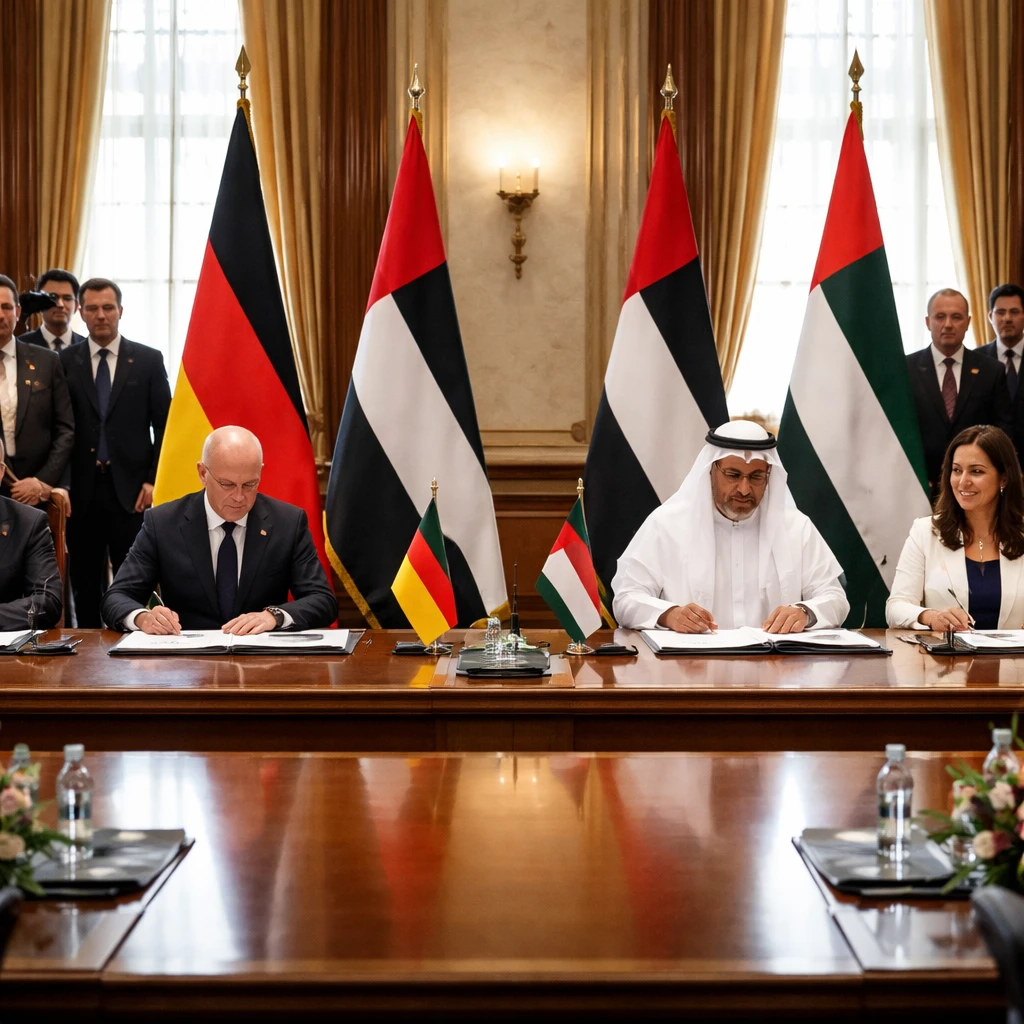
The United Arab Emirates and Germany are poised to formalize a package of investment, artificial intelligence and energy agreements valued at several billion dollars on Thursday, according to comments made by Lana Nusseibeh, a UAE minister of state and former ambassador to the United Nations.
Speaking to journalists in Berlin on Wednesday, Nusseibeh characterized the planned agreements as the start of a new phase in bilateral relations. She said the accords would strengthen existing partnerships and open channels for deeper cooperation between researchers and investors, though she did not lay out specific deal terms.
"A stronger UAE–Germany relationship can help connect European industrial and technological strengths with capital, energy and growth opportunities across the Gulf, Asia and Africa," Nusseibeh said, outlining the strategic rationale the UAE sees behind the agreements.
The pacts will be formalized during a visit to Berlin by UAE President Sheikh Mohamed bin Zayed Al Nahyan. Nusseibeh indicated the package will include a framework for technology cooperation aimed at bringing together research institutions and investors, and separate agreements addressing the energy transition that build on existing collaborations in renewables, hydrogen and energy efficiency.
The two countries already trade goods and services valued at roughly $15.5 billion a year, excluding oil, and maintain partnerships across several sectors. Nusseibeh framed the new agreements as an extension of those ties rather than a departure from established collaboration.
She also linked the timing and scope of the deals to a broader geopolitical backdrop. Growing uncertainty, including the conflict with Iran and shifts in the UAE's relationship with the United States, has encouraged both nations to widen strategic networks and reinforce existing partnerships, she said.
German Chancellor Friedrich Merz visited the Gulf in February, shortly before the United States and Israel launched strikes against Iran that have left a war unresolved for more than six months, a regional development Nusseibeh cited as part of the changing strategic environment that underpins the new agreements.