
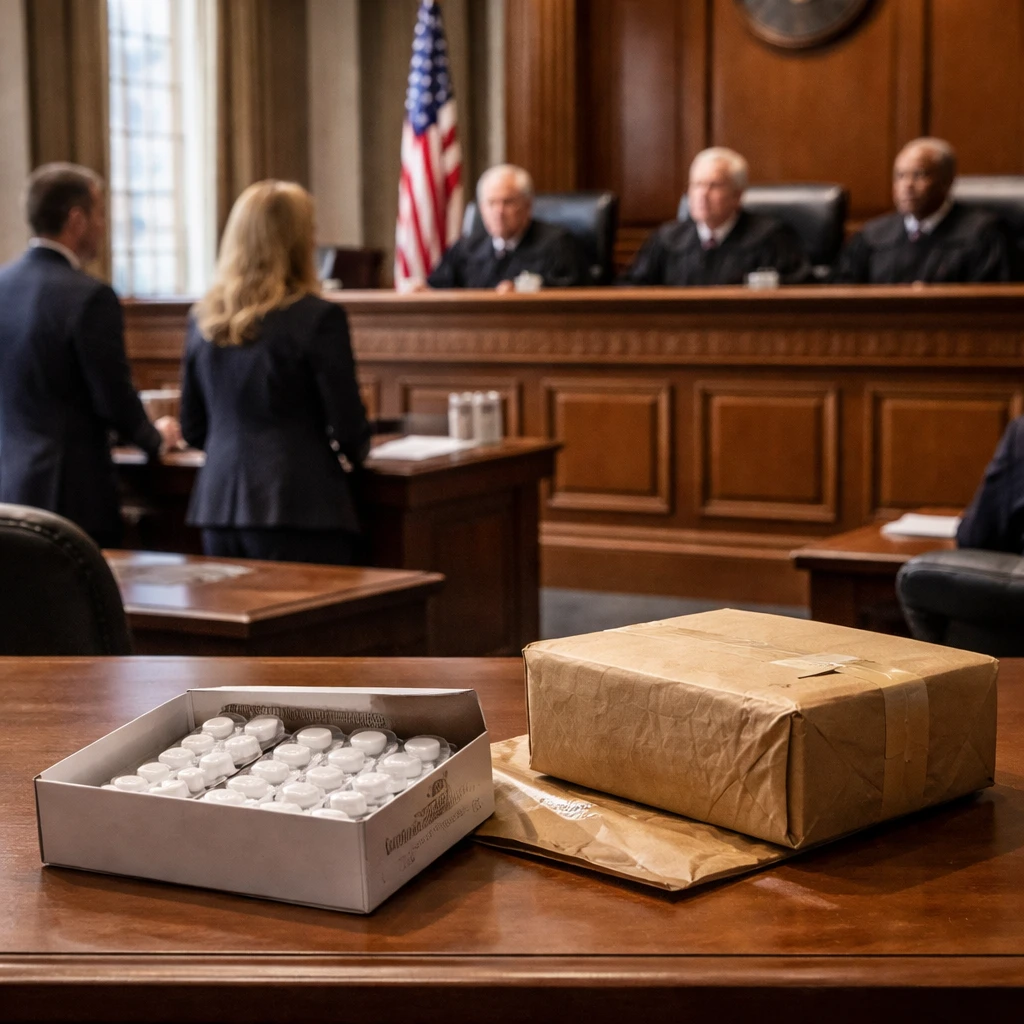
The New Orleans-based 5th U.S. Circuit Court of Appeals on Wednesday gave a wary reception to Louisiana's effort to undo a 2023 U.S. Food and Drug Administration rule that allowed the abortion medication mifepristone to be prescribed via telemedicine and delivered by mail across the country.
Louisiana Solicitor General Ben Aguinaga told the three-judge panel that the rule should be struck down because, he argued, it undercuts abortion bans that his state and others put in place after the U.S. Supreme Court in 2022 ended the federal constitutional right to abortion. "There’s no dispute that Louisiana is experiencing 1,000 abortions a month due to mifepristone mailed into the state," Aguinaga said in court.
Louisiana filed suit last year against the FDA, contending the agency overlooked serious risks associated with mifepristone - including sepsis and hemorrhaging - when it removed an in-person dispensing requirement and adopted the 2023 rule during the prior administration. That change allowed clinicians to prescribe the drug remotely and patients to receive it by mail instead of picking it up at a medical facility.
The litigation is a return engagement to the 5th Circuit. Earlier this year, a different panel temporarily blocked the FDA rule, but the U.S. Supreme Court in May lifted that order, permitting telemedicine prescribing and mail dispensing to continue. U.S. Circuit Judge Stephen Higginson repeatedly pointed to the Supreme Court's action during Wednesday's arguments.
Judge Higginson, noting the court's conservative reputation, observed the panel had been reversed unanimously by the Supreme Court in 2024 in a separate challenge by anti-abortion groups and clinicians that sought to tighten FDA rules easing access to the drug. He and U.S. Circuit Judge Dana Douglas, another appointee of a Democratic president, pressed Louisiana's lawyers on whether the state could establish legal standing to pursue the case.
"There are too many independent actors to say that actually the government’s assessment of safety is what’s causing your 1,000 abortions a month," Higginson said, questioning whether the state could attribute the in-state abortions directly to the FDA's reassessment of mifepristone.
The panel indicated that if it rules against Louisiana, the state could seek further review either from the U.S. Supreme Court or by asking the full 5th Circuit, which has a significant majority of Republican appointees, to rehear the matter. The case is one among several pending challenges to the FDA regulation.
Restricting access to mifepristone - including its provision through telehealth visits with out-of-state clinicians - has been a policy priority for Republican-led states that enacted abortion bans after the Supreme Court's 2022 decision. The litigation sits against a backdrop in which nearly half of U.S. states have banned or sharply limited abortion since that ruling, a shift that coincided with a marked increase in medication abortion.
Medication abortion, which uses a two-drug regimen of mifepristone followed by misoprostol, now accounts for more than 60% of U.S. abortions, data from the Guttmacher Institute show. That rise in medication use has made the regulatory terms governing mifepristone - including telemedicine prescribing and mail dispensing - a focal point in efforts to limit or preserve access.
Procedurally, U.S. District Judge David Joseph in April paused a separate element of the litigation while the federal government reviewed the safety of mifepristone under the administration of President Donald Trump. That administrative review prompted criticism from abortion rights advocates, who have characterized the review as politically motivated and unnecessary.
The FDA, which originally approved mifepristone in 2000, maintains the drug is safe and effective and says periodic reviews have not uncovered new safety concerns. Manufacturers of the drug have defended the agency's 2023 decision. Lawyers for GenBioPro and Danco Laboratories told the appeals court the FDA conducted a sufficient assessment of risks when it relaxed the dispensing requirement, with GenBioPro attorney John Elwood saying, "The FDA's decision was richly supported."
U.S. Department of Justice attorney Daniel Winik, representing the federal government, told the panel the agency's safety review was ongoing and that it was premature for the court to substitute its judgment for the FDA's regulatory role. Winik said he had "no idea" what the FDA might ultimately decide and emphasized that the agency should be allowed to complete its consideration of the drug without judicial interference.
The appeals panel included one Republican appointee, U.S. Circuit Judge Priscilla Richman, who pressed attorneys on how frequently women are being admitted to emergency rooms and questioned whether complications cited by the state would have been avoided if patients had seen clinicians in person instead of via telemedicine.
The case highlights the legal and regulatory fault lines over access to medication abortion and the role of federal health agencies in setting safety standards. It also remains a live point of contention between state attorneys general and the FDA, with courts asked to weigh procedural questions - such as standing and appropriate deference to agency expertise - in addition to the factual disputes over risk.
As the litigation proceeds, the panel's questioning suggested skepticism about Louisiana's ability to prove causation between the FDA's 2023 rule and the abortions the state has cited. How the 5th Circuit ultimately resolves those standing and causation questions will shape the path for further appeals and may determine whether broader restrictions on telemedicine prescribing and mail dispensing of mifepristone are legally sustainable.