
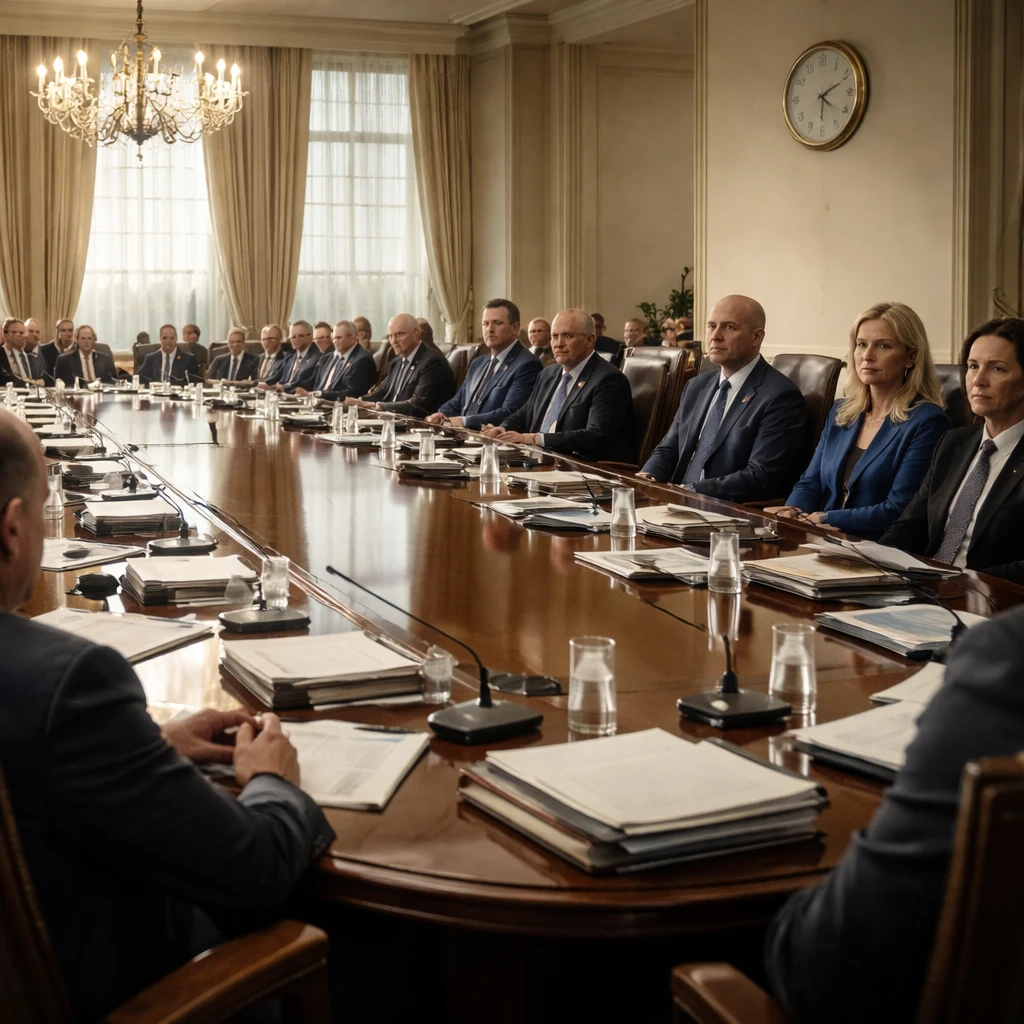
The Federal Open Market Committee concluded its July 28-29 meeting by opting to keep the federal funds rate in a 3.50%-3.75% range, a decision ratified by a 9-3 vote and representing the central bank's fifth consecutive pause.
Despite the majority decision to stand pat, three regional Fed presidents registered strong dissent. Minneapolis Fed President Neel Kashkari, Cleveland Fed President Beth Hammack, and Dallas Fed President Lorie Logan each cast their ballots for an immediate 0.25 percentage point increase to the benchmark rate. Their opposition represents the committee's most vocal pushback since 2016.
Kashkari underscored the longevity of the inflation problem, noting that inflation has remained above the Fed's 2% target for more than five consecutive years. While he acknowledged that early price pressures stemmed from supply shocks - including pandemic-related bottlenecks, the war in Ukraine, trade frictions, and conflict in the Middle East - he highlighted a newer, demand-side contributor: a multi-billion-dollar surge in AI data center development. That boom, he argued, is an additional source of heating in the economy.
Kashkari framed his preference in preventive terms: "I would rather tighten policy incrementally as we gather more data... than wait and potentially need bolder actions later." His position emphasizes taking measured tightening steps now to avoid more drastic interventions down the line.
Cleveland Fed President Beth Hammack voiced a similar sense of urgency. She characterized current policy as insufficiently restrictive given labor market conditions, noting unemployment is hovering near what she described as maximum capacity. Hammack also reported that across her district, business leaders are not observing a retreat in cost pressures; instead, those pressures are spreading through broader swaths of the economy.
Hammack warned plainly: "The longer high inflation persists, the more challenging and costly it can be to bring it back down." Her comments reinforce the dissenters' central concern that hesitation now could allow inflation to become more deeply embedded.
The three dissenting presidents share a common fear: a reluctance to act promptly could permit inflation to become entrenched, leaving the Fed to impose substantially larger rate increases later to regain control of price stability. Dallas Fed President Lorie Logan has issued public warnings consistent with this view, and while her full post-meeting statement had not been formally published at the time of the committee announcement, her vote aligns with the hawkish arguments made by Kashkari and Hammack.
Context and implications
The split highlights an active debate within the Fed between those favoring a patient approach and those urging pre-emptive tightening in the face of persistent inflation and evolving demand dynamics. The dissenters point to both labor market tightness and emerging demand from large-scale investments - specifically AI data center construction - as reasons to consider further policy tightening.
How the committee balances these views will shape near-term policy signals to markets, businesses, and households as the Fed continues to monitor incoming data.