
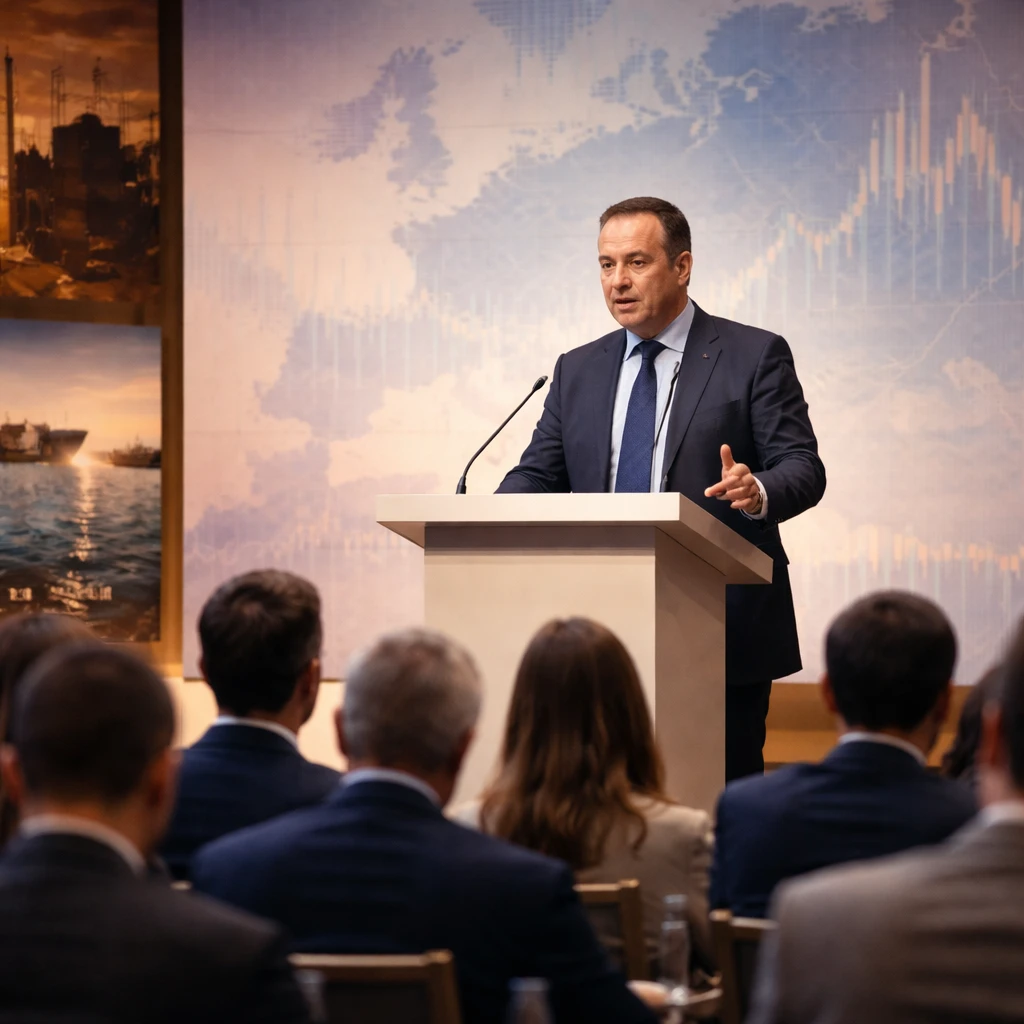
The European Central Bank may be able to pause its tightening path in July after a sharper-than-anticipated fall in energy costs and a slowdown in consumer price growth across the euro area, Governing Council member Yannis Stournaras said.
Data released on the day of his comments showed euro zone consumer price growth easing to 2.8%. Addressing attendees in Sintra, Portugal, Stournaras described the print as a "big downside surprise" and said the outlook does not currently point toward an additional move in July.
"I don’t think anything will happen in July, unless the situation changes dramatically," Stournaras said in an interview on the sidelines of the ECB’s annual forum. "As I see things now, it’s perhaps good to stay where we are for some time." The ECB increased its policy rate to 2.25% in June and is weighing whether further tightening is necessary.
Stournaras linked part of the recent disinflation to developments in energy markets. He noted that peace negotiations between the US and Iran have helped push energy markets back toward pre-war levels and that oil and gas supplies appear to be coming back into the market faster than some earlier assessments had expected.
On that point, Stournaras said central bank governors from Gulf nations recently informed their counterparts that damage to energy infrastructure "was not that big and Iran will come back with a considerable amount of oil in the market." He contrasted this assessment with prior views which suggested oil and natural gas prices would take a long time to retreat even if the Middle East conflict ended quickly.
Beyond the headline inflation number, Stournaras cautioned that policymakers must monitor how firms pass through changes in energy costs to consumers and pay attention to the inflationary implications of a surge in corporate spending on artificial intelligence.
He warned that "large spending on AI will affect prices for electronics imports from regions including Korea and Taiwan," highlighting a potential channel from tech investment into import price dynamics.
Stournaras also emphasized asymmetry in how energy price moves filter into consumer prices across Europe. "Very often in Europe, when oil prices go up, this is immediately passed on," he said. "But when there’s a decline, there isn’t the same kind of reduction. That’s because of lack of competition, or in countries like Greece, because of excess demand."
His remarks underscore the ECB’s current balancing act: weighing recent disinflation and energy market developments against uncertain pass-through effects and shifting demand patterns tied to large-scale technology investments.
Location: Sintra, Portugal