
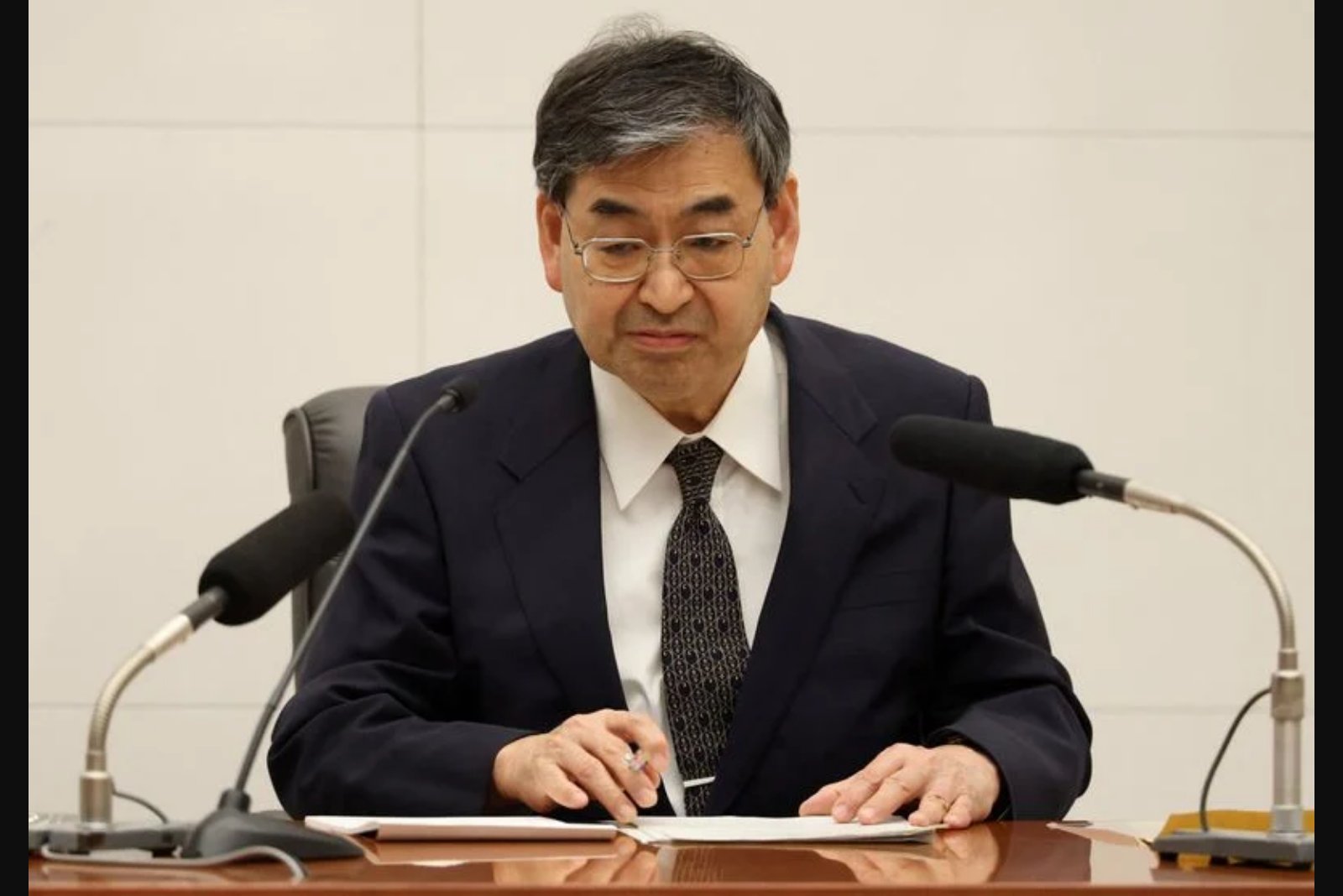
Bank of Japan board member Toichiro Asada said he needs to see evidence that inflation is being sustained by domestic demand - such as rising wages - before he would back further interest rate increases, while acknowledging that higher input costs have been passed through to consumer prices at a "relatively rapid" clip.
Asada, who was the lone dissenter in the BOJ's June decision to raise its policy rate to 1% - the highest level in 31 years - made the remarks in his first media interview since he joined the board. His comments underscore a growing policy balancing act at the BOJ: pressure to maintain looser settings from some political quarters, set against inflationary pressures as firms pass rising costs onto consumers.
On why he opposed the June move, Asada pointed to lingering uncertainty over developments in the Middle East that could harm both output and employment. He said that the central condition for him to support any future rate increase would be clear evidence that Japan can sustainably meet the BOJ's 2% inflation target.
"Moreover, I believe it is necessary to confirm that such achievement is being supported by endogenous economic forces, such as rising wages and demand," he told Reuters, adding that these forces are not yet strong enough to justify additional tightening.
At the same time, Asada made clear he is "not always opposed" to rate hikes. He said future votes on policy will depend on the economic picture at the time, with decisions taken after careful assessment of domestic and foreign developments in economic, price and financial conditions.
While headline consumer inflation has been moderating and crude oil prices have fallen, Asada cautioned that the pass-through from earlier oil price increases has been occurring at a "relatively rapid pace," and could broaden into higher prices across many goods. That dynamic, he suggested, is one reason the BOJ must remain vigilant.
Asada urged the BOJ to respond flexibly to changes in economic, price and financial conditions and to avoid making rate decisions according to any fixed timetable. "The pace of any tightening should likewise be determined after carefully assessing domestic and overseas economic, price, and financial developments," he said.
His remarks reflect the BOJ's shifting focus as inflation has hovered around the central bank's 2% target for four years and the bank has signalled its readiness to raise rates further following the June increase. Most analysts polled by Reuters expect another rate rise between October and December, a prospect Asada said he would evaluate at the relevant time.
Asada also discussed Japan's neutral interest rate - the level that neither stimulates nor restrains the economy - calling it "rather low" but difficult to pin down precisely. He stressed the neutral rate should not become an end in itself, and that policy must remain anchored to price stability. BOJ staff estimates cited by Asada place the nominal neutral rate roughly in a 1.1% to 2.5% range.
Coordination with fiscal policy and constraints on monetary tools
Hand-picked by Prime Minister Sanae Takaichi, Asada's appointment - along with that of fellow dovish newcomer Ayano Sato - has been viewed by analysts as part of an effort to shape BOJ policy in a way that supports the government's large spending plans. Asada recommended close coordination between fiscal and monetary authorities, noting limits to what monetary policy alone can do to address weak demand or supply constraints.
He said government measures to promote private investment are important, but cautioned many firms continue to face barriers to higher investment, including labour shortages and rising material costs. Given those constraints, he argued, achieving price stability through suitable monetary policy remains a foundation for expanding growth-oriented investment.
Wholesale inflation accelerated in May at the fastest pace in three years as a weaker yen pushed up import costs and rising fuel expenses tied to the Middle East conflict added to price pressures. Asada said monetary policy does not target the currency, but that it does take inflation and employment into account, and he emphasized the BOJ's role in controlling inflation.
Balance sheet size and government bond holdings
The BOJ has been slowing the pace of bond purchases since 2024. In June, it decided to discontinue a planned taper from the next fiscal year - a move interpreted by some analysts as intended to check sharp rises in bond yields. Asada said pausing the taper could help limit the negative fallout from excessive yield increases on investment.
Looking ahead, Asada said the BOJ needs to deliberate on the desirable size and composition of its large balance sheet, which is set to shrink as redemptions exceed monthly purchases. He urged the bank to focus on how much the ratio of its government bond holdings to nominal gross domestic product should fall from current levels around 80%.
"Once the ratio has fallen to a level considered appropriate, I believe the size of the BOJ's balance sheet should thereafter grow broadly in line with nominal GDP growth," he said, outlining a framework for gradually normalizing the central bank's holdings while keeping them consistent with the economy's scale.
Implications for markets and policy debate
Asada's interview highlights the BOJ's internal and external tensions as it navigates a period of sticky inflation, geopolitical uncertainty and significant balance-sheet adjustments. He framed his approach as conditional and data-driven: supportive of hikes only when inflation is demonstrably sustained by domestic demand, while cognizant of downside risks to growth and employment from external shocks.
That stance will bear watching as the BOJ moves to calibrate the pace of any further tightening and to determine the path of its balance sheet in the coming quarters.