
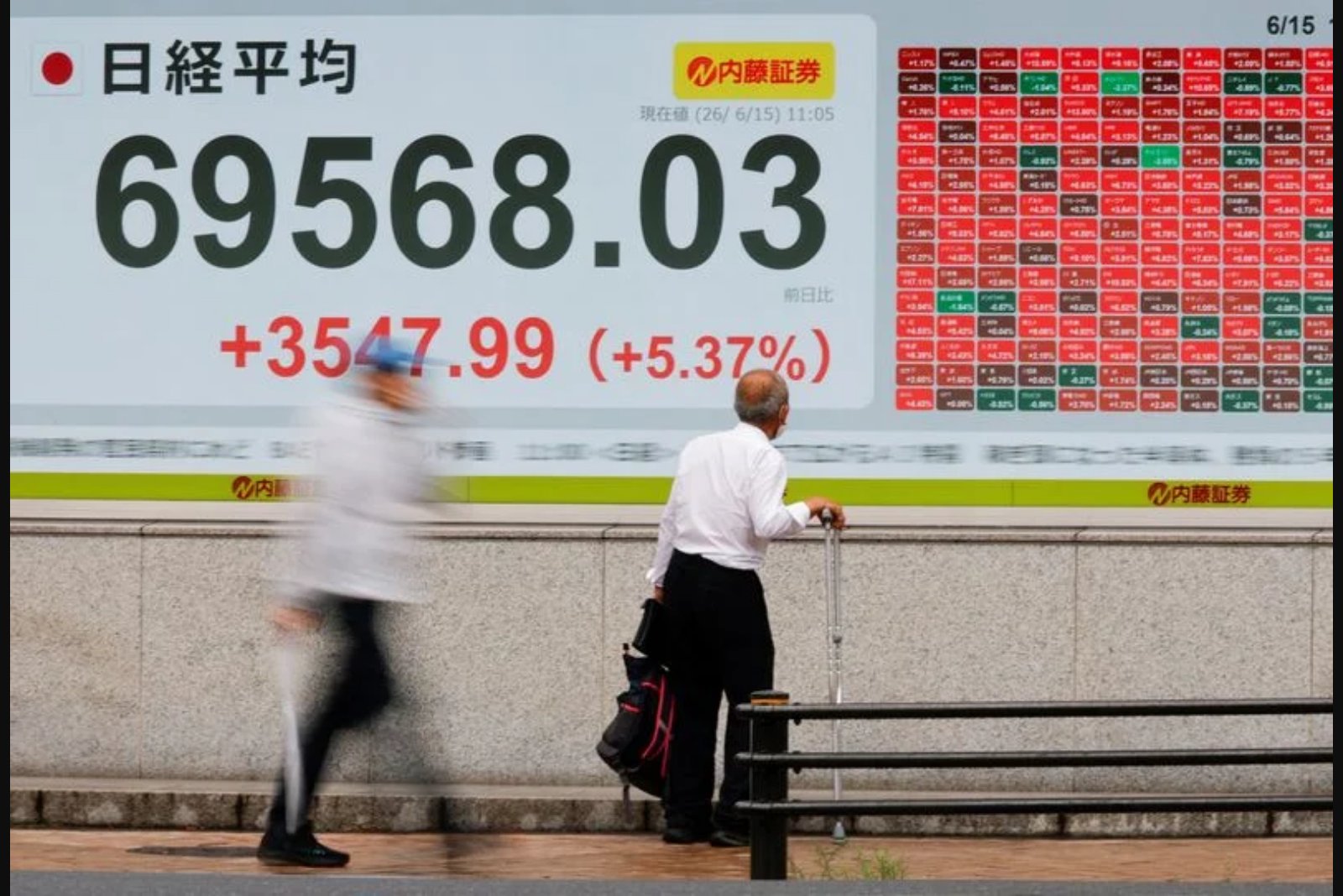
Asian stock indices recorded modest gains on Tuesday, continuing a slight upward trajectory that began the previous session. However, the rally lacked the fervor typically associated with major geopolitical breakthroughs, suggesting that initial euphoria over a preliminary peace agreement between the United States and Iran has dissipated into a more pragmatic assessment of market conditions. This shift in tone underscores a broader market dynamic where geopolitical relief is being carefully weighed against impending monetary policy decisions that could fundamentally alter capital flows and borrowing costs across the Asia-Pacific region.
The broader MSCI index of Asia-Pacific shares, excluding Japan, edged higher by 0.2%, reflecting a fragile optimism. Korean equities spearheaded these gains, signaling a regional preference for assets perceived as less directly impacted by immediate monetary tightening pressures. In contrast, Japan's Nikkei 225 index retreated by 0.2%, pulling back from record-high territory. This decline occurred even as S&P 500 e-mini futures in the United States slipped marginally by 0.1%, indicating that Asian investors were not fully translating Wall Street's gains into domestic buying activity. The divergence suggests a localized caution, likely driven by the imminent policy shift at the Bank of Japan.
The diplomatic developments between Washington and Tehran, which initially sparked a rally in global risk assets, are now facing a reality check. While the preliminary agreement is expected to remove a significant source of market volatility, the durability of such a deal remains uncertain. Analysts from Westpac have noted that critical sticking points, particularly regarding the trajectory of Iran's nuclear program, are deferred to future negotiations. This uncertainty is already reflected in commodity markets. Oil prices, which had settled at a three-month low overnight, showed a slight recovery, with Brent crude futures rising 51 cents, or 0.6%, to $83.74 a barrel. Shipping operators in both Asia and Europe have cautioned that restoring confidence in transit through the Strait of Hormuz could take several weeks, a logistical delay that could temporarily keep energy supply chains under scrutiny despite the political thaw.
Beyond the geopolitical landscape, the primary focus for institutional traders has shifted toward central bank policy. The Bank of Japan is set to announce its interest rate decision on Tuesday, with consensus expectations pointing toward a rate hike that would push rates to a 31-year high. This decision is particularly notable as it occurs in the absence of Governor Kazuo Ueda, who is undergoing medical treatment. Deputy Governor Shinichi Uchida is scheduled to hold the post-meeting press briefing. Analysts at Mitsubishi UFJ anticipate that the bank's assessment of current economic conditions will remain unchanged. They expect Deputy Governor Uchida's commentary and rationale for the rate hike to closely mirror the framework and language established in Governor Ueda's speech on June 3. Furthermore, discussions regarding future policy trajectories are likely to adhere strictly to the governor's established remarks, signaling a deliberate and predictable path for monetary tightening despite leadership transitions.
In the broader global context, the S&P 500 index climbed 1.7%, while the Nasdaq Composite surged by 3.1%. The Dow Jones Industrial Average and the STOXX 600 also closed at record highs, illustrating the powerful impact of geopolitical de-escalation on risk appetite. However, Asian markets appear more selective. The Reserve Bank of Australia is expected to maintain its current stance, pausing its tightening cycle during its upcoming meeting, as indicated by a Reuters poll of economists. This divergence in central bank approaches adds complexity to the regional economic outlook.
In currency and bond markets, the U.S. dollar index, which tracks the greenback against a basket of six major currencies, held steady at 99.66. This level places the dollar firmly within a narrow trading channel that has characterized the entire week. The yield on the 10-year U.S. Treasury bond ticked up by 0.8 basis points to 4.475%, reflecting subtle shifts in long-term rate expectations. In the precious metals sector, gold prices advanced by 0.2% to $4,313.87. Meanwhile, cryptocurrency markets experienced minor declines, with bitcoin falling 0.3% to $66,245.97 and ether dropping 1.2% to $1,793.70.
The interplay between geopolitical easing and monetary tightening creates a delicate environment for capital allocation. Investors are navigating a landscape where the removal of geopolitical risk is being offset by the potential for higher interest rates in key Asian economies. The durability of the Iran-U.S. agreement remains a variable, with significant unresolved issues that could introduce future volatility. For now, market participants are adopting a measured approach, balancing the relief of diplomatic progress against the tangible impacts of central bank policy shifts.