
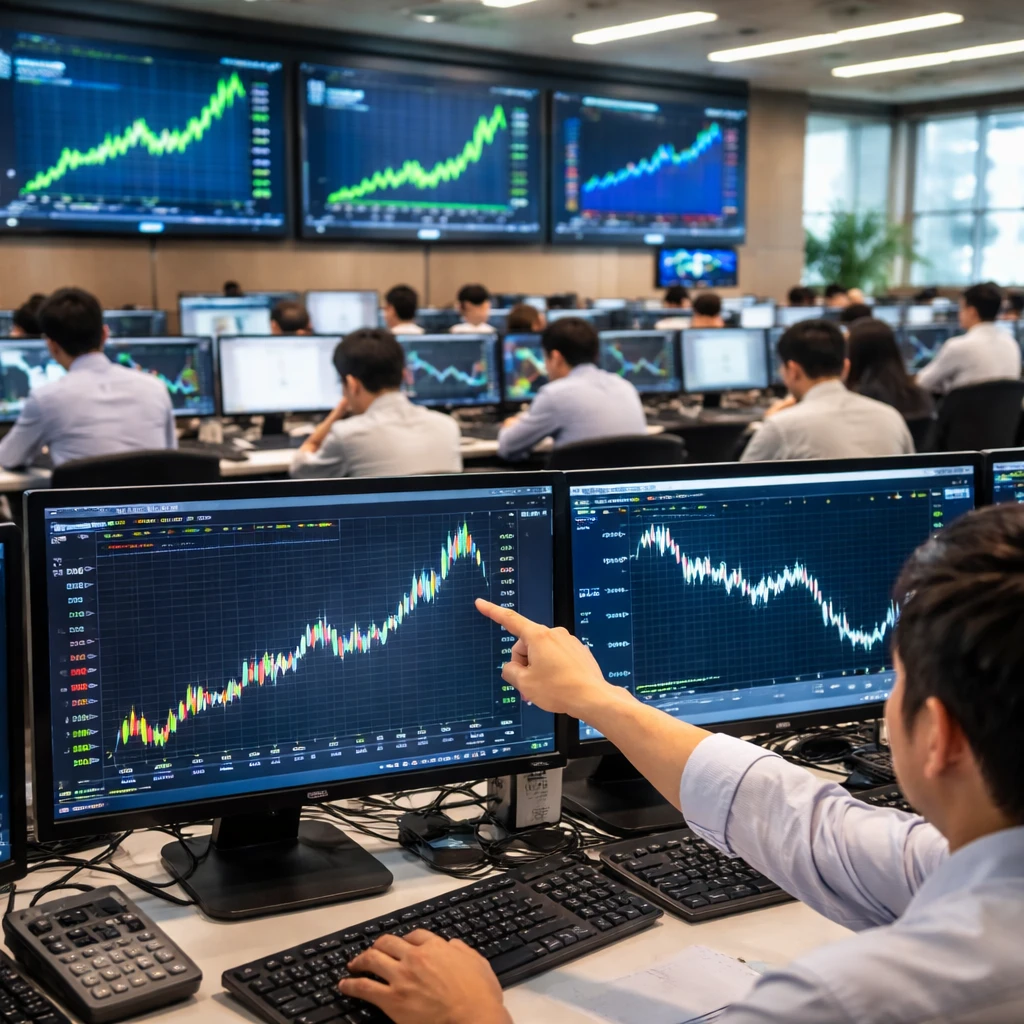
Asian markets delivered a pronounced reversal on Friday, with investors buying into beaten-down technology and semiconductor names after a steep earlier selloff. South Korea's benchmark KOSPI climbed as much as 17% intraday, while Taiwan's market advanced by more than 7% and Japan's Nikkei 225 rose over 5% as traders moved quickly into chipmaker shares.
Broad measures reflected the strength: MSCI's index of Asia-Pacific shares excluding Japan gained 4.7% for the session. Notwithstanding Friday's outsized gains, the KOSPI was still set to record a nearly 25% decline for July, which would represent its largest monthly fall since 1997 during the Asian financial crisis.
Currency markets were in flux after an unprecedented coordinated intervention by Japanese and Korean foreign exchange authorities on Thursday aimed at strengthening their currencies versus the U.S. dollar. For Japanese authorities, the action followed a series of interventions this year intended to slow the yen's depreciation; for Seoul, the joint move was an uncommon step. The market response to that intervention was short-lived: the yen continued to slide on Friday, trading at 160.69 after the Bank of Japan's rate-setting committee opted to keep interest rates on hold, consistent with market expectations.
The South Korean won also trimmed some of its gains after earlier reaching its strongest level in nine months overnight. Market participants took cues from U.S. equity strength late on Thursday: S&P 500 e-mini futures were up 0.3% in Asian trading following solid earnings from Amazon and Sony during the Tokyo session, though Apple warned of revenue growth falling short of analysts' estimates as it contends with chipmaking bottlenecks.
Individual chipmaking giants led Friday's equity advance. Samsung Electronics and SK Hynix rallied in tandem, each climbing nearly 30% as investor demand returned to the sector's beaten-down names. Semiconductor-related moves were a key driver of the region's broader equity uplift.
Sentiment carried into early European trade, with pan-region futures up 0.6%. Futures for Germany's DAX increased by 0.4% and FTSE futures rose by 0.4% as markets braced for a slate of company reports and economic releases that could shape near-term price action.
Items likely to influence markets on Friday
- Company earnings scheduled: ExxonMobil, AbbVie, Chevron, ITV, NatWest, Puma, Taylor Wimpey
- Economic data: UK - Nationwide house prices for July; France - preliminary CPI for July and producer prices for June; Germany - unemployment for July; Euro Zone - CPI and HICP flash for July
- Debt auctions: UK - 1-month, 3-month and 6-month government debt
The combination of central bank posture, emergency foreign exchange measures, and concentrated sectoral rebounds created a volatile environment across both currency and equity markets. Traders and portfolio managers were responding to a mix of technical rebounds in individual names, macro policy signals from the Bank of Japan, and the immediate but ephemeral impact of coordinated currency intervention.
Given the concentrated nature of the rally, market participants will likely watch upcoming corporate results and the scheduled economic releases closely for confirmation that the move can be sustained beyond tactical buying in troubled chip stocks and other technology names.