
The Bank of Japan opted to keep interest rates unchanged on Friday while underscoring its intent to push borrowing costs higher if conditions warrant. The statement followed a government yen-buying intervention that took place overnight but did not provide durable support for the weakened currency.
Within the policy decision the board recorded a single dissent. Board member Hajime Takata argued that the BOJ should raise its policy rate to 1.25% to counter inflationary risks stemming from external demand shocks.
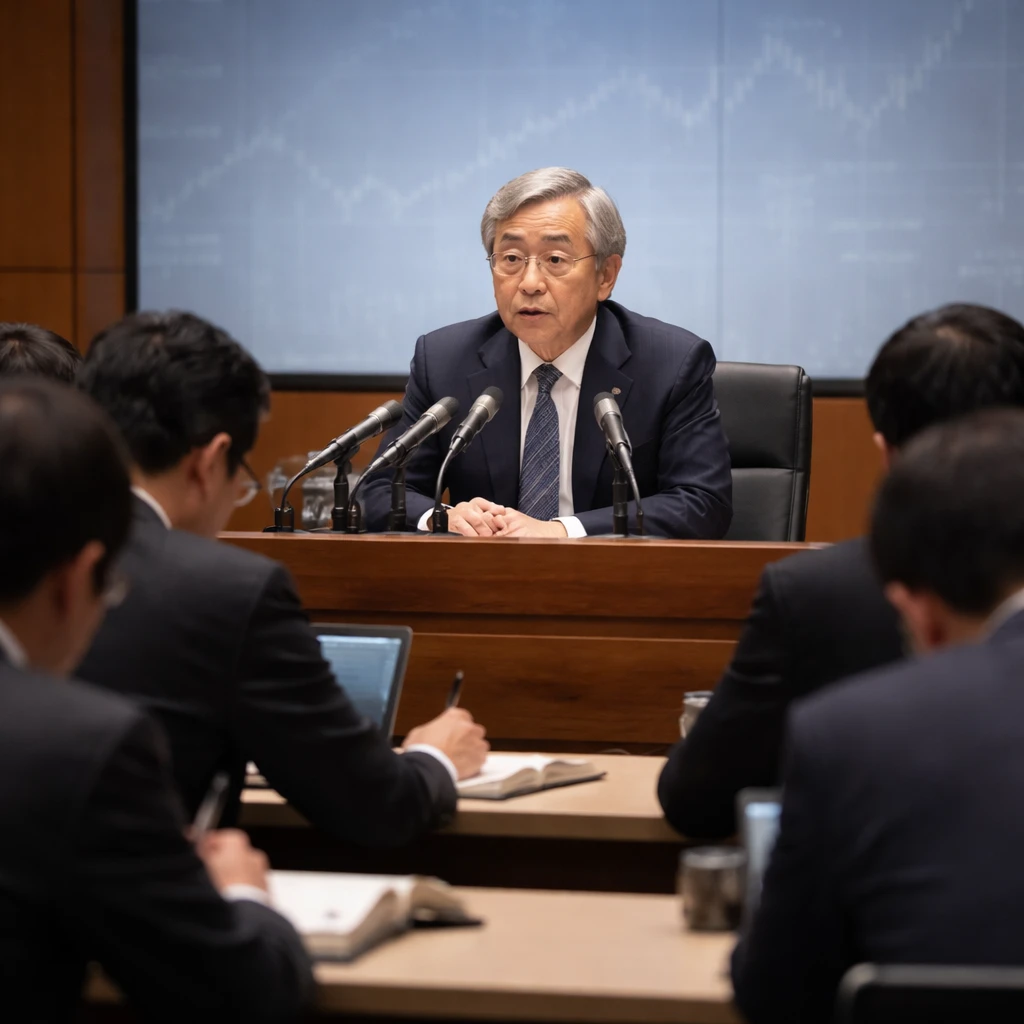
Following the meeting, BOJ Governor Kazuo Euda held a post-meeting news conference conducted in Japanese. Below are excerpts from his remarks, as translated by Reuters:
RISK OF INFLATION OVERSHOOT
"At a time when there is a risk of underlying inflation overshooting, delaying necessary policy action could materialize such a risk and hurt the economy."
WATCHING FOR IMPACT OF AI DEMAND AND CURRENCY MOVES
"The impact of AI demand and currency moves are among important risk factors we are looking at. We will look at how such factors could affect the economy and prices from our next policy meeting onward in debating monetary policy."
STABLE RATE FORMATION REQUIRES APPROPRIATE GUIDANCE
"I won’t comment on daily market moves. For stable rate formation in market, it is important for monetary policy to be guided appropriately and for long-term fiscal policy to be guided in a way that maintains market trust."
UPSIDE PRICE RISKS NEED SCRUTINY
"Given that underlying inflation is approaching our 2% target, we must scrutinize upside price risks more than ever. We will debate our policy from our next meeting onward with this point in mind."
The governor emphasized that the BOJ will take into account several factors - including developments in demand tied to AI and movements in the currency - when considering monetary policy at future meetings. He also stressed the need for appropriate guidance of policy and fiscal measures to preserve market confidence and support orderly rate formation.
The discord within the board was explicit: Hajime Takata alone pressed for an immediate increase to a 1.25% policy rate, citing inflation risks linked to external demand shocks. Beyond that dissent, the committee united behind the decision to hold rates but signaled vigilance on inflation and other upside price pressures.
Markets and economic actors will watch upcoming BOJ deliberations closely, as the bank has flagged that evolving factors could shape its policy stance from the next meeting onward.