
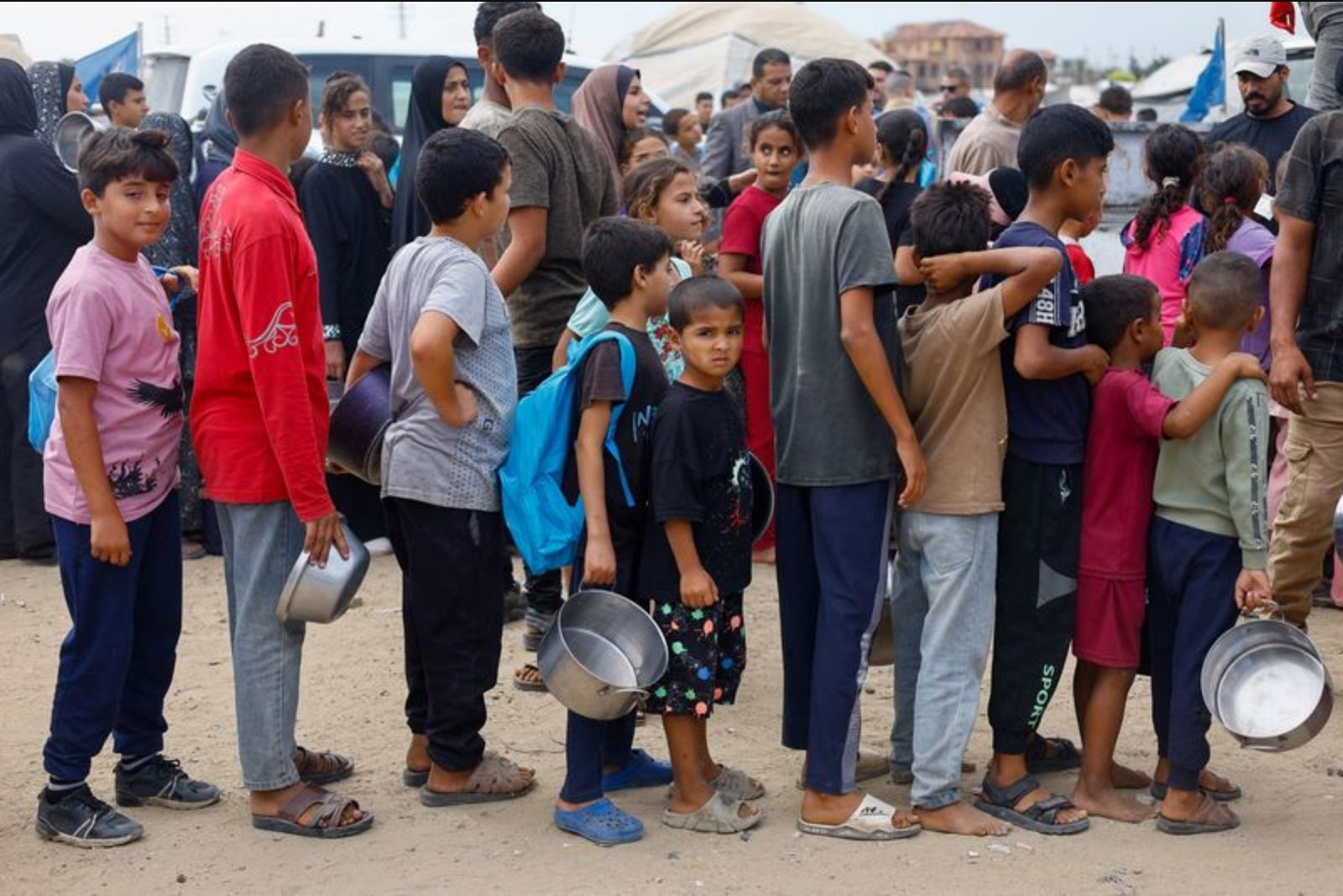
The UN World Food Programme (WFP) has announced substantial reductions to its Gaza aid operation due to a lack of funds, removing monthly food assistance for about 500,000 people in a territory where roughly two-thirds of residents already struggle to obtain adequate food.
Under the revised plan, the WFP will lower the number of beneficiaries receiving monthly support from 1.6 million to 1.1 million. Food rations distributed by the organisation have been halved. Cash assistance will be cut for 75,000 families. The programme supplying hot meals to people unable to cook has been scaled back from 250,000 daily meals to 150,000, and some families in hard-to-reach locations may now receive a hot meal only every other day.
The WFP said about 1.4 million people - approximately two-thirds of Gaza’s population - face crisis levels of food insecurity or worse. Within that group, roughly 200,000 people are assessed to be in emergency conditions. These figures underscore the scale of need even before the latest reductions in assistance.
Commenting on the humanitarian situation, acting WFP Executive Director Carl Skau said life in Gaza remains harsh despite the ceasefire reached a year ago. He told Reuters in Gaza:
"It’s a year into the agreement of this ceasefire. Well, life is still brutal here. There is no proper shelter...There is no basic services. There is no safety, no security,"and added:
"These cuts are happening just as we are facing the fourth winter. You know, I’ve been through the winters here, absolutely brutal."
The WFP has placed an urgent funding request for $450 million to maintain essential operations across Gaza and the Israeli-occupied West Bank over the next six months. The agency appealed to the international community to support ongoing assistance and to protect gains while enabling early recovery efforts.
The announcement drew a sharp reaction from Gaza authorities and residents. The Hamas-run Gaza government media office described the WFP’s decision as "catastrophic" and warned the reductions could accelerate famine in the enclave, calling for additional funds to prevent such an outcome.
On the ground, a Palestinian woman, Sabrine Kuhail, spoke from a displacement site in the Nuseirat refugee camp in central Gaza, describing the cumulative toll on civilians:
"On top of the circumstances and the difficult life, you want to make it even harder on us. You made us hungry for three years with war, destruction, siege, and the bloodshed that is not stopping. What do you want from us? Enough, enough, we are tired."
Operationally and security-wise, the WFP noted that Israeli forces continue to occupy more than 60% of the territory and carry out almost daily airstrikes, while Hamas maintains control over much of the area where over two million people live, largely in temporary shelters that aid groups consider to be supplied inadequately.
The agency also referenced the ceasefire agreement brokered last year, which included provisions for eventual reconstruction of Gaza and terms for disarmament and troop withdrawal. The WFP said implementation of that deal has seen little progress, leaving reconstruction and a return to normal services stalled while humanitarian needs persist.
The cuts affect multiple dimensions of the WFP response - direct food distributions, cash transfer programmes and prepared meals for people who cannot cook - and come as the agency confronts immediate financing gaps. The WFP has framed its appeal as a call for timely support to sustain critical services and to allow a transition toward early recovery when conditions permit.