
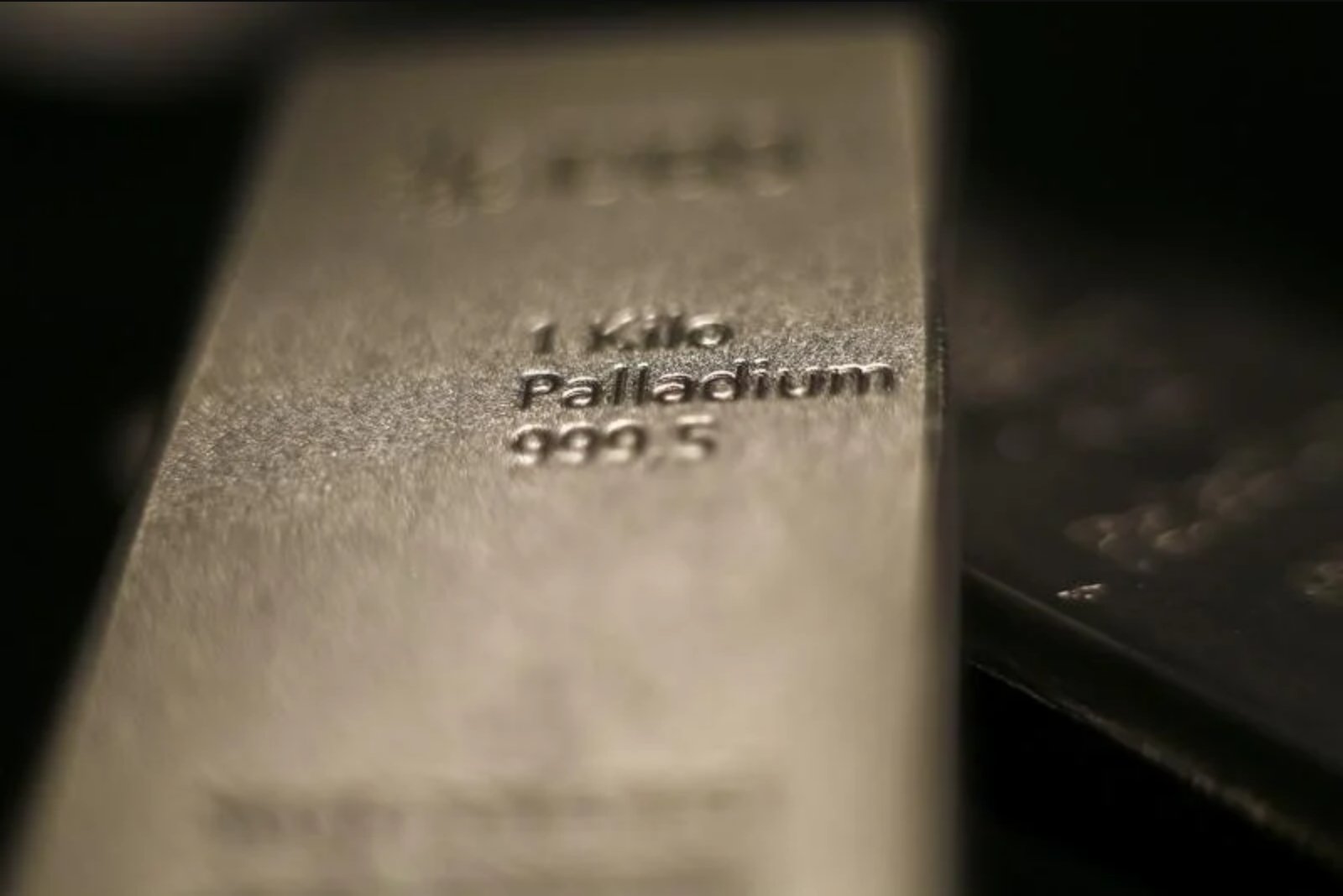
UBS has revised down its palladium price outlook to roughly $1,100 per ounce over the next year, reducing its prior estimates issued in December, March and June by between $100 and $200 per ounce. The Swiss bank said the adjustment reflects a shift in financial-market sentiment that has become less constructive for the metal.
In explaining the downgrade, UBS pointed to two market signals. First, investor positioning has weakened, suggesting that holders of palladium-related financial exposure have reduced their commitments. Second, options-market indicators have grown more bearish, which the bank sees as evidence that market participants are increasingly cautious about the metal's near-term price trajectory.
On the physical side, UBS highlighted recent import flows into China as relevant to demand prospects. According to the information cited, Chinese palladium imports fell sharply from nearly 8.6 metric tons in April to just 3.4 metric tons in September. UBS noted that such a decline in import volumes is consistent with softer physical uptake in one of the world's key markets for the metal.
Despite these headwinds, UBS identified one dynamic that could temper weakness: the widening price gap between palladium and platinum. That spread increases the economic incentive to reintroduce palladium into gasoline autocatalysts where substitution is technologically viable. In UBS's view, the improved economics of switching back to palladium could provide some support to automotive demand, partially offsetting the more bearish signals coming from financial markets.
The bank's updated view centers on the interaction between financial positioning, options sentiment and physical demand drivers. UBS's downgrade thus reflects a combination of reduced investor appetite, a more pessimistic derivatives market, and materially lower imports into China, alongside the potential moderating influence of substitution economics in vehicle emissions control systems.
What this means
- UBS expects palladium to trade around $1,100 an ounce over the next 12 months, marking a significant downshift from earlier forecasts.
- Weaker investor positioning and bearish options sentiment are cited as primary financial indicators behind the cut.
- Declining Chinese import volumes and the palladium-platinum spread are key physical-market considerations that could influence future demand, especially in the automotive sector.