
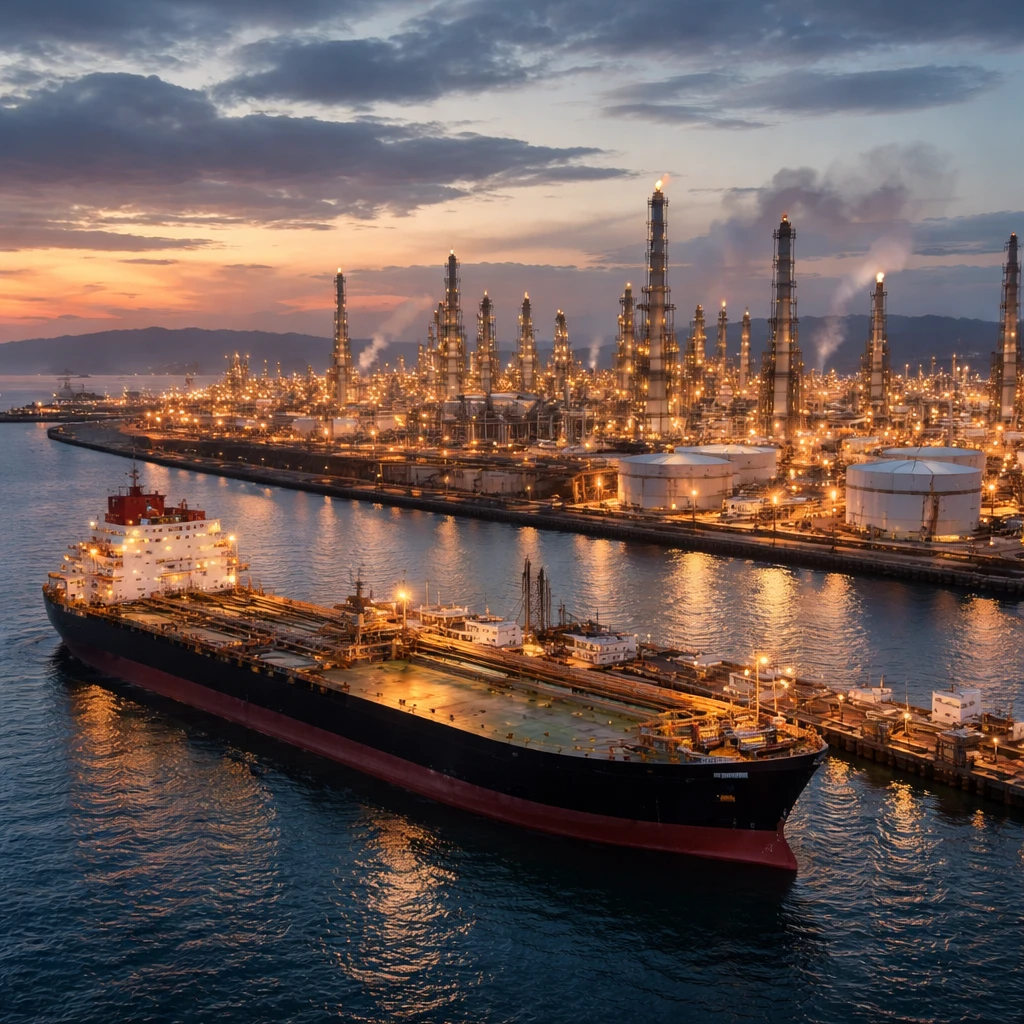
India is preparing to increase its diesel exports from 2027 as state-run refining companies expand their output, officials say, a move that could enlarge the country's footprint in international fuel markets.
Officials told reporters that collective expansions by state refiners will add 16.5 million tonnes to diesel production capacity in 2027 through projects at existing refinery sites. The timing and scale of those additions underpin expectations that India will be able to supply more refined product to global buyers from that year onward.
"We will be in a happy situation of not only refining for ourselves but for the world," Oil Minister Hardeep Singh Puri said, describing the country's ambitions for both domestic supply and export growth.
The anticipated export increase comes as India pursues an overall refining-capacity objective of 300 million tonnes per year by 2030, with further expansion plans to take capacity to 400 million tonnes per year at a later, unspecified date. Those targets form part of a broader push to raise the nation's processing ability and export potential.
Ship-tracking data from Kpler show that India has become the second-largest exporter of seaborne diesel this year, behind only the United States. That shift has taken place against a backdrop of global refining disruptions - including conflict-related trade interruptions and plant shutdowns - which have pushed utilization rates higher at operating refineries as markets address fuel shortages.
Market observers and officials cite two geopolitical flashpoints as contributors to tighter trade flows and elevated freight rates worldwide: tensions between the United States and Iran, and the conflict involving Ukraine and Russia. Those dynamics have affected shipping patterns and logistics costs, reinforcing the strategic value of additional refining capacity in regions able to increase output.
As state refiners add diesel capacity in 2027, India is effectively positioning itself as a stronger swing supplier of refined products - a role that becomes more notable when global supply is constrained and freight costs are elevated. How quickly new output moves from expanded plants to export markets will depend on operational execution and the prevailing market environment.
Key points
- Planned expansions by state refiners will add 16.5 million tonnes of diesel production capacity in 2027, supporting higher exports.
- India aims for 300 million tonnes per year of refining capacity by 2030, with a later goal of 400 million tonnes per year.
- Higher exports arrive amid a tight global market affected by the US-Iran and Ukraine-Russia conflicts, which have disrupted trade and lifted freight rates - impacting energy, shipping, and refined product markets.
Risks and uncertainties
- Geopolitical conflicts cited in reports - specifically US-Iran and Ukraine-Russia tensions - have disrupted trade flows and increased freight rates, creating volatility for shipping and fuel markets.
- Global refining disruptions, including plant closures, have contributed to tight product availability; further closures or operational issues could continue to strain supply and prices in energy and transport sectors.
- The projected export increase rests on the successful completion and operation of the planned refinery expansions in 2027; delays or execution issues could affect the timing and scale of added diesel exports.