
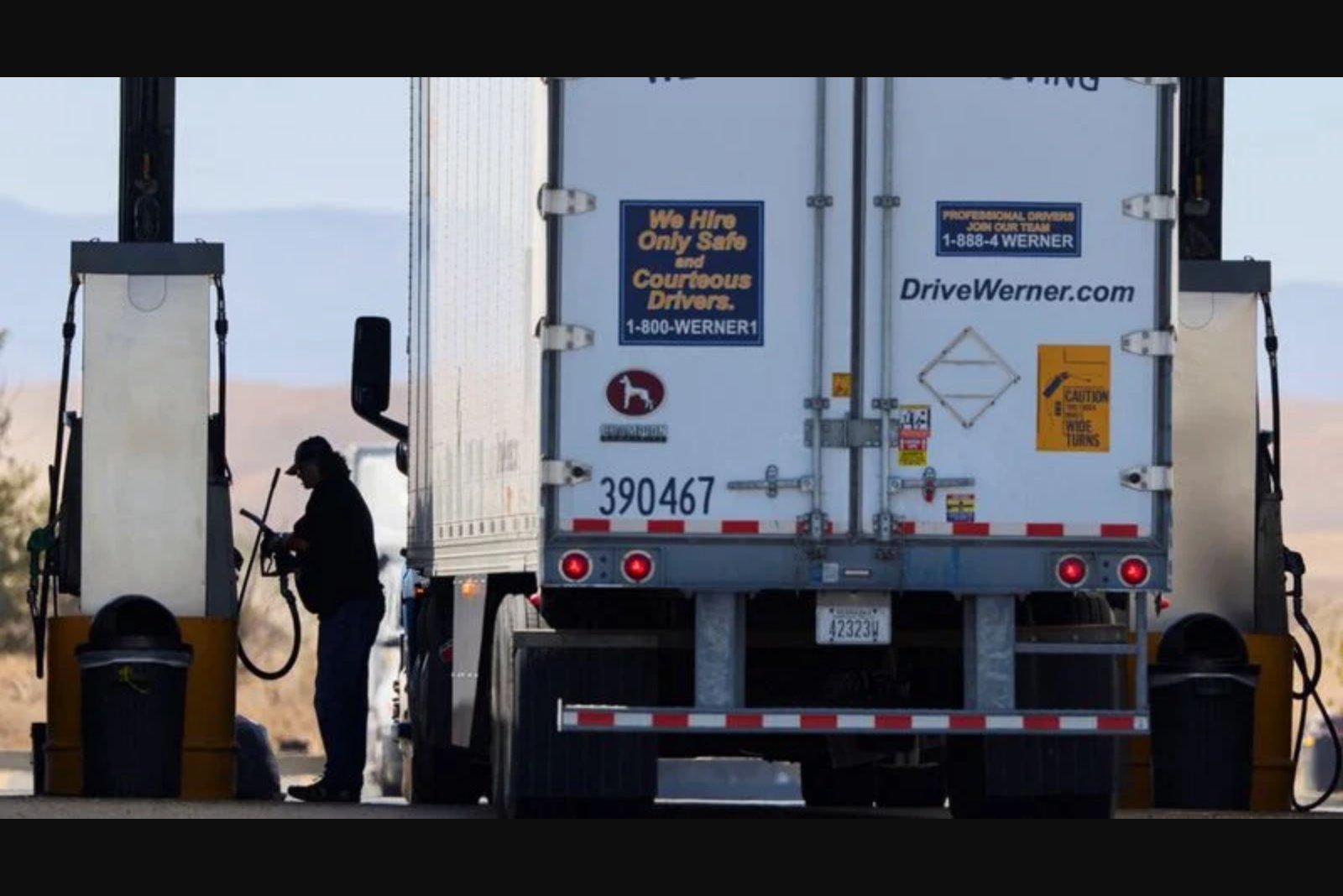
With the November midterm elections approaching, the administration has rolled out a patchwork of interventions aimed at reducing diesel costs, yet the fuel has climbed again, complicating both political objectives and policy trade-offs.
Recent policy moves include billions in direct aid to farmers, temporary changes to trucking rules to permit use of dyed diesel on highways under altered reporting requirements, a step to ease sanctions on Russian diesel, and diplomatic pressure on European partners to release emergency fuel stocks. Despite those actions, U.S. diesel prices increased by nearly 10 cents a gallon in the latest week to an average of $6.28, reversing two weeks of declines and remaining close to record highs, according to the Energy Information Administration.
Diesel’s price trajectory has taken on heightened salience in the political calendar. The fuel is central to operations across farming, construction, freight and other sectors, and government data show its rise was a factor behind sharp increases in delivery costs, early-stage food production expenses and the price of some consumer goods. In Farm Belt states that are politically important to the administration, rising inputs such as fuel and fertilizer, along with trade disruptions and weak farm economics, have amplified voter frustration.
At rallies across the region the president has touted the measures. Onstage in Nebraska he signed an executive order allowing red-dyed diesel to be used in highway vehicles, and at a Kansas rally he announced an $8 billion farm aid package. Those announcements underline the trade-offs implicit in seeking fast relief: the fiscal cost of additional federal spending, potential risks associated with changing enforcement of fuel taxes, and geopolitical consequences from loosening restrictions on imports tied to a wartime Russian economy.
Political dynamics are acute: Republicans are defending narrow majorities in Congress and high costs of living rank as a central voter concern. Nearly 80% of Americans place blame for higher costs on the president, according to an October poll. The administration has framed the price increases as stemming from pre-existing structural issues - including years of refinery closures and disruptions from the war in Ukraine - while defending the recent actions as historic steps to protect farmers, truckers and workers.
Implementation and legal clarity have proved uneven. One of the administration’s more direct measures - an executive order allowing dyed diesel typically reserved for off-road use to be used on highways while temporarily modifying federal tax reporting and record-keeping requirements - has generated confusion. The IRS has not repealed the federal diesel tax; instead it has temporarily waived certain reporting requirements and penalties through the end of the year, leaving truck stops and fuel sellers uncertain about liability and compliance.
David Fialkov, a leading lobbyist at NATSO, the trade group representing major U.S. truck stop operators, said members appreciate the effort but find the guidance murky and too risky. "I really don’t see any of these dyed diesel announcements making a meaningful dent in diesel prices," he added.
Beyond regulatory tinkering, the administration has turned to federal payments. Government support to farmers this year was already expected to exceed $47 billion, fueled by commodity-related payments and earlier tariff relief distributed by the Department of Agriculture. The new $8 billion program would push assistance to a record $55.4 billion for the year, surpassing the prior high of $45 billion in 2020 when pandemic-related aid was distributed.
Those payments may help producers manage elevated input costs and lost sales, but they do not directly resolve the market disruptions driving fuel and fertilizer price increases. Critics question whether taxpayer funds should offset producer losses linked in part to policy choices. National Farmers Union President Rob Larew said this is the second round of emergency aid this year to respond to losses that were largely foreseeable, and that one-time payments cannot provide long-term stability for family farms.
Officials acknowledge timing constraints. A USDA official indicated the aid will be finalized after the November 3 election and likely not disbursed until the end of the year, underscoring a lag between announcement and relief for producers.
Other elements of the response carry geopolitical consequences. Easing sanctions on Russian diesel - a decision intended to expand supply - has prompted bipartisan criticism and raised the prospect of enabling revenue flows to Moscow at a time of war in Ukraine. The administration has defended the sanctions relief as necessary leverage to secure returns of American prisoners and to draw Russian leadership into negotiations.
At the same time, officials have pressured European allies to release emergency diesel stocks and have backed that pressure with a threat to curtail U.S. diesel exports, generating diplomatic friction.
Analysts and political observers remain skeptical both of the near-term price impact and the political calculus. Chris Borick, a pollster and political scientist, noted the president's willingness to prioritize short-term gains over longer-term costs and questioned whether meaningful short-term relief is achievable. Edward Fishman, director at the Maurice R. Greenberg Center, characterized some of the administration’s actions as blame-shifting, suggesting political aims may be a substantial motivator.
On the market drivers themselves, some analysts argue the Iran conflict has been the principal cause of the recent diesel spike by disrupting global oil flows and refined-fuel supplies. Ukrainian attacks on Russian refineries have also tightened supplies but, in analysts’ assessments cited by officials, have played a more limited role.
The confluence of these factors leaves policymakers with limited, imperfect options. Immediate regulatory relief on fuel use and payments to affected constituencies provide visible action, but they do not necessarily shrink the fundamental supply constraints or geopolitical shocks that underpin prices. The fiscal implications of record farm aid and the diplomatic costs of sanctions relief or export threats add further complexity.
For voters in regions where fuel and fertilizer are critical to livelihoods, the gap between announced measures and tangible price relief is likely to be an electoral consideration. For markets and supply chains, the persistence of elevated diesel prices continues to feed through to delivery costs, early-stage food production expenses and consumer prices.
As election day nears, the administration’s portfolio of interventions illustrates the limits of short-term policy levers when confronted with global supply disruptions and geopolitical risk. The measures have expended political and financial capital without delivering a clear downward shift in diesel prices to date, leaving open questions about the durability and trade-offs of the approach.
Key sectors affected: agriculture, freight and logistics, construction, refining and fuel retailing.