
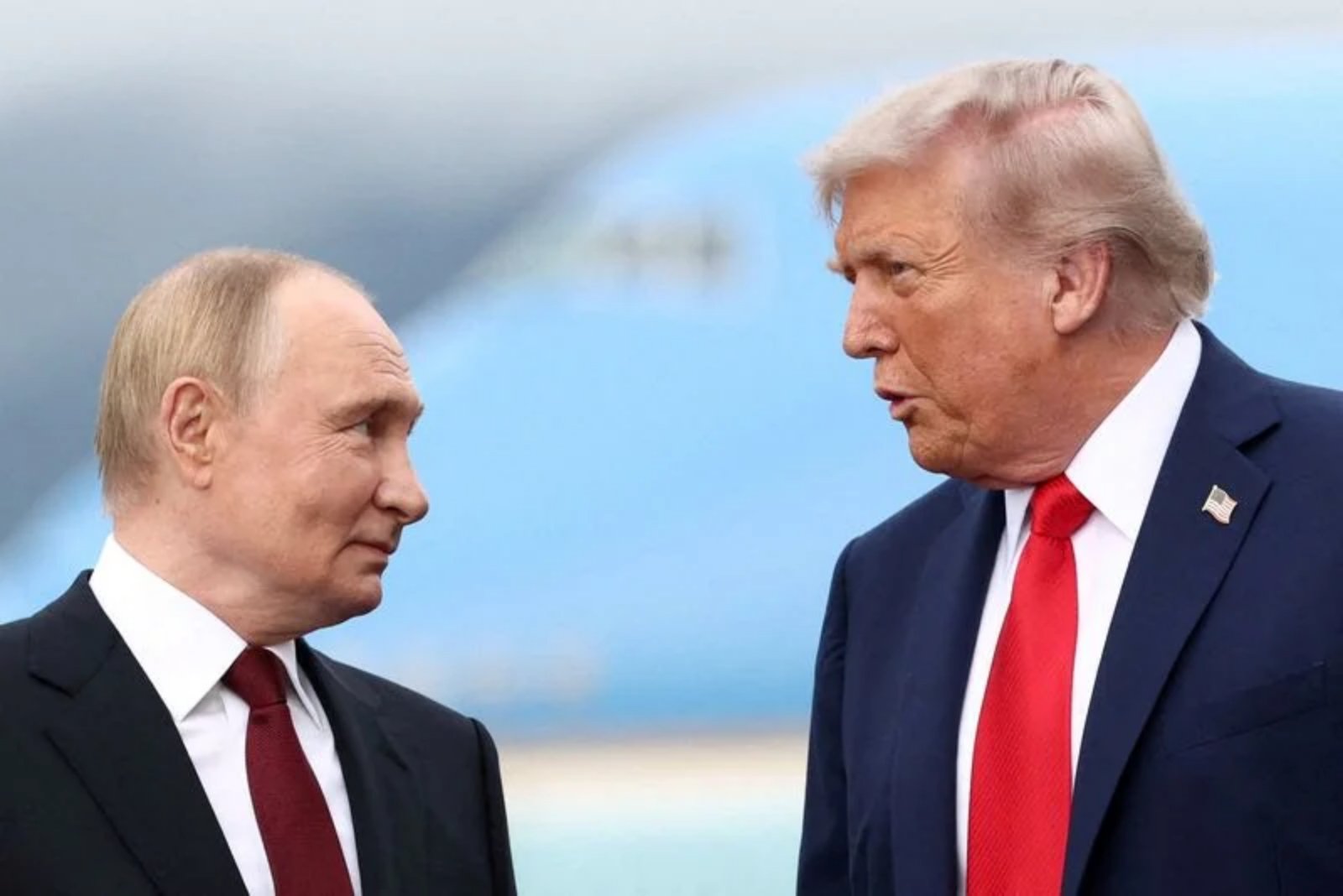
President Donald Trump indicated on Saturday that he has not reached a final conclusion about whether to permanently waive sanctions and tariffs connected to Russian exports, telling reporters at his Mar-a-Lago club in Palm Beach, Florida: "A lot of you don’t know what my decision is yet, but we’ll figure it out, and you’ll figure it out."
The comments followed an executive order signed on Friday that temporarily waived key sanctions and tariffs prescribed under the law identified by officials as the Graham Act. That law, enacted last month at the urging of lawmakers seeking to pressure Moscow over its war in Ukraine, contained measures including tariffs on Russian goods and penalties on countries buying Russian oil and gas. Those measures were scheduled to take effect next week before the waiver was issued.
Friday’s order did not set an explicit end date for the waiver. However, Secretary of State Marco Rubio told reporters on Saturday that the president elected to take up to 60 days to analyze the consequences of imposing both sanctions and tariffs. "I think the president wants to take the 60-day period of time to sort of analyze what imposing both sanctions and tariffs will mean to the global economy and even to the US economy," Rubio said prior to boarding a plane for a trip to Uzbekistan.
Reaction to the executive action has been mixed. Ukrainian President Volodymyr Zelenskiy criticized Friday’s waiver, warning that it could embolden Russian President Vladimir Putin and prolong the conflict in Ukraine. That critique underscores the political as well as the economic considerations the administration faces.
Alongside the waiver, the administration announced an agreement for additional Russian diesel supplies to global markets, a move officials described as intended to ease rising fuel prices that have been influenced by recent conflicts and distribution disruptions. Rubio defended this separate arrangement on Saturday, saying, "That diesel is going to be sold one way or the other. The only difference is how much of it the United States was going to get."
Under the diesel agreement, Trump said Russia would initially supply more than 300,000 metric tons of diesel to the United States, followed by further shipments in November and beyond. Administration officials framed the shipments as a potential consumer benefit while also tying them to diplomatic leverage.
The diesel agreement is "a carrot to try to end the war, not an economic lifeline" to Russia, US Secretary of Energy Chris Wright said during a Sunday interview on ABC’s "This Week." Wright reiterated on CNN’s "State of the Union" that "the only way they can get additional diesel to export is if they turn down the conflict with Ukraine." He added to CNN: "If Russia can bring additional diesel to the market and export it, it would benefit American consumers. He’s putting pressure that would both benefit American consumers and be a step forward for peace in the Russia-Ukraine war."
Administration officials framed the pause and the diesel deal as responses to overlapping global conflicts that have disrupted energy supplies. Rubio said the measures reflect the difficulty of managing multiple geopolitical crises simultaneously, stating: "These conflicts around the world are starting to crash into each other."
The White House move leaves open several questions about the final form of policy toward Russia and how the United States will balance pressure on Moscow with efforts to stabilize fuel markets. Officials are relying on the 60-day review window to assess potential impacts on both global and domestic economic conditions and to reconcile the diplomatic objectives associated with sanctioning Russia with the near-term goal of easing energy price pressures.
As the administration conducts its review, market and political observers will be watching how the waiver and diesel shipments influence fuel availability and prices, as well as whether the approach changes the behavior of external parties purchasing Russian energy. At the same time, stakeholders in energy, commodities and international trade sectors face a period of heightened uncertainty while the review is under way.