
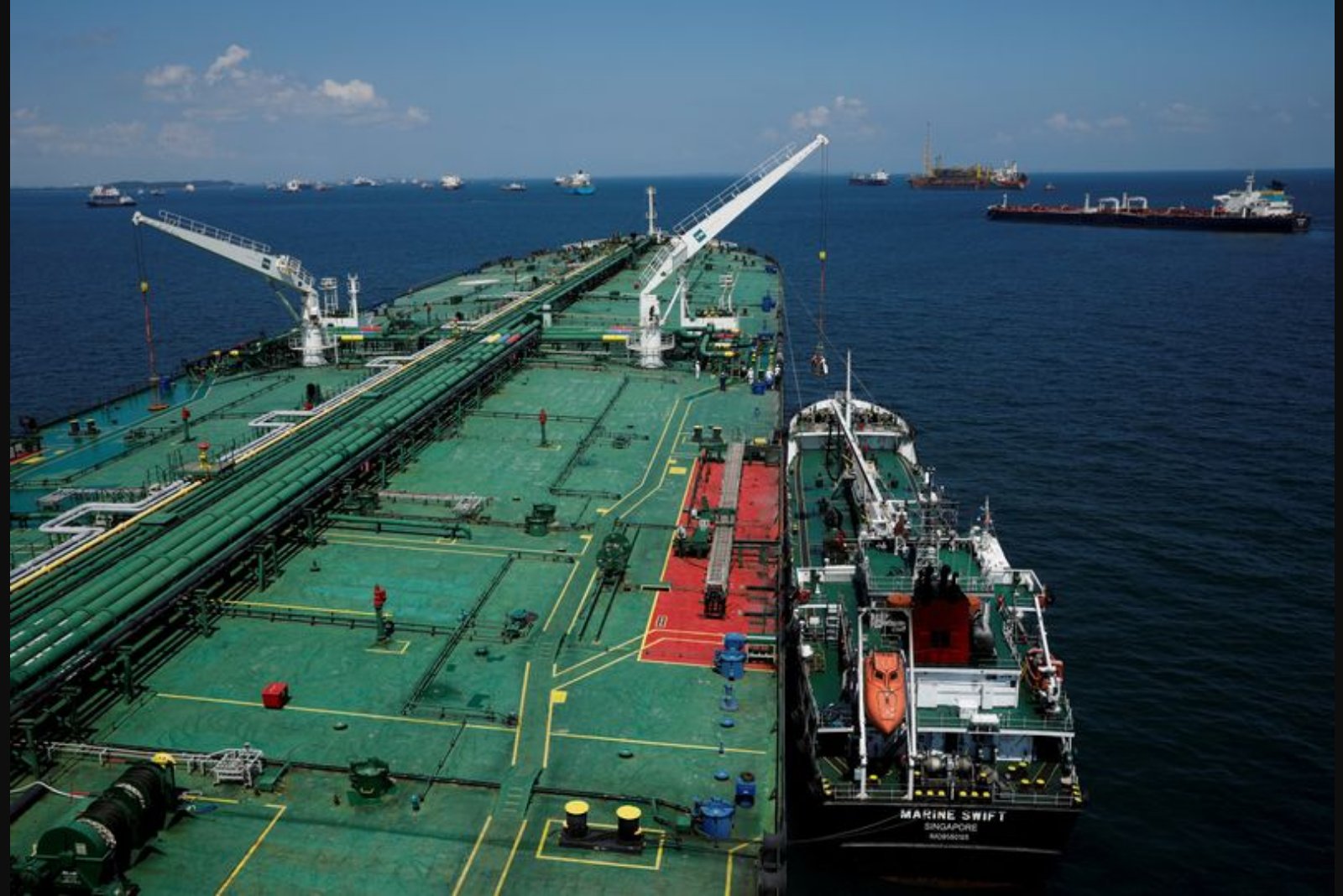
LONDON, Oct 16 - The cost to ship crude oil on the largest tankers moderated this week after surging to fresh highs in recent sessions, as demand softened following a spate of attacks on vessels in the Middle East and amid news that the United States was considering easing sanctions on parts of the so-called shadow fleet.
Data from the Baltic Exchange showed freight rates for very large crude carriers (VLCCs) on the Gulf of Oman to China route fell to about 776 on the Worldscale basis, down from 841 last week. The 841 level was the highest since the Worldscale rate was launched earlier this year, reflecting prior gains since the outbreak of the Iran war.
Market participants pointed to a drop in demand on that specific route. "Gulf of Oman VLCC rates dropped as demand on that route has softened since the fresh attacks, as higher Middle East Gulf freight rates and subsequently lower export volumes have reduced demand on this route," said Kpler analyst Matthew Wright.
Comments from the Trump administration about potentially lifting sanctions on some vessels within the shadow fleet also weighed on freight, according to market watchers. "Trump administration comments about potentially removing sanctions on some shadow-fleet tankers drove freight rates lower," Sparta Commodities analyst Michael Ryan said, "adding a removal would increase the number of ships that can carry oil."
Despite the pullback, rates remain near previously set record highs. The ongoing US-Israeli war on Iran has prompted greater use of ship-to-ship transfers to move oil out of the Strait of Hormuz, boosting demand for tanker capacity and underpinning freight levels.
Observers warn that persistently elevated shipping costs could feed through to broader inflationary pressures, raising costs for businesses and consumers if high freight levels continue. The elevated costs of moving crude have the potential to add to inflationary dynamics, should they remain sustained.
Rates have also eased from record peaks on other long-haul routes this week, including voyages from West Africa to Asia, indicating a broader, if partial, reduction in pressure across the market.
Market context
- VLCC Worldscale on Gulf of Oman-China: about 776 this week, down from 841 last week.
- 841 was the highest since the Worldscale rate was launched earlier this year.
- Use of ship-to-ship transfers via the Strait of Hormuz has increased demand for tankers.
Note: Where the article cites analysts, their comments reflect market observations explaining recent freight movements and the influence of potential policy changes on ship availability.