
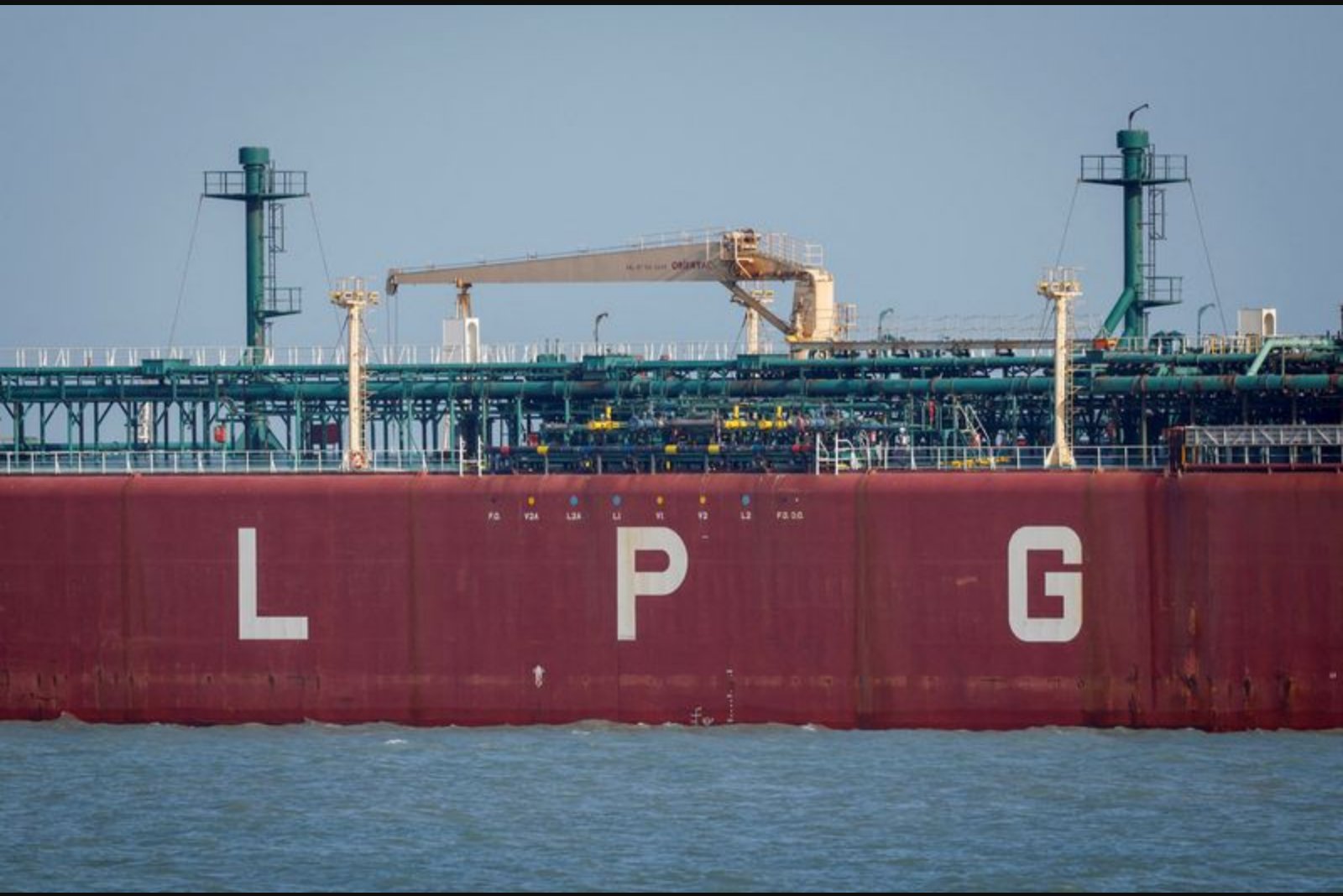
Iran has managed to move limited volumes of petroleum products since mid-July despite a US naval blockade that has curbed its crude exports, according to maritime intelligence and people tracking Gulf movements. The flows, while small compared with Tehran's pre-blockade exports, provide tangible examples of LPG and jet fuel cargoes that have transited the Gulf of Oman in recent months.
Analysts monitoring ship tracking and satellite imagery identified at least eight gas tankers that departed the Gulf of Oman carrying Iranian liquefied petroleum gas (LPG) since mid-July. Additionally, maritime imagery and analysis identified one tanker carrying Iranian-sourced jet fuel that reached Myanmar in September. Six of the eight LPG tankers, along with the jet fuel tanker, are listed under US sanctions for transporting Iranian petroleum and petrochemical products.
Observers who follow regional oil movements said Tehran has, in recent weeks, concealed Iranian cargoes among a growing volume of ship-to-ship (STS) transfers conducted by other Gulf producers off the coast of Oman. Those maneuvers included transfers near Omani coastal towns and waiting patterns in the Gulf of Oman before ships proceeded toward their destinations, according to the analysts.
United Against Nuclear Iran (UANI), a US advocacy group that monitors tanker traffic, provided analysis indicating that several LPG tankers carried Iranian cargoes and that the total volume of those LPG shipments was approximately 4.1 million barrels. UANI's senior research analyst described the observed movements as a small number of tankers moving Iranian LPG amid a broader redirection of Iranian products by US forces.
Some of the LPG tankers reportedly conducted transfers near the Omani coastal towns of Shinas and Sohar, while others waited in the Gulf of Oman before transiting past the area covered by the US blockade, which US Central Command (Centcom) has indicated lies across the Gulf of Oman near the Iran-Pakistan border. Based on tracking, many cargoes subsequently sailed to Malaysia's Eastern Outer Port Limits for additional STS transfers, with likely final destinations in China, according to UANI's assessment.
One maritime intelligence group that analyzes satellite imagery corroborated the appearance of a tanker delivering jet fuel to Myanmar in September. The US imposed targeted sanctions in 2023 on Myanmar's jet-fuel industry, citing military airstrikes on civilians. Myanmar's military government has repeatedly denied that it targets civilians, saying its operations are directed against armed groups. Requests for comment to the Iranian government and Myanmar's military-backed government about these shipments were not answered.
The US military's Central Command has described the blockade as "ironclad." The blockade was initially imposed on April 13 and was lifted in June after a draft understanding with Iran, then reimposed on July 14 following the collapse of that agreement. Centcom has said it enforces passage assessments for individual vessels - reviewing their papers and, where appropriate, allowing transit for humanitarian reasons - and that appearing on US sanctions lists is not the sole criterion for action.
Centcom reported in an October 13 update that, during the three months of the latest blockade, four commercial vessels had been disabled and 135 ships had been turned around by US forces. Previous Centcom statements have said US forces have also seized some tankers. A US military official emphasized that the mere appearance of a vessel in tracking data does not automatically indicate it evaded the blockade, noting that some ships are monitored closely without immediate action for operational reasons.
Washington has paired the naval blockade with a sanctions campaign intended to sever remaining financial links and curtail Iranian revenue. In the week preceding the latest reporting, the US imposed fresh sanctions on 17 vessels accused of transporting Iranian crude, petrochemicals and petroleum products.
A US Treasury spokesperson cautioned that raw shipping data can be misleading because ships may spoof locations or adopt false identities when loading, and said such data "should be taken with a grain of salt." The same Treasury spokesperson described the combined operation and blockade as "suffocating the Iranian regime."
Risk intelligence analysts say economic pressure on Iran could prompt riskier behavior. Torbjorn Soltvedt, principal Middle East analyst at a risk intelligence firm, said deteriorating economic conditions in Iran could lead Tehran to accept greater risks to move product. He noted that if Iran can move product tankers in even small numbers, jet fuel might be an attractive commodity to ship, given the pressure US sanctions have placed on Iran's aviation sector and a potential surplus of jet fuel at Iranian refineries.
Analytics firm Kpler recorded Iranian crude exports falling to zero in September, marking the first month without an Iranian crude shipment since Kpler began tracking the producer in 2013. US Treasury Secretary Scott Bessent has said the blockade prevented most Chinese purchases of Iranian oil and left Iran unable to deliver crude to customers.
Maritime-security experts who track Gulf oil flows characterized the recent Iranian-export instances as opportunistic moves rather than evidence of a sustained new export pattern using smaller ships. Nonetheless, the observed STS activity and the movement of limited cargoes of LPG and jet fuel demonstrate that some petroleum products have passed through or around the area of US maritime interdiction since mid-July.
Where information is limited, analysts and officials caution against assuming that every tracked passage reflects a breach of the blockade. US enforcement actions and sanctions lists remain significant factors shaping whether individual vessels are stopped, turned, or allowed to proceed for specified reasons. The data and imagery provide concrete examples of shipments moving, but officials and analysts differ on how broadly those movements should be interpreted in terms of Iran's overall export capacity.
Summary
Since mid-July, a small number of LPG tankers and a single jet fuel tanker have carried Iranian petroleum products out of the Gulf of Oman despite a US naval blockade and an intensified sanctions campaign. Ship-to-ship transfers among Gulf producer traffic off Oman and subsequent transfers in regional waters have been used to obscure some of the cargo movements. The volumes are a fraction of Iran's prior exports, and US forces report turning and disabling many vessels during the latest enforcement period.