
Summary: The Houthi offensive against targets inside Saudi Arabia is being framed by regional and Saudi sources, and by Iranian officials, as a deliberate strategy to convert Riyadh’s economic vulnerabilities into leverage. By striking energy-related facilities, key airports and high-profile investment conferences, the campaign aims to compel Saudi concessions on political and humanitarian issues in Yemen and to build pressure for a reduction in economic restrictions on Iran.
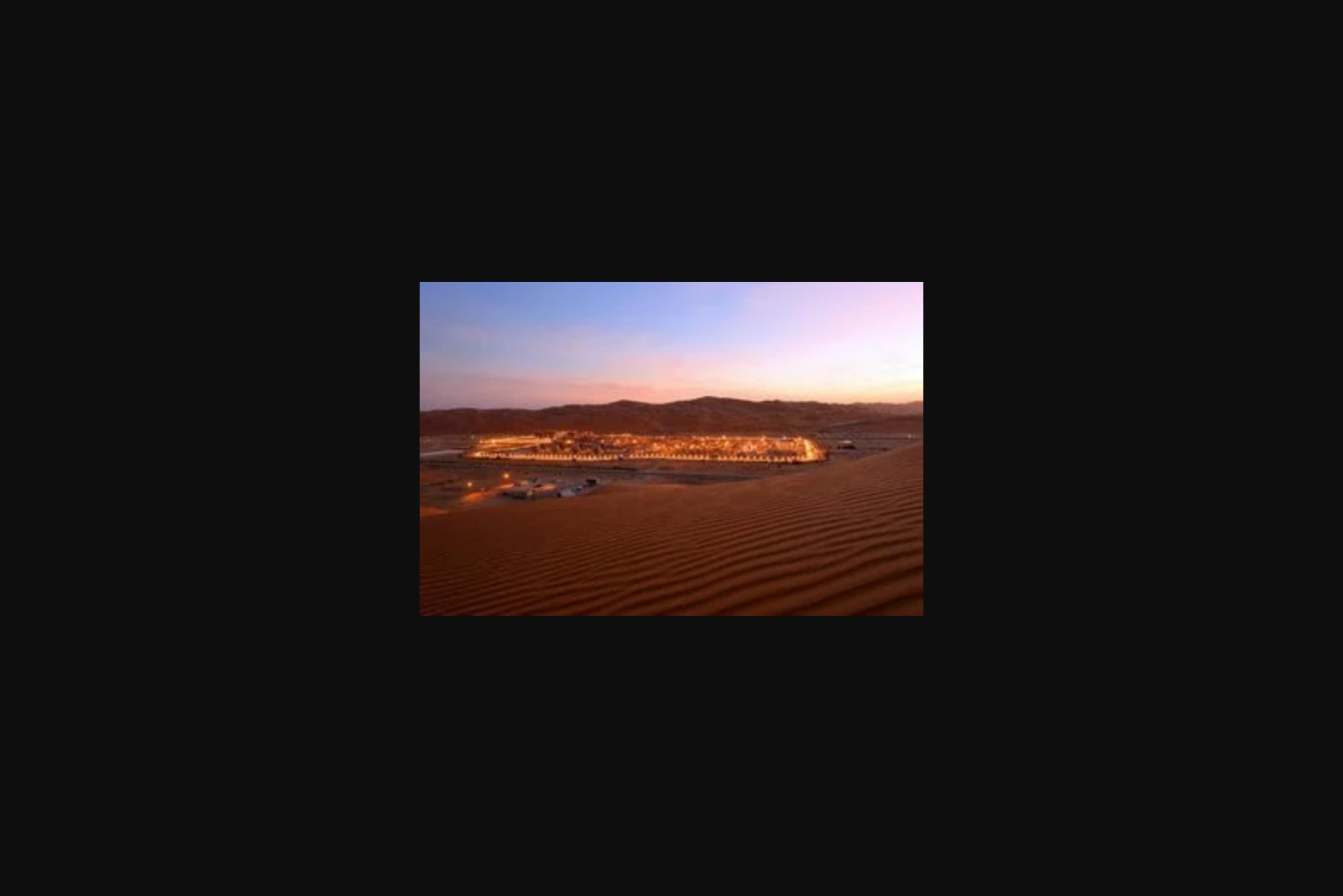
The current wave of Houthi attacks, which has included strikes reaching as far as King Khalid International Airport in Riyadh and a hit on facilities belonging to Saudi Aramco that produced a multi-floor fire, is being interpreted by multiple regional actors as an offensive that transcends Yemen’s borders. Saudi, Iranian and other regional sources tell reporters the strikes are intended to do two things: pressure Crown Prince Mohammed bin Salman to accede to Houthi demands within Yemen, and to persuade US President Donald Trump to loosen what the sources describe as the US blockade constraining Iran’s economy.
Those sources and analysts view the campaign as a joint calculation by Iran and the Houthis that Saudi Arabia’s openness to foreign investment, its centrality to global energy markets and its relative exposure to domestic disruption make it a weak point in any broader confrontation that stretches from the Strait of Hormuz to the Bab el-Mandeb shipping lane in the Red Sea.
Michael Knights of strategic advisory Horizon Engage summed up the logic driving the strikes by saying Iran faces severe economic and military pressure following what the article components describe as a war launched by the US and Israel on February 28. Unable to force a change of course from Washington directly, Knights said, Tehran and its allies have chosen to hit at a regional partner instead. "The Iranians are in a chokehold," he said, and so are "hammering Saudi Arabia, they’re hammering the weak point," exploiting the kingdom’s economic fragility and its need for a stable investment climate.
For the Houthis, easing the US-imposed restrictions on Iran is an explicit interest because Tehran remains a principal backer. The sources note that any loosening of pressure on Tehran would be likely to bolster Iran’s capacity to sustain political, financial and military support to allied movements, including the flow of weapons and cash that Washington asserts sustain the Houthi campaign.
Houthi demands and their aims
Saudi and regional sources, cited in the reporting, set out what the Houthis are seeking in return for an end to their attacks. Their list includes an end to Saudi military operations against them, removal of restrictions on Yemeni ports and airports, the resumption of regular flights between Yemen and Iran, restoration of public sector salary payments, compensation for wartime losses, and an end to Riyadh’s support for Yemen’s internationally recognised government. Acceptance of those terms would, according to the sources, consolidate Houthi authority over much of Yemen.
A senior Iranian official framed the strikes as part of a broader strategy by Tehran and its regional allies to alter the balance of power across the Gulf and nearby shipping lanes by deliberately targeting energy infrastructure and critical maritime routes. That official told reporters Riyadh could not rely solely on US protection and must instead pursue negotiations, warning that Houthi attacks would continue while Saudi restrictions remained in place.
In public statements, Houthi spokesperson Mohammed Abdulsalam denied acting on Iran’s orders and argued the group’s demands are rooted in longstanding humanitarian issues linked to Saudi policies. He reiterated a list focused on easing restrictions on Yemeni ports and airports, adjusting economic constraints and ensuring payment of civil servants’ salaries from Yemen’s own resources. "Our humanitarian demands have nothing to do with Iran or anyone else," Abdulsalam said.
Disruption of investment events and economic signals
The attacks have not been limited to military or energy sites; they have struck at the heart of Saudi Arabia’s economic outreach. Organisers of the kingdom’s flagship investment gatherings have been forced to adapt. The Future Investment Initiative, an annual forum meant to showcase Saudi ambitions to global investors, saw top oil executives withdraw and was shifted to permit remote participation after organisers faced an exodus of attendees in the wake of the strikes.
Analysts and Saudi sources quoted in the reporting say that by targeting such events and high-profile infrastructure the Houthis and their backers intend to hit investor confidence, a vital component of Crown Prince Mohammed bin Salman’s Vision 2030 strategy. The longer the campaign continues, the greater the potential damage to investor sentiment and the more acute the threat to the economic transformation agenda that underpins the kingdom’s long-term plans.
Saudi options and the strategic dilemma
Faced with attacks that have struck deep within its borders, Saudi leadership is confronting a painful dilemma. Sources familiar with Riyadh’s thinking argue that escalation could draw the kingdom into a broader conflict that would jeopardise the transformation agenda central to the crown prince’s domestic program. Yet concessions designed to end the strikes could strengthen a movement that has long posed a challenge to Saudi influence across Yemen and the wider region.
Abdulaziz Sager, chairman of the Gulf Research Center, said Saudi decision-makers had reached a point where they saw few alternatives to military action. "They reached a point of NO negotiations," he told reporters. "They have no other choice except military action."
Other analysts see the Houthis increasingly negotiating from a position of strength. Fawaz Gerges of the London School of Economics said the group appears to be pushing for a ‘‘victor’s peace’’ that recognises its authority in Sanaa and eases constraints on Yemen.
The US role and regional military calculations
Officials and sources cited in the reporting describe limited appetite in Washington for another protracted campaign against the Houthis. After a campaign of US strikes last year tied to attacks on shipping in the Red Sea, a ceasefire was agreed. The perceived reluctance in the United States to re-engage in an extended kinetic campaign renders Riyadh’s expectations of decisive American backing uncertain, the sources say.
At the start of the most recent Houthi campaign, Crown Prince Mohammed bin Salman reportedly asked President Trump for decisive military help. According to the reporting, Trump declined to greenlight US strikes but offered targeting assistance and intelligence-sharing. Trump later said he was considering action against the Houthis while indicating any major move could be postponed until after the US midterm elections. The US State Department, the reporting notes, referred to earlier remarks by Trump and by Secretary of State Marco Rubio condemning the Houthi attacks. The White House did not immediately respond to requests for comment.
The evolving campaign has exposed vulnerabilities in Saudi Arabia’s defences by virtue of the reach of drones and missiles, prompting warnings from analysts that the conflict could turn into a war of attrition that favours the Houthis. Former US negotiator Aaron David Miller pointed to the stark asymmetry of stakes. "Saudi infrastructure is much more valuable than Houthi infrastructure," he said. "They have so much less to lose than the Saudis." That imbalance, analysts say, may shift calculations in a protracted conflict.
Broader regional consequences and the erosion of a peace roadmap
Yemen analyst Farea al-Muslimi warned that the Houthi campaign aims to assert regional primacy and risks dragging the Arabian Peninsula into a far wider conflict. He described the situation as centred on the collapse of a 2023 Saudi-backed peace roadmap that had offered the Houthis a route to political recognition and reconstruction funds. Under that roadmap, Riyadh was due to support public sector salaries and rebuilding efforts; the outbreak of hostilities in the Red Sea, the sources say, has derailed that process and pushed the Houthis into deeper alignment with Iran.
Al-Muslimi said the region is moving toward a more dangerous phase. "We’re heading towards the worst outcome imaginable," he warned. "A war worse than 2015. This time it will be bloodier, and Saudi Arabia will enter it with fewer allies." He added that any successful campaign to counter the Houthis would require unity across the Gulf, especially between Saudi Arabia and the United Arab Emirates, and argued the threat posed by the Houthis extends beyond Saudi borders to the entire Gulf and the wider region. "The Houthis are not a threat to Saudi Arabia alone," he said. "They threaten the entire Gulf and the wider region. This is not simply a Saudi war. It is a Gulf war."
What remains unclear
Several official voices contacted for the reporting - including the Saudi government media office, Iran’s foreign ministry and a Houthi representative - did not immediately provide comment in response to requests. There are also limits to what public statements and sourced commentary can definitively establish about decision-making behind the strikes, the balance of influence between Tehran and the Houthis, and the precise threshold at which Riyadh would choose negotiation over escalation or vice versa.
This account is drawn from statements and assessments attributed to Saudi, Iranian and regional sources, public Houthi comments, and analysts cited alongside those sources. It reflects the positions and analysis they provided but does not introduce material beyond those reported views.
Reporter’s note: The situation is fluid and the sources quoted express the range of strategic thinking across the region. The central throughline of the reporting is that the Houthi campaign is being used as a lever aimed at both Riyadh’s domestic economic priorities and the international pressures on Tehran, with potential consequences for energy markets, investor confidence and regional security.